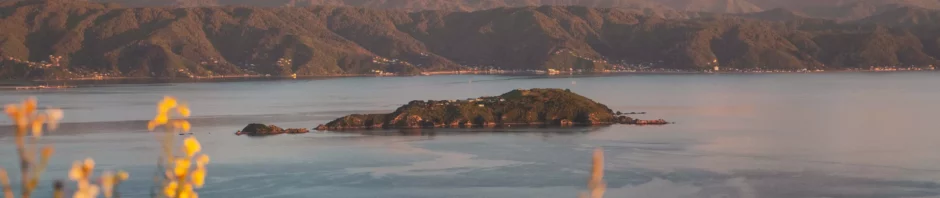
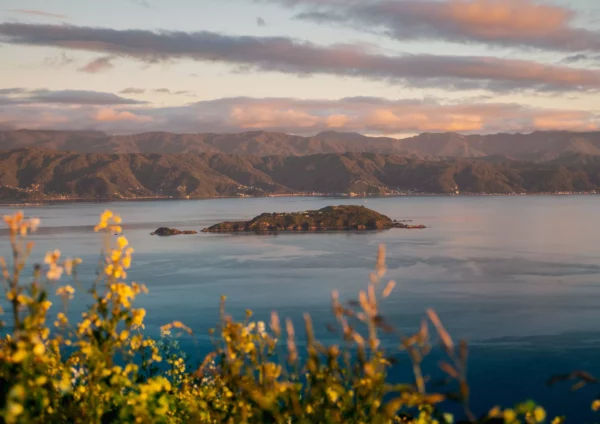
Matiu / Soames Island sits in Wellington Harbour, visible from much of the city yet experienced by relatively few. It is not remote in distance, but it is distinct in character. Reached by a short ferry crossing, it offers an outdoor experience shaped more by access and time than by endurance.
That distinction matters.
Reaching the island
Access to Matiu / Soames Island depends not on physical exertion, but on transport. The ferry crossing is brief, predictable, and weather-dependent in the way all harbour travel is. Once ashore, the island feels immediately separate from the city despite its proximity.
This form of access is important. It allows people who cannot walk far, carry loads, or commit to full-day or multi-day trips to still experience a place that feels removed, quiet, and self-contained.
Distance is crossed by water rather than effort.
Scale and time
The island is small enough to be comprehensible, yet large enough to reward time spent without urgency. Its tracks rise steadily to a central high point, but an hour is not sufficient for meaningful walking unless one rushes - and rushing misses the point.
For many visits, the value lies elsewhere.
On calm days, it has been possible to cross to the island during a lunch break, sit quietly near the wharf with a packed meal, and return to work within the hour. There is no distance to measure in that experience, no summit necessarily reached. What is gained is presence.
On one such visit, a nest of little blue penguins was discovered beneath a boardwalk - entirely unmarked, easily missed, and visible only because there was time to stop rather than move on.
Stillness as outdoor recreation
There is an unspoken assumption that outdoor experience is defined by movement: kilometres covered, elevation gained, destinations reached. Matiu / Soames Island quietly resists that assumption.
Here, outdoor engagement can consist of:
- sitting in shelter from the wind
- watching the harbour traffic pass
- noticing birds along the shoreline
- pausing rather than progressing
These are not lesser experiences. For many people - particularly those with limited mobility, limited time, or changing physical capacity - they are the only realistic form of engagement available.
Access that allows stillness is still access.
Layered use
The island’s value also lies in its layered history and use. It has been a place of occupation, quarantine, defence, restoration, and now quiet public access. None of these layers dominates completely.
Walking, wildlife observation, reflection, and simple presence coexist. The island is neither an amusement nor a wilderness in the strict sense. It is a managed place that still allows space for unscripted experience.
That balance is increasingly rare.
Why this place belongs in “Places”
Matiu / Soames Island earns its place in this series not because it is spectacular, but because it demonstrates what inclusive access looks like in practice.
It shows that:
- meaningful outdoor experience does not require physical endurance
- time-limited access can still be valuable
- transport can enable inclusion rather than diminish authenticity
- engagement does not depend on achievement
For families with young children, older visitors, people with disabilities, or those constrained by work and care responsibilities, this kind of access is not secondary. It is essential.
A quiet lesson
The island does not ask much of its visitors. It does not demand speed, distance, or performance. It rewards attention instead.
That is its quiet lesson - and the reason it belongs here.
Some places are important not because they test us, but because they allow us to arrive at all.
(This is part of an occasional series reflecting on places where outdoor recreation still fits into ordinary life.)