
Guest Post by Dave Rhodes
The government’s latest move in the Predator Free 2050 agenda is a big symbolic step: feral cats are to be formally treated as a pest species targeted for eradication by 2050. Ministers have talked about “stone-cold killers” and lined cats up alongside possums, rats, stoats and ferrets as enemies of biodiversity.
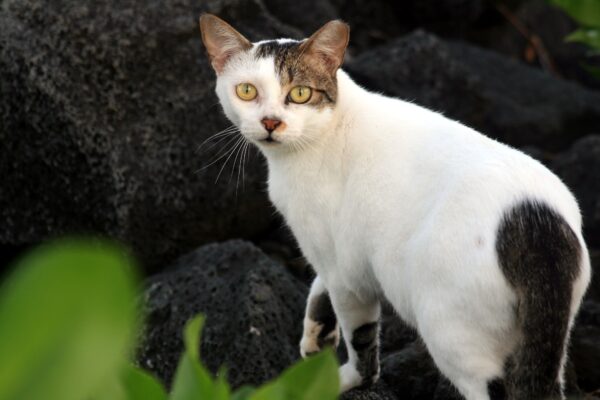
For hunters, anglers and outdoor recreationists, this decision lands in familiar territory. We know that uncontrolled predators can strip the life out of a landscape. We also know that big promises about “eradication” can easily turn into more aerial poisons, more collateral damage, and more distrust.
CORANZ absolutely recognises that feral cats are a serious problem. But if New Zealand is now going to go after them nationally, we should insist on realistic, science-based solutions, not just another round of political grandstanding.
This article sets out:
- What we actually know about feral cats and their impacts
- What “eradication by 2050” is likely to mean in practice
- The risks for outdoor users, working dogs and public trust
- The sort of programme CORANZ could support – and what we should firmly oppose
What’s been announced – and what hasn’t
The key decisions so far are political, not operational:
- Feral cats are being formally added to the Predator Free 2050 “hit list”, with an aspirational goal of nationwide eradication by 2050.
- Rough population estimates range from a few million to well over ten million feral cats scattered across farms, scrub, bush margins and some offshore islands.
- The government is pointing to strong public backing: DOC’s strategy consultation received a few thousand submissions, with a high proportion supporting tougher feral cat management.
Crucially, the “how” is not yet fixed. Detailed operational plans – tools, timelines, priority areas – are not due until about 2026. That gives organisations like CORANZ a narrow but important opportunity to influence the direction of travel before methods harden into policy.
The real impacts: more than “just a few birds”
There is no point pretending feral cats are harmless. They are not.
1. Predators of native wildlife
Feral cats are highly efficient, generalist predators. Field studies and necropsies in New Zealand show them taking:
- Ground-nesting birds such as dotterels and wrybill
- Lizards and skinks, sometimes in large numbers – one documented Canterbury cat had 17 skinks in its stomach
- Bats – a single cat in the central North Island killed over 100 short-tailed bats in about a week
- Invertebrates like wētā, as well as rats and rabbits
In alpine and subalpine areas, cat predation has been implicated in significant mortality of kea and other vulnerable species.
These are the same species and places that many CORANZ members value: the river flats where anglers see dotterels, the scree slopes where trampers spot a skink, the high country where a lucky hunter hears kea overhead. If we care about those experiences, we cannot shrug off feral cats as “someone else’s problem”.
2. Disease – toxoplasmosis
Feral cats are the primary host for Toxoplasma gondii, the parasite behind toxoplasmosis. Growing evidence shows:
- “Abortion storms” in sheep flocks linked to cat contamination of pasture or feed
- Human health risks, especially for pregnant women and immunocompromised people
- Impacts on marine mammals, including dolphins, via runoff carrying oocysts to sea
Recent modelling work on farmland suggests that small reductions in feral cat numbers make only a small dent in infection risk – significant reductions are needed before toxoplasmosis prevalence starts to move.
That is a sobering message for those who think a token bit of “control” will solve everything. Either we get serious about feral cats in hotspots, or we should stop pretending.
The grey zone: what counts as “feral”?
On paper, “feral cats” are those living entirely independent of human support: no owner, no regular feeding, fully wild. In reality, the cat landscape is a continuum:
- Fully feral animals in remote areas
- Stray cats around farms, towns and dumps, sometimes intermittently fed
- Owned but free-roaming cats that live inside by day and hunt at night
- Semi-managed “shed cats” on farms
Animal-welfare groups like SPCA support feral cat control in sensitive areas but warn against any approach that effectively treats every cat outside as fair game.
For CORANZ, two things follow:
- Definitions and identification matter. If the government wants public support, it must make a sharp distinction between feral cats in the hills and pets in suburbia – and enforce dumping and irresponsible ownership.
- Any control methods used in multi-use landscapes must minimise the risk to lost pets and managed farm cats, not just tick the “feral” box on a policy paper.
How do you “eradicate” feral cats in practice?
To understand what 2050 might look like, we have to look at the tool kit being discussed now.
1. Trapping and shooting
Professional ground-based control is the most targeted option:
- Cage traps and kill traps, carefully placed around travel lines, hedges, culverts and stock yards
- Night-time shooting using spotlights and increasingly thermal imaging
These methods, done well, can be highly selective and humane. They are also labour intensive and expensive, especially across large, rough country. They form part of any realistic programme, but they won’t, by themselves, deliver “nationwide eradication”.
2. Poisons and meat baits
Once a species is formally in the Predator Free tent, the pressure comes on to use the same broad tools we see for possums and mustelids:
- Secondary poisoning – relying on cats scavenging poisoned rodents or possums
- Direct poisoning – meat baits laced with compounds such as 1080 or PAPP
DOC and research partners have already trialled aerially sown meat baits targeting cats and stoats in some remote ranges, and large-scale operations are proposed for places like Rakiura.
From a purely ecological point of view, these might be effective in very remote, controlled environments. From a CORANZ perspective, they raise immediate red flags:
- Dogs – including working dogs and hunting dogs – are extremely vulnerable to these baits and to scavenging poisoned carcasses.
- The wider the use of aerial toxic meat baits, the more recreation access, game animals and public trust are put at risk.
- We have seen, over decades of 1080 debate, just how quickly over-reliance on poison erodes social licence.
Is “nationwide eradication by 2050” even realistic?
Feral cats are not like rats on an island. They are wide-ranging, fast-breeding, superb hunters that thrive in almost every habitat we have – from high country tussock to dairy shed to rubbish tip.
To fully eradicate them from all of mainland New Zealand would require:
- New detection and control technologies we don’t yet have at scale
- Constant surveillance to prevent re-invasion
- Decades of consistent funding and political will
Even enthusiastic Predator Free supporters admit that the 2050 goal is a “moonshot” – a stretch target intended to drive innovation, not a guaranteed outcome.
CORANZ should therefore be deeply wary of any argument that says:
“Because we promised eradication, we must now expand aerial poison use across half the country.”
That is bad science, bad policy, and bad politics.
What would a science-based, realistic approach look like?
Rather than chasing a slogan, CORANZ should push for clear priorities and practical steps.
1. Focus on real hotspots
Start where feral cats are doing the most damage and where success is actually measurable:
- Offshore islands and fenced sanctuaries
- High-value breeding areas for kea, dotterels, bats and other vulnerable species
- Farms and catchments where toxoplasmosis is a clear economic and animal-health issue
In those places, intensively managed programmes using professional trapping and shooting, and in some cases carefully controlled toxic baits, may be justified – if they are monitored properly and if non-target risks are genuinely minimised.
2. Get serious about domestic cat management
You cannot solve a feral cat problem while turning a blind eye to pet-cat behaviour and dumping. A credible national strategy should include:
- Mandatory microchipping and registration of domestic cats
- Strong desexing requirements, especially in urban areas and around high-value conservation sites
- Enforceable penalties for abandoning cats
- Support for local bylaws restricting cat numbers or requiring night curfews in sensitive areas
Without this, feral populations will be constantly topped up from the edges while the government blames “ferals” and dodges harder conversations about pet ownership.
3. Put method ahead of rhetoric
CORANZ could articulate a clear hierarchy of control methods it supports:
- Preferred tools
- Professional ground-based trapping and shooting, including use of thermal gear where appropriate
- Fencing and exclusion where feasible
- Community trapping groups operating under good training and welfare standards
- Professional ground-based trapping and shooting, including use of thermal gear where appropriate
- Conditional tools
- Use of cat-specific toxic meat baits only in remote areas with low dog use, with independent monitoring and transparent reporting of all non-target incidents
- Use of cat-specific toxic meat baits only in remote areas with low dog use, with independent monitoring and transparent reporting of all non-target incidents
- Opposed tools
- Widespread aerial toxic meat baiting for cats over multi-use public land
- Leghold traps and inhumane methods that fail basic animal welfare tests
- Widespread aerial toxic meat baiting for cats over multi-use public land
4. Insist on independent monitoring and open data
Every major feral cat project should be required to report publicly:
- Biodiversity outcomes – are bird, bat and lizard populations actually improving?
- Non-target deaths – including deer, goats, working dogs and other wildlife
- Costs per hectare and per unit of biodiversity gained
That sort of transparency would allow groups like CORANZ to support what works and criticise what doesn’t, based on evidence rather than spin.
A constructive position for CORANZ
Putting all this together, a balanced stance might be:
- Recognise that feral cats are a serious predator of native wildlife and a vector of toxoplasmosis, causing real harm to biodiversity and farm productivity.
- Accept in principle their classification as a pest species to be controlled and, where realistic, eradicated in high-value areas.
- Question the nationwide “eradication by 2050” slogan as technically doubtful and potentially a Trojan horse for more broad-scale poisoning.
- Advocate strongly for a toolbox led by humane, targeted ground control and serious domestic-cat management, with poisons strictly limited to circumstances where non-target risks are minimal and independently monitored.
- Defend the interests of outdoor users and working dogs, making it clear that conservation gains must not come via cavalier risk to dogs, game animals and public access.
In short:
Yes, we have a feral cat problem.
Yes, we need to act.
But if the solution is just “more poison, everywhere”,
then the cure will be worse than the disease.
CORANZ should be at the table insisting that any feral cat programme is honest, targeted, humane and scientifically defensible – and that it strengthens, rather than further erodes, the relationship between conservation agencies and the outdoor community.
Gonna be a lot of cat-lovers pissed off by this
“Rough population estimates range from a few million to well over ten million feral cats” is this another DOC “back of a fag packet” calculation or a realistic estimate?
Of course DoC scaremongers for job security. Any crisis imagined means more vote allocation and job security. When will MPs wake up to the wiles and ways of bureaucrats.
The ironic twist is that DoC’s poison saturation of public lands means more and more endangered species. The kea is a prime example.
Yes DoC guessed the possum population at 70 million. It was a beat-up. There were not 70 million and in 1994 a senior Landcare Research scientist told DoC the 70 million figure was a “back of cigarette opacket calculation”.
DoC lack integrity and credibility. Yes wake up you MPs.