Opinion by Andi Cockroft, Chair, CORANZ
Disclosure: I am an avid outdoor persona, born Country, I grew up surrounded by mother nature. Meadows, woods, streams were my playgrounds. But as I aged, I find myself unable to participate in all those activities I enjoyed as a younger man. Now registered disabled, I am fortunate to be on the lower end of that scale, simply limited in effort and duration, others are far less fortunate yet all of us can and should be able to continue to enjoy the great kiwi outdoors. With that disclosure, read on:
Outdoor recreation in New Zealand is often discussed as though it were a single activity, undertaken by a single kind of person. The assumed participant is fit, time-rich, unencumbered, and able to walk long distances carrying weight. For many New Zealanders, that image bears little resemblance to reality.
Access that works only for the able-bodied and time-rich is not truly public access.
The quiet exclusions
There are many reasons why people cannot undertake long tramps or multi-day journeys:
- physical disability, visible or otherwise
- injury or chronic limitation
- age - both young and old
- family responsibilities
- limited time away from work or care
None of these diminish a person’s connection to the outdoors. But they do limit how that connection can be expressed.
For such people, access that depends solely on walking or cycling may exist in theory, but not in practice.
Time matters as much as distance
A further, often overlooked factor is time.
For many families, outdoor recreation must fit into a single day - sometimes only a few hours. Parents may have children too young to walk far. Others may be caring for older relatives. Many simply cannot afford to disappear into the backcountry for several days at a time.
In these circumstances, the difference between a two-day tramp and a two-hour drive is the difference between participation and exclusion.
The outdoors does not become less meaningful because it is reached in a day rather than a week.
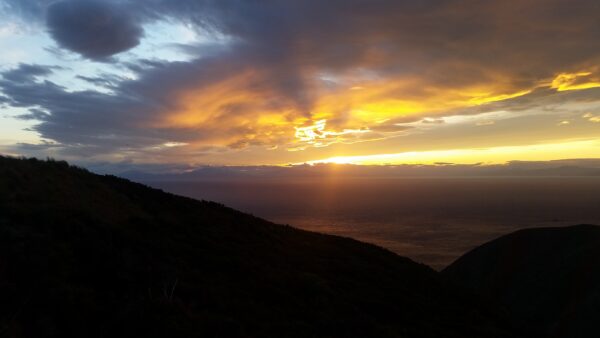
View of a beautiful sunset from my doorstep
Vehicle access as an enabler, not a shortcut
The use of vehicles - including 4WD - is sometimes dismissed as a lesser form of outdoor recreation. That view misunderstands both intent and outcome.
For many people, vehicle access is not about avoiding effort. It is about making effort possible at all.
A vehicle allows:
- people with limited mobility to reach remote places
- families to experience coastlines, forests, and backcountry together
- older New Zealanders to continue engaging with landscapes they have known for decades
- outdoor use to occur within realistic timeframes
The destination still matters. The weather still matters. Judgment, preparation, and respect for conditions remain essential. What changes is not the quality of the experience, but its accessibility.
A day out is still an outdoor experience
There is a tendency to equate seriousness with duration. By that measure, a multi-day tramp is assumed to carry greater value than a day spent exploring remote coastlines, fishing sheltered bays, or simply being present in a quiet place.
That hierarchy is unhelpful.
A day out can still involve:
- planning
- navigation
- awareness of weather and terrain
- respect for land and wildlife
- connection to place
For many, it is the only form of outdoor engagement available - and it is no less real for that.
Shared spaces, shared responsibility
Inclusive access does not mean unrestricted access everywhere. Nor does it mean ignoring environmental limits. It does mean recognising that different people require different means of access, and that exclusion should not be the default response to complexity.
Where vehicles share tracks with walkers or cyclists, compromise is required. Time-based separation, route designation, speed limits, and clear expectations all have a role. Many such arrangements already work reasonably well, quietly and without fanfare.
What undermines them is not use, but absolutism.
The risk of narrowing access
When policy assumes a single ideal user, it narrows the definition of who belongs outdoors. Over time, this creates a subtle but real exclusion - one that is rarely stated openly, but felt keenly by those affected.
Access that exists only for the physically capable is not inclusive.
Access that exists only for those with time to spare is not equitable.
A public estate that cannot be reached by large sections of the public is public in name only.
Why this matters to CORANZ, and to me personally?
CORANZ exists to represent outdoor recreation in all its ordinary forms. That includes walking and cycling, but it also includes vehicle-based access where it is lawful, appropriate, and responsibly managed.
To argue for access while ignoring the realities of age, ability, and time would be inconsistent with that purpose.
Inclusive access is not about privileging one activity over another. It is about ensuring that the outdoors remains available to people across the full spectrum of life.
And the Conclusion?
Outdoor recreation is not defined by how far one walks, how steep the climb, or how many nights are spent away. It is defined by engagement with land and water - and by the opportunity to do so at all.
For some, that engagement begins at the end of a long track.
For others, it begins at the end of a gravel road.
Both are valid. Both deserve consideration.
If New Zealand’s outdoors is to remain truly public, access must be inclusive - not only in principle, but in practice.
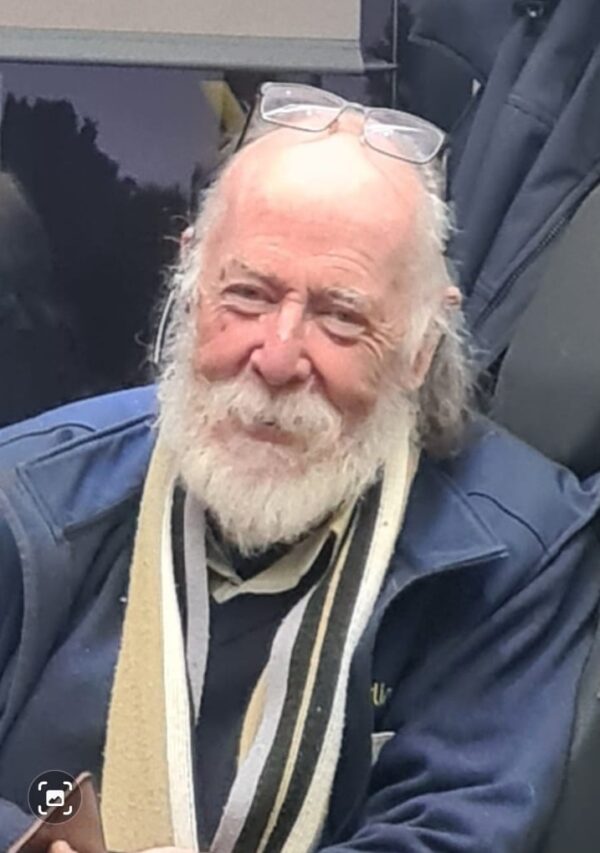
Andi Cockroft, Chair, CORANZ
I asked AI to compile a list of activities suitable for inclusion by CORANZ, here’s what it had to say – I never knew there were so many:
Land-based Outdoor Activities
Walking & Tramping
Day walking (tracks, coastlines, ranges)
Tramping / multi-day hiking
Backcountry hut-to-hut travel
Coastal walking
Alpine walking (non-technical)
Running (Nature-based)
Trail running
Fell running
Backcountry endurance running
Hunting & Gathering
Big game hunting (deer, pig, tahr, chamois)
Small game hunting (rabbit, goat)
Upland bird hunting
Wild food gathering / foraging
Māori customary harvesting (where applicable)
Climbing & Scrambling
Rock climbing (trad & sport)
Bouldering (outdoor)
Scrambling
Alpine climbing (non-expedition)
Water-based Outdoor Activities
Freshwater Fly fishing
Spin fishing
Whitebaiting (seasonal)
Kayaking (rivers, lakes)
Canoeing
Packrafting
Swimming (rivers, lakes)
Coastal & Marin
Shore fishing
Surfcasting
Rock fishing
Kayak fishing
Spearfishing
Snorkelling
Free diving
Swimming (coastal)
Paddleboarding (non-competitive)
Mountain & Snow Activities
Winter Ski touring
Snowshoeing
Backcountry skiing
Alpine touring (non-resort)
Year-round Mountaineering
Glacier travel (guided or unguided)
Cycling (Non-competitive, Outdoors)
Gravel cycling
Backcountry cycling
Bikepacking
Trail cycling (non-park)
Long-distance touring
Wind & Air-assisted (Low-infrastructure)
Paragliding
Hang gliding
Kitesurfing (remote beaches)
Windsurfing (lakes, coast)
Quiet / Observational Activities
Nature photography
Birdwatching
Botanical observation
Landscape sketching
Star-gazing
Bushcraft & outdoor skills
Wilderness navigation
Animal-assisted Outdoors
Horse trekking
Backcountry horse travel
Simple Activities Often Overlooked but Common
Picnicking in natural areas
Beachcombing
Rockpooling
Coastal exploration
Backcountry camping
Freedom camping (where permitted)
Why this list works for CORANZ
These activities:
rely on access, not facilities
are low-impact when well managed
are practised by ordinary New Zealanders, not elites
depend on healthy land and water
are vulnerable to quiet loss of access
They reinforce CORANZ’s message that outdoor recreation is broad, diverse, and culturally embedded, not niche or extreme.