
Time for an Honest Conversation
By Andi Cockroft, Chair, CORANZ
For decades, New Zealand has invested heavily in pest control to protect native forests and wildlife. The scale of that commitment reflects something most New Zealanders agree on: introduced predators do real harm, and doing nothing is not an option. Aerial poisoning using 1080 has become the centrepiece of that effort, supported by substantial public funding and repeated operational campaigns.

It is precisely because the stakes are so high that we should be willing to ask a careful, measured question: is the current approach delivering durable, long-term outcomes - or has it become a system that sustains itself without clearly resolving the problem it exists to address?
For organisations such as the Council of Outdoor Recreation Associations of New Zealand, this is not an abstract debate. Outdoor recreationists are directly affected by pest control policy through access closures, hunting restrictions, food-gathering bans, and exclusion from large areas of public land - often for extended periods and on a recurring basis.
Activity versus outcomes
No one disputes that 1080 operations can produce sharp, short-term reductions in pest numbers. That has been demonstrated repeatedly. What is less clear - and far less openly discussed - is whether repeated applications over many years are reducing overall pest pressure in a lasting way, or whether they are managing symptoms without changing the underlying trajectory.

If a control method is truly effective at a system level, we would expect to see:
- declining frequency of intervention,
- shrinking control footprints,
- easing restrictions on access and hunting,
- and a credible pathway toward reduced dependence on poisoning.
Instead, we see the opposite: ongoing emergency framing, rising budgets, expanding areas under control, and increasing limitations on alternative tools. That does not automatically mean failure - but it does justify scrutiny.
The language of urgency
Terms like “mast year” have become central to how pest control is explained to the public. True mast events are well-documented ecological phenomena, historically episodic and influential in driving rodent population spikes. Yet they now appear to be invoked with growing frequency, sometimes year after year.
This raises an important question of clarity rather than denial: are we seeing genuinely more frequent biological mast events, or has the term broadened into a general explanation for persistent pest pressure in a system already under heavy management? If definitions drift, so too does public confidence.
Clear thresholds, transparent criteria, and consistent long-term data matter. Without them, even legitimate explanations begin to sound like permanent justifications rather than situational responses.
Sustainability in all its forms
Sustainability is not just ecological. A system that relies on continual escalation faces challenges on several fronts:
- Ecological sustainability: repeated knockdowns may suppress populations temporarily without resolving rebound dynamics.
- Social sustainability: communities lose trust when access and hunting are permanently reduced with no visible progress.
- Economic sustainability: rising costs with no defined end-state invite hard questions about value and alternatives.
- Democratic sustainability: when decisions are framed as purely technical necessities, space for legitimate disagreement narrows.
None of these concerns negate conservation goals. They reinforce the need for approaches that endure.
The role of community and alternative tools
One of the most troubling trends is the steady sidelining of complementary tools, particularly recreational hunting and local stewardship. These are not silver bullets, but neither are they negligible. In many contexts they provide ongoing pressure, local knowledge, and public engagement - qualities centralised systems struggle to replicate.
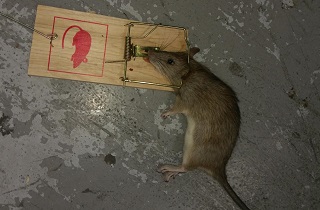
A resilient strategy would integrate tools, not exclude them by default.
A call for transparency, not ideology
Questioning long-term effectiveness is not opposition to conservation. It is an insistence on accountability. If current settings are working, that success should be demonstrable through:
- independent long-term population trends,
- stable or declining intervention frequency,
- and a gradual return of access and community involvement.
If they are not, then adjustment is not heresy - it is responsible governance.
New Zealand’s natural heritage is too important for conversations that stop at funding requests or emergency language. We owe it - and ourselves - a frank, evidence-led discussion about what success actually looks like, and how we know when we are getting there.