A very personal opinion by Andi Cockroft, Chair, CORANZ
From time to time, health headlines remind us that staying mentally sharp into later life isn’t just about luck or genetics. Lifestyle matters. Movement matters. Social connection matters. Learning matters.
What’s often overlooked is how many of these things are already woven into everyday outdoor life - quietly, naturally, and without the need for programmes, apps, or self-improvement regimes.
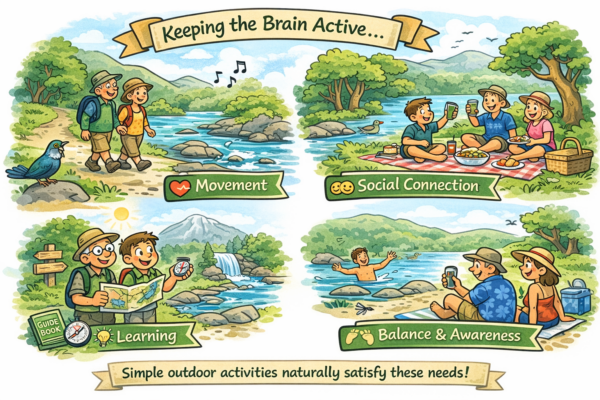
Recent articles about dementia prevention list familiar advice: keep moving, avoid isolation, challenge the brain, manage risk, stay socially connected. Sensible guidance, but often framed as something people must add to already busy lives.
For many New Zealanders, the outdoors already does much of this work for us.
Movement without the gym
Walking a riverbank, swimming in a lake, cycling a quiet road, or wandering a reserve may not feel like “exercise”, but the body doesn’t know the difference. Regular movement - especially when it raises the heart rate slightly and challenges balance - is strongly associated with better long-term brain health.
Outdoor movement has an advantage over structured exercise: people tend to do it for longer, and keep doing it. It’s less about discipline and more about habit.
Social by default
Loneliness is now recognised as a major risk factor for cognitive decline. Yet many outdoor activities are inherently social, even when they’re simple.
A shared picnic, a barbecue by the river, a walk with a neighbour, or a casual swim with friends all involve conversation, awareness of others, and shared experience. These interactions stimulate the brain in ways solitary puzzles and screens don’t.
They also happen without calling themselves “social engagement”.
Learning without pressure
The brain responds best to novelty - new places, new routes, new skills. Outdoor recreation is full of small learning moments: reading the water before swimming, navigating a track, judging weather, noticing seasonal change.
None of this feels like study. But it all builds what researchers call cognitive reserve - the brain’s ability to adapt and cope with age-related change.
Even something as simple as visiting a new reserve or trying a different walking route introduces novelty that matters.
Risk, but managed
Health advice rightly warns about falls and head injuries. The outdoors doesn’t ignore risk - it teaches people to manage it.
Uneven ground, cool water, changing conditions all encourage attentiveness. People move more deliberately. They read their surroundings. Over time, this builds physical awareness and balance, which reduces the very risks health professionals worry about.
Avoiding all risk isn’t the goal; understanding it is.
The bigger picture
What’s striking is that none of this requires people to become someone else. You don’t need to take up extreme sports, buy expensive gear, or adopt a new identity.
You simply need to spend time outside, regularly, in ways that feel normal and enjoyable.
From a public perspective, this matters. Communities where outdoor activity is easy, accessible and socially accepted are likely to be healthier in ways that go well beyond physical fitness.
And that’s where access, water quality, and the protection of everyday outdoor spaces quietly become health issues as much as recreational ones.
Not a prescription - just an observation
This isn’t about promising protection from dementia or offering guarantees. Life doesn’t work that way.
It’s simply an observation: many of the habits associated with long-term brain health align closely with the rhythms of ordinary outdoor life.
Walking, swimming, talking, noticing, learning - not as interventions, but as ways of being.
Sometimes the most effective things we can do for ourselves don’t arrive as instructions. They’re already there, waiting just outside the door.
This is why fishing clubs are so important in the world that is dominated by modern work ethics – I mean the expectation that you will work for your “master” until you drop sort of ethic. Like so many older folk I got the most benefit from hunting, tramping, fishing, outdoor sport and other clubs that got me outside and away from the often toxic social environment of work and sterile gyms. The combination of social contacts and the outdoors that such groups supply is mental health gold.