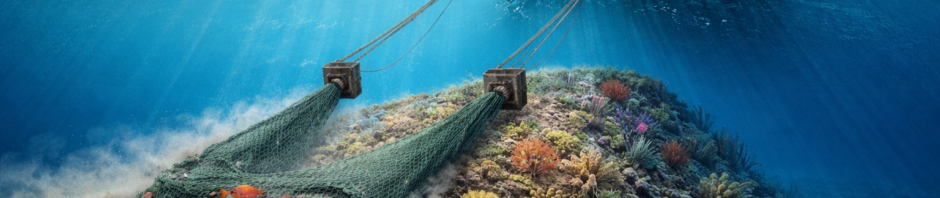
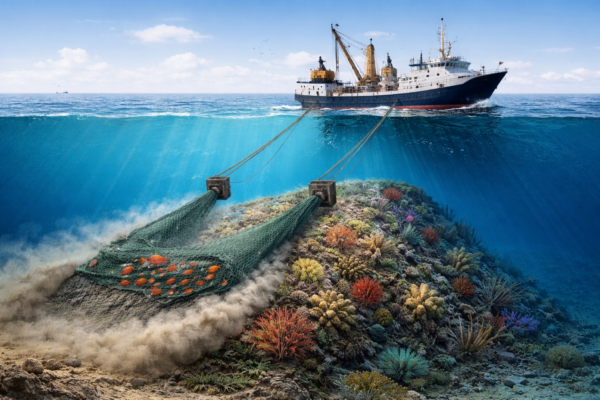
Bottom trawling is a commercial fishing method that involves towing weighted nets along the seafloor to catch species that live close to the bottom, such as hoki, orange roughy, and scampi. It has been used in New Zealand waters for decades and remains an important part of the commercial fishing sector.
At the same time, bottom trawling has become the focus of renewed public attention. Several organisations are currently circulating petitions calling for restrictions or bans on the practice in specific areas of New Zealand’s marine environment.
This article outlines what bottom trawling involves, why it is debated, and what current petitions are seeking - without taking a position.
Why bottom trawling is debated
Supporters of bottom trawling argue that:
- It provides a significant portion of New Zealand’s commercial seafood exports.
- It is regulated under the Quota Management System.
- Catch limits and area restrictions are already in place.
- Improvements in gear and mapping technology have reduced impacts in some areas.
Critics argue that:
- Trawling gear can damage sensitive seabed habitats, including deep-sea corals and sponge fields.
- Some deep-sea ecosystems recover very slowly.
- Certain species associated with trawled habitats are vulnerable or long-lived.
- Additional protections are needed in specific areas.
The debate often centres not on whether fishing should occur, but where and how it should occur.
Current petitions and campaigns
A number of organisations are currently promoting petitions or public campaigns related to bottom trawling.
Deep-sea and seamount protections
Environmental groups, including Greenpeace Aotearoa, have been calling for bans on bottom trawling on seamounts and other deep-sea features. These campaigns focus on protecting fragile coral ecosystems and reducing disturbance in areas considered biologically unique.
Petitions linked to these campaigns typically ask the Government to prohibit bottom trawling in specified deep-sea zones within New Zealand’s Exclusive Economic Zone and, in some cases, advocate for stronger international protections.
Species and habitat concerns
The Endangered Species Foundation has also promoted petitions relating to bottom trawling impacts in sensitive habitats, particularly where fishing overlaps with areas used by protected or vulnerable marine species.
These campaigns often focus on ecosystem protection rather than commercial fisheries management alone.
Hauraki Gulf proposals
In northern New Zealand, bottom-contact fishing methods have been debated in relation to the Hauraki Gulf Marine Park.
Groups including LegaSea have supported proposals to restrict or remove bottom trawling and dredging within the Gulf, particularly in areas considered important for habitat restoration and recreational fisheries.
Public consultation processes relating to the Hauraki Gulf have generated significant engagement, including submissions from commercial, recreational, iwi, environmental, and community stakeholders.
Regulatory context
Bottom trawling in New Zealand is regulated primarily by the Ministry for Primary Industries, which oversees fisheries management under the Fisheries Act.
Current management includes:
- Quota limits for individual species
- Area closures in certain marine reserves and benthic protection areas
- Observer coverage and reporting requirements
- Environmental impact assessments for some fisheries
New Zealand already has a network of “Benthic Protection Areas” that restrict bottom trawling across significant portions of the Exclusive Economic Zone, although debate continues over how effective these protections are in practice.
What this means for recreational interests
For recreational users of marine space - including fishers, paddlers, divers, boaters, and coastal communities - the bottom trawling debate intersects with several themes:
- Marine habitat health
- Access to productive recreational fisheries
- Long-term sustainability
- Shared use of marine environments
- Regional economic impacts
Different recreational groups may hold different views on the appropriate balance between commercial fishing and environmental protection.
A continuing public conversation
The presence of active petitions reflects ongoing public engagement with marine management in New Zealand. Fisheries policy, marine conservation, and economic sustainability remain areas of active discussion and consultation.
For those interested in the topic, official consultation documents, regulatory frameworks, and campaign materials are publicly available through government and advocacy organisation websites.
As with many marine issues, the debate over bottom trawling is not static. It evolves alongside scientific research, regulatory review, court decisions, and public input.
A Few Links to Consider:
https://action.greenpeace.org.nz/petition/ban-bottom-trawling?utm_source=chatgpt.com
https://action.greenpeace.org.nz/petition/ban-bottom-trawling-hauraki-gulf?utm_source=chatgpt.com
https://haurakigulfalliance.nz/take-action/
https://www.change.org/p/ban-bottom-trawling-protect-nz-s-oceans-before-it-s-too-late
In my opinion bottom trawling does so much damage, there are other successful methods that the pros can use, this is a practice that should be
Absence of bottom trawling/dredging in Marlborough Sounds has worked wonders.
Ban bottom trawling
Ban nets that don’t allow smaller fish out of nets
Ban scallop drenches
Make a coastal limit of 8 km for trawlers