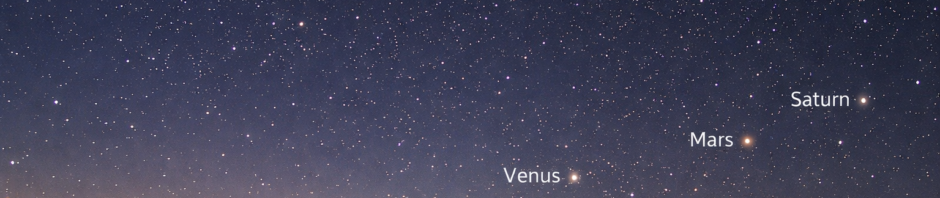
Six planets will line up in our twilight sky this weekend.
No tickets.
No bookings.
No equipment required beyond your own eyes - though binoculars help.
Mercury, Venus, Saturn and Jupiter should be visible to the naked eye. Uranus and Neptune will require optical aid. The best time to look is shortly after sunset or just before sunrise, when the sky is dark enough for contrast but the planets are still high enough above the horizon to clear the haze.
That is the science.
Here is the opportunity.
In a country rich in coastline, hilltops and open horizons, we sometimes forget that night use is still outdoor recreation. We talk about rivers, tracks and fisheries. We talk about access and stewardship. But the sky remains the most universal public resource we have.
And it costs nothing.
What You’re Likely to See
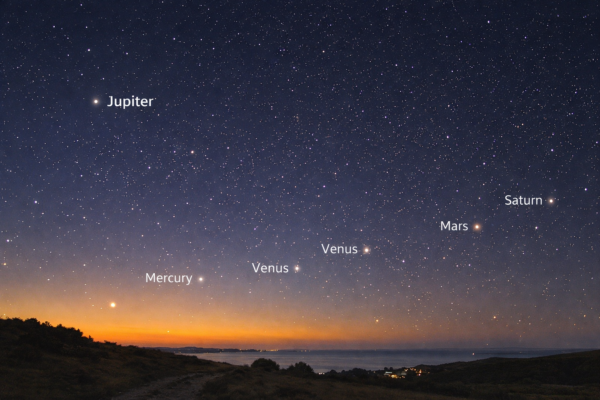
Venus will be the easiest - bright, steady, unmistakable.
Jupiter will sit higher and shine clean and white.
Saturn appears more golden.
Mercury will be low and harder to spot, closer to the horizon glow.
You will not see them perfectly aligned like beads on a string. They will stretch along the ecliptic - the path the Sun traces across our sky. But to the eye, they will form a loose arc that feels deliberate.
That alone is worth stepping outside for.
Where to Go
Avoid heavy city lighting if you can. A beach, a rural road pull-off, a hill above town, or even a darkened park will improve contrast.
You do not need wilderness. You need horizon.
Take a warm layer. Bring a torch - preferably with a red filter if you have one - and respect private land boundaries. If using a roadside turnout, park safely and visibly.
Competence still applies at night.
Does It Matter?
This is not about rare spectacle alone. Planetary alignments occur periodically. What is rarer is the decision to pause and look up.
Outdoor recreation is not always exertion. It is not always policy debate or conservation conflict. Sometimes it is simple observation.
Standing under a clear sky recalibrates scale. The concerns of the day shrink slightly. Perspective widens. That effect is not romantic - it is measurable. Time outdoors, especially in low-light natural settings, reduces stress markers and restores attention.
For families, it becomes shared memory. For young people saturated with screens, it is a reminder that not all light comes from devices.
The Sky Is Still Public
We often speak about access to land and water. Dark skies deserve similar attention. Light pollution grows quietly. Good viewing requires restraint - sensible lighting, downward-facing fixtures, and conscious design.
But tonight does not require policy.
It requires stepping outside.
If clouds allow, look west after sunset. Let your eyes adjust. Give it ten minutes.
You may see four planets easily. You may see six if equipped.
Or you may simply see a darker sky than usual and remember that not all recreation is complicated.
Sometimes it is enough to stand still and notice that we are not alone in the universe.
Why not do that tonight?
Bloody rain
Beaut night in Wellington, got to see 3 and possibly 4
Cloudy and spitting.