
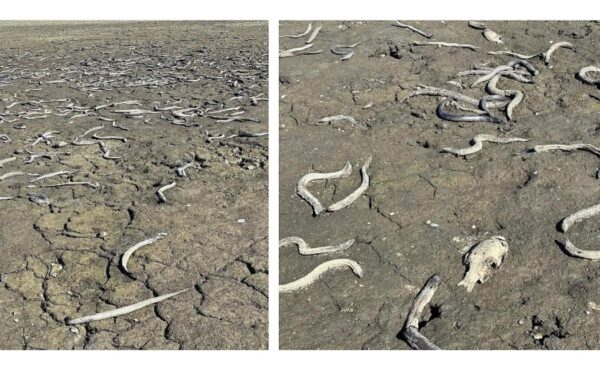
Reports from Radio New Zealand describe a confronting scene at Pukepuke Lagoon in Manawatū, where thousands of eels and other aquatic life were found dead or dying on an exposed lakebed. The lagoon has been known to recede during dry periods, but local accounts suggest nothing on this scale has been seen before. The immediate response has been to identify possible causes, including groundwater extraction, drainage systems, and weather extremes. That may be necessary, but it does not yet explain why the system failed in this way.
What has changed is not simply water level at a single point in time, but the long-term condition of the lagoon itself. Historical records indicate it has reduced from around 162 hectares to roughly 15 hectares over the past century. That contraction reflects cumulative decisions about land use, drainage, and water management. Individually, these changes may have appeared manageable. Taken together, they have reduced the system’s capacity to absorb stress.
This is how systems behave when margins are lost. For long periods, conditions can appear stable, even as underlying resilience declines. Water levels fluctuate, species adapt, and the system continues to function. Then a combination of pressures aligns - reduced inflows, sustained extraction, dry conditions - and the remaining buffer is no longer sufficient. What follows appears sudden, but it is the result of long accumulation.
There is a tendency to treat events like this as isolated incidents requiring investigation and remediation. That approach is understandable, but it risks narrowing the focus to immediate triggers. Freshwater systems do not respond to single inputs. They reflect the interaction of multiple pressures over time, many of which sit outside the immediate site. Addressing one factor alone may not restore the broader balance.
Water quantity is central to this. Much of the national discussion focuses on water quality, but ecosystems depend equally on the presence, movement, and retention of water. When volumes fall below critical levels, the system cannot function regardless of nutrient levels or clarity. In such conditions, outcomes are determined not by one variable, but by the cumulative effect of all of them.
The principle is straightforward. Freshwater bodies are shaped by long-term use, and their condition reflects how much margin remains within the system. Once that margin is reduced, resilience declines and outcomes become less predictable. Events that appear exceptional become more likely.
This is not about whether the lagoon still exists. It is about whether it continues to function as a living system.
I know the area well. It seems incredible and this summer has been wetter than normal?
The lagoon situation is nation wide. Check out the Wainono and Washdyke lagoons in South Canterbury. Both were major food sources to locals, Maori and Pakeha, until irrigation became an ecocide pandemic. Both are just puddles today.