Guest Post by Dave Rhodes
As a child I remember Julie Andrews staring as Mary Poppins singling “Feed the birds tuppence a bag” a most endearing song that I remember well. I can still hear it echoing through my memories from decades ago.
However, guidance now highlights a change in approach at places such as Western Springs Park, where visitors are now discouraged from feeding birds. The reasons given include declining water quality, increased disease risk, and changes in bird behaviour. For many, feeding birds has long been seen as harmless, even beneficial. The shift away from it reflects a broader issue.
What changes is not simply the presence of food, but how that food alters the system. Artificial feeding introduces a consistent and concentrated food source into an environment that would otherwise fluctuate naturally. This can increase local bird populations, change movement patterns, and lead to higher concentrations of waste and nutrients in confined areas. Taken together, a simple action becomes a sustained input.
The effects extend beyond the birds themselves. Uneaten food breaks down in water, affecting quality and increasing the likelihood of disease. Concentrations of birds can attract other species, including rodents, altering predator-prey dynamics around nests and feeding areas. These responses are not isolated, and they develop over time rather than appearing immediately.
The same principle appears in other settings. Around airports, feeding birds is discouraged not for ecological reasons, but for safety. Increased bird activity near flight paths introduces risk, even where the action itself appears minor. The setting differs, but the mechanism is the same: behaviour changes in response to a new and predictable food source.
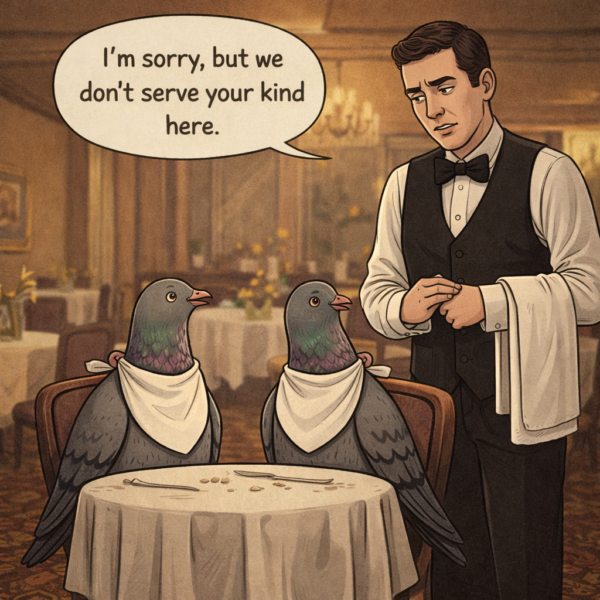
There is often a view that feeding can be made acceptable by using more appropriate food such as grains or seed rather than bread. While this may reduce direct health impacts, it does not remove the wider effects. Regular feeding still concentrates birds, alters behaviour, and adds nutrients to the environment. Changing the food does not remove the intervention.
In other contexts, feeding birds can serve a different purpose. In colder climates, particularly through winter, supplementary feeding using appropriate food such as grains or animal fats can support survival when natural food sources are limited. Parts of southern New Zealand are not dissimilar in climate to northern England, where such practices are common. The outcome reflects the conditions of the environment.
The principle is straightforward. The setting changes the effect, but introducing food alters behaviour and system balance in all cases. This is not about whether feeding birds is right or wrong. It is about recognising how small actions carry through the wider system.