Inspired by research undertaken by Dr Peter Trolove, immediate past president NZFFA
A recent Canadian review of pesticide regulation highlights a gap that is not unique to Canada. The system evaluates individual chemical components, while real-world use involves complex mixtures applied across landscapes. The distinction is technical, but it has practical consequences for how environmental and health risks are understood. The surface narrative is one of controlled and assessed use, but the underlying question is whether what is assessed reflects what is actually present in the environment.
What changes in this case is not the presence of regulation, but its focus. Assessment frameworks centre on declared “active” ingredients, even though products used in the field contain additional compounds that influence behaviour, persistence, and toxicity. Data on full formulations, usage volumes, and environmental distribution is often incomplete or difficult to access. Taken together, this creates a system where the measurable component is well understood, while the complete exposure picture remains partial.
This shifts how risk is interpreted. When evaluation is based on simplified inputs, conclusions may not fully reflect cumulative or combined effects. Environmental systems do not respond to single variables in isolation. Rivers, soils, and coastal waters receive mixtures over time, influenced by weather, land use, and repeated application. A framework that isolates individual components may provide clarity in process, but it can reduce visibility of broader system effects.
This pattern is not confined to one jurisdiction. Risk-based regulatory models are widely used, including in New Zealand, and rely on thresholds of “acceptable risk” under defined conditions. That approach has practical advantages, but it also depends heavily on the quality and completeness of underlying data. Where monitoring is limited, or where access to detailed information is constrained, confidence in outcomes becomes more difficult to sustain.
The wider implication is one of alignment. Environmental management depends not only on rules, but on how closely those rules reflect real-world conditions. Systems that prioritise what is easiest to measure can drift away from what is most relevant to ecological integrity. Transparency, independent data, and site-specific understanding are not optional extras; they are part of the regulatory foundation.
This is not a question of whether chemicals should be used, or whether regulation is necessary. It is about whether the framework assessing those chemicals captures the conditions in which they are actually applied. The issue is not the presence of rules, but whether those rules are matched to reality.
Download the Canadian research paper (PDF) here
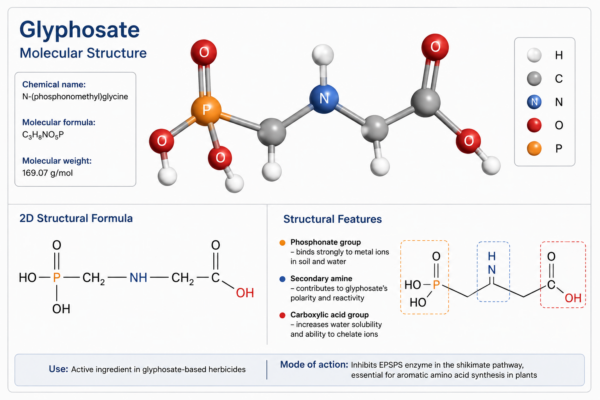
So, glyphosate as used in NZ may be actually far more toxic when mixed with other ingredients than when tested solo?
If so, it raises all manner of questions about the incessant spraying along margins of water bodies.
My interest in glyphosate was piqued after observing ECan annually defoliate the Lower Rakaia River fairways with high, verging on “off label”, concentrations of the herbicide mixed with known toxic POEA wetting agents. [Informed by LGOIMA requests]
Along with excess water abstraction for irrigation, defoliating habitat supposedly protected by the Rakaia River National Water Conservation was a concern especially in light of declining populations of the recreational and native fish that were the reason the Acclimatization societies fought so hard for the RWCO in the first place.
Dr Martin Unwin identified that terrestrial insects form an important part of the diet of juvenile salmon as they grow and migrate down the Rakaia River braids.
Glyphosate wipes out about 40% of soil ecology.
While for me fish are of at least as important as Public Health, my background reading alerted me to the link between personal friends and farmer clients who have developed Non-Hodgkin lymphoma and/or motor neuron disease.
The paper Andi based his article on alludes to the fact that governments and the giant agri-chemical companies collude in order to promote the use of herbicides despite known public health risks.
US Agricultural investigative journalist Cory Gillam has published two books on the subject “Whitewash” and “The Monsanto Papers” which are in my collection. (2).
The New Zealand EPA uses its “risk assessments” in a similar manner to Canada and the US balancing health risks against economic interests of the agricultural sector .
It is hard to accept that the environment, i.e. aquatic ecosystems are viewed in such a cavalier fashion by the Canterbury Regional Council, even harder to accept the NZEPA chooses to ignore the IARAC finding that glyphosate is a probable cause of cancer. (1)
References
1. https://nzmj.org.nz/media/pages/journal/vol-131-no-1472/carcinogenicity-ofglyphosate-why-isnewzealand-sepalostin-the-weeds/87fb5826be-1696475516/carcinogenicity-ofglyphosate-why-isnewzealand-sepalostin-the-weeds.pdf
2. https://en.wikipedia.org/wiki/Whitewash_(book)