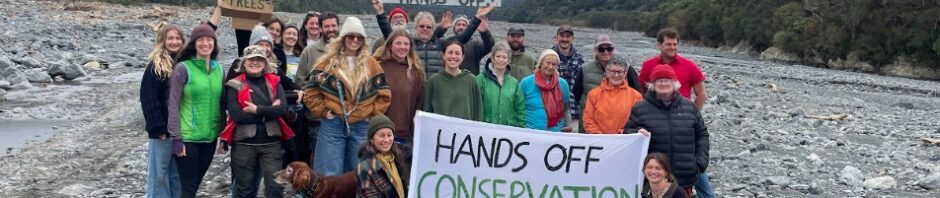
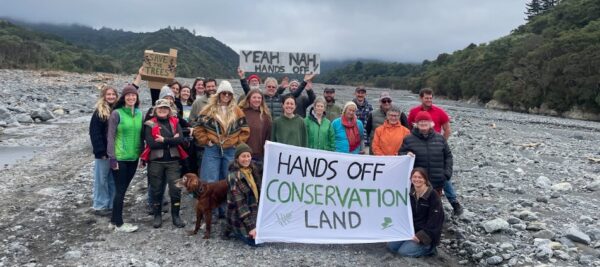
Recent emails and public demonstrations organised by Greenpeace show that concern about the Conservation Amendment Bill remains strong. Protesters gathered throughout New Zealand under banners calling for the Bill to be scrapped, arguing that it threatens public conservation land and represents a broader “war on nature”.
Public engagement in conservation is healthy. New Zealand’s conservation estate exists because generations of New Zealanders have valued it, supported it through taxation, and expected governments to protect it for future generations. Public scrutiny of legislation affecting that estate is therefore entirely appropriate.
However, there is also value in stepping back from the slogans.
Since the Bill was first introduced, the Government has already withdrawn some of its most controversial proposals, including provisions relating to the sale and exchange of conservation land. That was a significant change, and one that followed widespread public submissions and political debate. Whatever one’s view of the Government or the legislation, it demonstrated that public participation can influence the legislative process.
That leaves an important question.
If some of the most contentious proposals have been removed, what exactly remains?
The current Bill still contains significant changes. It proposes a stronger emphasis on recognising economic opportunities associated with conservation land, new approaches to concessions and commercial activities, visitor charging for some international tourists, and other administrative reforms. These are substantial policy questions worthy of careful examination.
Reasonable people will differ on whether those changes are appropriate. Some see them as modernising conservation management, while others fear they may gradually shift the balance away from conservation towards commercial development.
Those issues deserve thoughtful discussion.
What deserves equal attention, however, is ensuring that debate remains focused on the legislation itself rather than broad campaign slogans. Describing every proposal as either saving nature or destroying it risks oversimplifying legislation that runs to many clauses with very different purposes and effects.
The Conservation Amendment Bill is no longer the Bill originally introduced. Nor is it necessarily the Bill that will ultimately become law. Parliamentary scrutiny, select committee processes and public submissions exist precisely so legislation can be tested, amended and improved before its final passage.
That process has already changed this Bill once.
It may yet change it again.
For organisations such as CORANZ, the challenge is not to choose between government and campaign groups, but to examine each remaining proposal on its merits. Public access, conservation outcomes, recreational opportunities, commercial concessions and environmental stewardship all deserve careful consideration. Some provisions may warrant support. Others may warrant amendment. Some may deserve continued opposition.
Good legislation is rarely judged by its slogans.
It is judged by its detail.
As this Bill continues through Parliament, New Zealanders would be well served by looking beyond the campaign banners and asking a simpler question:
What does each remaining clause actually do, and will it leave our conservation estate stronger for future generations?
This is great to see, we need a lot more of associations, organisations, clubs etc doing the same, a rolling stone gathers the moss, the louder we are the more attention we get.
It is the old Devil lies in the Detail approach that needs to be aware of. Great points raised and hopefully widely read.