
The Department of Conservation’s aerial 1080 poisoning of public lands with alpine habitat is not saving New Zealand’s famed mountain parrot, the kea, says a Christchurch based scientist, Dr Jo Pollard (BSc (Honours), PhD) (Zoology).
Absolute Protection?
“One of Earth’s smartest creatures is being lost to poison, despite legally having Absolute Protection,” Dr Pollard said. “For the last few decades, local kea numbers have been notably shrinking, especially in the east and north of the South Island. There is little information on the total number of kea remaining, with estimates as low as 1000 having been made for a long time.”
The poison toll
A major factor behind the kea’s rapid decline from being a species of “least concern” (in 1988) to “endangered” (in 2017) is obvious, said Dr Pollard. In 1963 it was noted that the government’s aerial spreading of 1080 poison to control pests was killing kea. When the Department of Conservation (DOC) began monitoring in 2008, in South Westland, 7 of the 17 kea being monitored were poisoned which indicated that 41 percent of the local kea had died in just one poison drop. In subsequent years, monitored kea deaths from poisoning have included 50% at Matukituki near Wanaka and 50% at Fiordland’s remote Wet Jacket Peninsula (2020); and 22% at Arthurs Pass and 29% at Otira-Taipo (2022).
“Kea are slow breeders that take years to mature and find a mate, and don’t breed every year, so have little capacity to withstand being by-kill in NZ’s repeated poisoning regime,” said Dr Pollard.
Science?
DOC claims kea benefit from poison. “Ironically, the department’s own monitoring shows otherwise”’ says Dr Pollard, who has published a critique of DOC’s evidence.
“There is no scientifically obtained evidence that supports poisoning kea to improve their reproduction, as is claimed. Studies have found remarkably little evidence of nest predation by mammals, given the opportunities created by monitoring.”
Dr Pollard was critical of the Department of Conservation’s science which she said regarding kea involved “unashamedly biased research” and “poor scientific rigour”.
Cruelty
The poison is also cruel, with effects including prolonged, extreme muscle spasms before death. Survivors may be disabled, have reduced fertility or deformed offspring.
Raising awareness
Unless people do something NOW, the kea will be lost, says Dr Pollard. “DOC is still poisoning furiously, blindly trying to “fix” nature but ending up with more rats, which it then poisons; while TbFree has an extreme poisoning plan aiming to cull wild mammals across vast, continuous swathes of land, in case the animals are carrying bovine Tb.”
“Effects of the poisoning on most native creatures have long been overlooked, but you might hope the imminent extinction of kea will give pause for thought.”
Act now
Dr Pollard says people can help save kea now – by reading the evidence against DOC’s killing of kea and acting to raise awareness of the issue.
– https://1080science.co.nz/kea-index/
Footnote:-The information is at this link along with a flier designed for stuffing letterboxes and an easy link for people to use to contact their MP regarding kea.
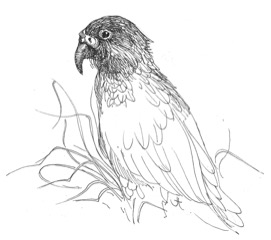
It’s not just coincidence that keas were so numerous over a century or so of high country farming merinos that a bounty was on their heads for killing sheep by pecking through for kidney fat.,
But in last 25 years or a bit more, keas have declined alarmingly.
The Department of Conservation was formed about 1987 and soon swung it’s 1080 programme into action.
Coincidence or not?
Amazing isn’t it. DOC’s own monitoring shows kea being killed by their poison drops – yet they claim 1080 helps kea. Another example of Hitler’s line, “The broad mass of a nation will sooner fall victim to a big lie than a small one”.
Where is the science that says kea are unaffected by 1080? The whole issue of 1080 needs an independant enquiry.
Kea being bombed with a grain based pellet poison bait ! Is asking for trouble , even someone with only “half a Brain” could work that one out ?
Give Polly another 1080 CRACKER ?