Guest Post By Dave Rhodes - Opinion
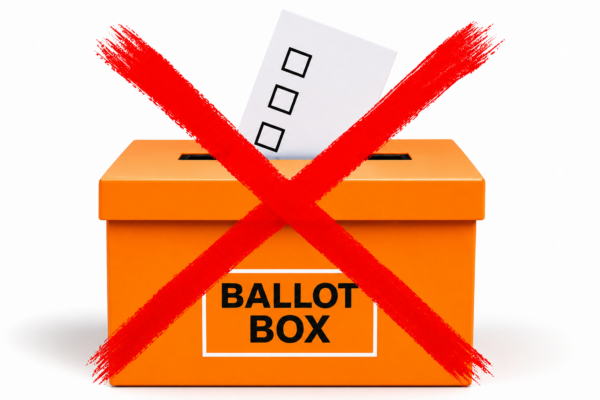
Yesterday, New Zealand went to the polls. I didn’t. Not because I forgot, couldn’t be bothered, or failed to appreciate the privilege of living in a democracy. Quite the opposite. I considered the choices carefully and concluded that exercising my democratic right not to vote was preferable to endorsing someone I didn’t particularly want governing me.
I started with Labour. Chris Hipkins remains, in my mind, inseparable from the COVID years. Families kept apart, New Zealanders stranded overseas, elderly people dying without loved ones beside them, and a government that repeatedly told us to be kind while imposing restrictions that many found anything but kind. Whatever the justifications, I have never been satisfied with the accountability for those decisions or their economic consequences. Hipkins may have moved on. I haven’t.
The Greens were next. I remember when green politics meant protecting rivers, forests and the natural environment. These days I see a party increasingly preoccupied with wealth redistribution and taxation. I have never understood the economic wisdom of discouraging success and investment, particularly when New Zealand desperately needs both. Te Pāti Māori offers another philosophy I cannot embrace. I favour equality and national unity, while I see its political approach as emphasising differences between New Zealanders. Its internal disagreements hardly inspire additional confidence.
The Opportunities Party advertises itself as a centrist alternative, although much of its economic philosophy appears rather further left to me. Its history of internal upheaval doesn’t help. As for the smaller parties, I could probably find one whose policies appealed to me, but under MMP a party vote for one that wins neither an electorate nor five percent contributes nothing to the allocation of parliamentary seats. I could spend an afternoon finding the perfect political home, only to discover it has no seats.
Then there’s National. Christopher Luxon’s campaign left me wondering whether Labour’s best strategy was simply to remain quiet and watch. Napoleon is credited with advising against interrupting an enemy making a mistake. National’s continued commitment to carbon pricing and international climate obligations leaves me concerned about household costs, while its environmental history troubles me for different reasons. From the removal of Environment Canterbury’s elected councillors in 2010 to intensive dairying, expanding pine plantations and fast-track consenting, I see too much emphasis on development and too little on environmental safeguards and public accountability.
New Zealand First? I have a long memory. Winston Peters’ decision to install Jacinda Ardern’s Labour government in 2017 remains something I cannot forgive politically. Nor am I impressed by what I perceive as NZ First’s contribution to the latest government. Shane Jones’s approach to fisheries and mining, coupled with his previous commercial fishing connections, raises questions for me about whose interests receive the greatest consideration. Public resources deserve public accountability.
That leaves ACT, probably the closest I came to finding a party I could support. Its emphasis on individual freedom, smaller government and equality before the law appeals to me. Yet I remain disappointed by what I see as limited progress on those promises, while its approach to carbon pricing and international climate commitments leaves me unconvinced. So near, and yet not quite near enough.
Beyond the parties lies something more troubling. Governments of both political persuasions have become comfortable using parliamentary urgency, sometimes avoiding or shortening public scrutiny. Even select committees can leave ordinary submitters with precious little opportunity to explain their concerns. Meanwhile, those with resources and established political connections seem better placed to make themselves heard. We are encouraged to participate enthusiastically in choosing our governments, but participation in their subsequent decisions can be considerably less welcome.
I don’t suggest everyone should follow my example. Voting is a democratic right, and so is choosing not to vote. I respect those who made their choices yesterday, even where I disagree with them.
As for me, I looked across the political landscape, considered the alternatives, and decided to stay home.
At least nobody can accuse me of voting for the wrong party.
As you say Dave, whether to vote is a decision for each person to make.
Probably many people who voted found it hard to settle on a party that might deal with more than a few important issues satisfactorily (and political promises never seem to be kept anyway).
Whatever happens from now on, it is a safe bet the environment will be lucky to be protected. Get out and enjoy the outdoors while you can but keep pressure on the politicians too.
Well Dave I don’t agree with wimping out by not voting. I think voting should be compulsory.
Your summation on individual parties however I agree with. No party inspires me and we’ve ended up with more MPs than ever -130- when a much supported argument is to reduce the number of MPs to 100. What a waste of public money!
Yes 130 lame ducks to feed. Must admit not sad to see Brownlee out of office, he and Mallard between them have contributed to a huge reduction in Parliamentary standards – particularly behaviour and dress codes. Nicola Willis, Chris Bishop, Paul Goldsmith all gone it seems. Other parties are not immune with Arbuckle, Davidson and Cameron likely to be absent. And those expelled Te Pati now Independents Tākuta Ferris and Mariameno Kapa-Kingi never really stood a chance.
Opportunities appear to have got in but I was never going to support them. So just who would I have given a vote to had I voted – Outdoors may be the only one but far too vague on fiscal policy to trust with my household budget problems. That basically left nobody – so that’s what I did – a vote for the Nobody Party.
…and had voting been mandatory a simply spoiled ballot paper achieves the same result.
The media have confused and twisted an already stuffed political arena, Labour worried me the most, co governance, funding gangs and the covid lies, the Greens and Clohe going to financially save NZ, Close has failed in all of her business attempts, and they also love gangs.
Not much left, but if one doesn’t vote, then you have no right to complain.