Footwear trends come and go.
Minimalist.
Max-cushion.
Barefoot.
Carbon-plated.
Marketing language changes quickly. Terrain does not.
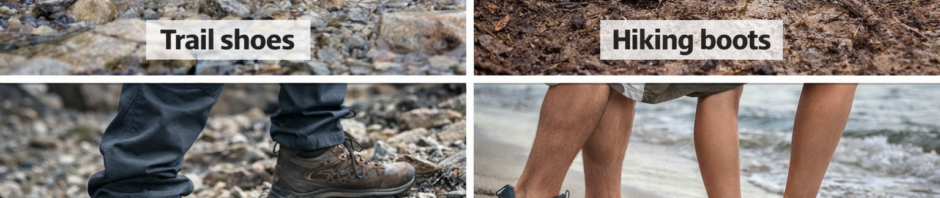
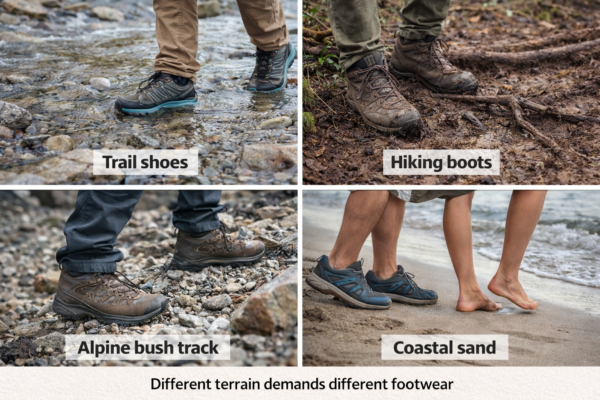
Outdoor recreation in New Zealand spans riverbeds, alpine scree, muddy bush tracks, coastal sand and rocky headlands. No single shoe excels in all of them.
Skill and judgment are essential - and that includes what you put on your feet.
Terrain First, Brand Second
The right question is not “What’s fashionable?”
It is “Where am I going?”
Riverbeds and braided rivers
Grip and drainage matter. Smooth soles on wet stones invite slips. Lightweight footwear that sheds water quickly can reduce fatigue.
Muddy bush tracks
Aggressive tread patterns and lateral stability help prevent sideways movement on greasy clay or root systems.
Alpine terrain and scree
Underfoot protection and edging stability matter more than softness. Rolling an ankle high above the bushline is not a minor inconvenience.
Coastal walking and sand
Flexibility and breathability often outweigh heavy support.
Site-specific realities matter.
Load Changes the Equation
A short day walk with a light pack is very different from:
- Carrying 15–20kg overnight.
- Hauling equipment or game.
- Multi-day tramping.
As load increases, ankle stability and midsole structure become more relevant.
Lightweight trail shoes are popular - and for many conditions, effective - but they demand good foot strength and careful foot placement.
Boots do not prevent poor judgment.
But under heavy load, they can provide useful support.
The Barefoot Question
There is growing interest in minimalist and barefoot-style footwear.
Stronger intrinsic foot muscles and improved proprioception are often cited benefits.
But adaptation takes time.
Switching abruptly to minimalist shoes on demanding terrain increases injury risk.
If transitioning, do so gradually and match terrain to experience.
Risk cannot be eliminated, only managed.
Fit Is More Important Than Fashion
The most expensive boot is not the best boot.
What matters:
- Proper fit (no heel lift, adequate toe room).
- Compatibility with sock choice.
- Realistic break-in before longer trips.
- Suitability for the intended terrain.
Blisters and black toenails are rarely caused by ideology. They are caused by poor fit and poor preparation.
Weather and Conditions Matter
Wet grass, frozen ground, summer heat and river crossings all change footwear demands.
A trip planned in dry conditions may shift if weather turns.
Carry spare socks.
Plan for wet feet in river country.
Avoid cotton.
Preparation reduces small problems becoming large ones.
A Practical Rule
If you cannot comfortably stand on uneven ground for extended periods in your chosen footwear, it is unlikely to improve on the third hour of a walk.
Test locally before committing to longer routes.
Competence builds from practice, not purchase.
Sidebar: Five Footwear Mistakes That Cause Most Outdoor Injuries
1. Choosing for Looks Instead of Terrain
Urban styling rarely translates well to wet rock or clay tracks.
2. Ignoring Load
Shoes that feel fine under a light day pack may feel unstable under overnight weight.
3. Skipping Break-In Time
New boots on a multi-day trip is a common and preventable mistake.
4. Sudden Switch to Minimalist Footwear
Foot strength adapts slowly. Transition gradually.
5. Poor Sock Selection
Moisture management matters. Friction causes blisters more than distance does.
Outdoor recreation is not about owning more gear.
It is about matching equipment to conditions.
Footwear is not fashion.
It is judgment made visible.