
Sketching outdoors is the practice of drawing places, objects, people, or scenes on location, using simple materials such as pencil, pen, or watercolour. In New Zealand it is commonly done in parks, reserves, along waterfronts, in towns, and at familiar local places rather than in remote or dramatic settings.
For many people, sketching is not about producing finished artwork, but about slowing down and noticing.
How people actually do it
Most outdoor sketching is:
- Short sessions rather than long outings
- Done sitting or standing in one place
- Focused on observation rather than accuracy
- Often repeated at the same locations
People commonly sketch:
- During walks or outings
- While waiting or resting
- Alone or alongside others
- In everyday clothing, with minimal equipment
A sketch may take five minutes or an hour. Both are normal.
Where it happens
Outdoor sketching commonly takes place:
- In parks and reserves
- Along waterfronts and harbours
- In town centres and streets
- At beaches and river edges
- In gardens, cemeteries, and quiet corners
Suitable places are usually chosen for:
- Comfort and shelter
- A place to sit or lean
- Interesting detail rather than spectacle
- Ease of access
These are often the same places people already walk through without stopping.
Access realities
Sketching relies on:
- Open public space
- The ability to stop and linger
- Seating, steps, or low walls
- Feeling welcome to stay without explanation
When public spaces become places people only pass through, sketching - like photography or bird watching - becomes harder to practise.
Shared use
Sketching areas are typically shared with:
- Walkers and passers-by
- People sitting or eating nearby
- Families and children
Because sketching is quiet and contained, it usually coexists easily with other uses. Most interaction is brief and friendly, if it happens at all.
Who this suits
Outdoor sketching suits:
- People of all ages
- Beginners and experienced artists
- Those who prefer quiet activity
- People with limited mobility or energy
- Anyone wanting a reason to stop and look
Many people sketch casually for years without identifying as “artists”.
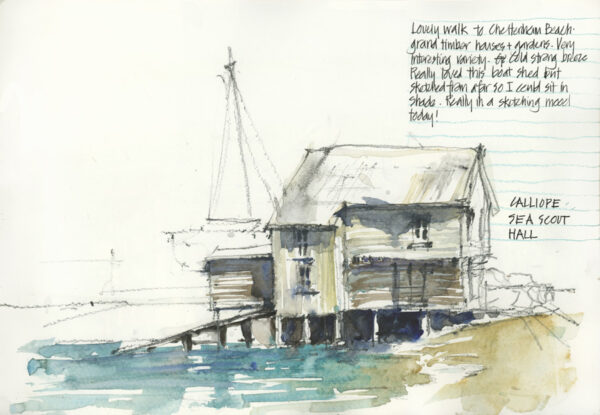
Learning and getting started
Some people teach themselves through practice and observation. Others enjoy learning alongside others.
In New Zealand, many people begin or develop sketching skills through:
- Community education and night-school classes
- Council or community-run art programmes
- Local sketch groups that meet in public places
These classes are often:
- Free or very low cost
- Short and informal
- Welcoming to complete beginners
They can provide confidence and basic skills without turning sketching into a formal commitment.