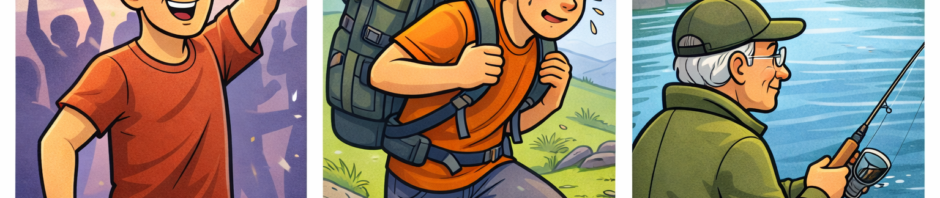
Maybe The Outdoors Is Part of the Answer.
Guest Post by Dave Rhodes
A recent RNZ article here suggests what many already suspect: the 40s can feel more exhausting than the 20s - not because we are “old,” but because small biological shifts collide with peak life demand.
Muscle mass declines unless maintained.
Sleep becomes lighter.
Recovery costs more.
Cognitive load peaks.
At exactly the same time, work and family responsibilities are often at their highest.
This is not a personal failing. It is a structural phase of life.
Outdoor recreation has a quiet role to play here.
Muscle Is Not Optional
The science is straightforward. Muscle tissue regulates energy use. It supports metabolic health. It lowers the cost of everyday movement.
Strength training is often recommended clinically.
But New Zealand’s outdoor culture has long provided functional strength without branding it as such.
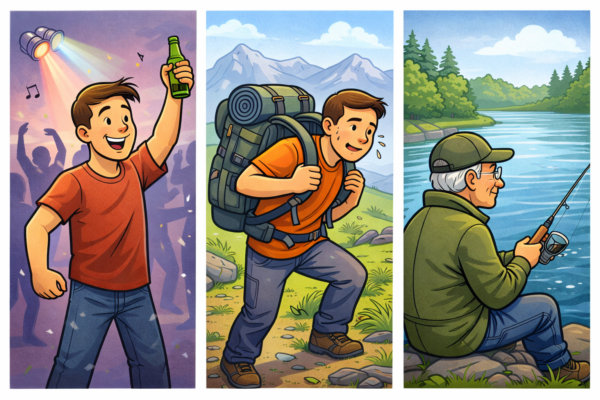
Carrying a pack.
Launching a boat.
Walking uneven river margins.
Dragging a dinghy up the beach.
These are not extreme pursuits. They are sustained, practical resistance training embedded in recreation.
Skill and judgment are essential. So is physical capacity.
Outdoor participation maintains both.
Cognitive Load Needs a Physical Counterbalance
The article highlights midlife as a period of maximum cognitive load - planning, leadership, caregiving, decision-making.
Mental labour drains energy as effectively as physical work.
Outdoor recreation interrupts that cycle.
When attention narrows to:
- Reading a current seam while fishing,
- Placing a careful footstep on a descent,
- Watching wind patterns before casting off,
The prefrontal cortex rests. Vigilance shifts from abstract to immediate.
That reset is not indulgence. It is neurological balance.
Access Matters Most in Midlife
Time becomes scarce in the 40s and 50s.
If local tracks close, if river margins narrow, if peri-urban access erodes, the ability to “get out” shrinks dramatically.
Midlife is when access is most fragile in practice.
Public resource, public responsibility.
Outdoor recreation close to home is not a luxury amenity. It is practical wellbeing infrastructure.
Later Life Is Not the End of Energy
The article makes an important point: energy does not simply decline. It changes.
Muscle adapts at 60, 70 and beyond. Strength training works later in life.
Outdoor recreation scales.
The summit may change. The distance may shorten. The pace may adjust.
Competence often deepens as intensity moderates.
Fishing knowledge accumulates. Navigation skill matures. Risk assessment sharpens.
Energy becomes predictable rather than explosive.
That is not decline. It is evolution.
Avoid the Medicalisation of Movement
There is a tendency to turn midlife fatigue into a clinical project.
Prescriptions. Programmes. Supplements.
Outdoor recreation remains:
- Voluntary
- Community-based
- Low cost
- Self-directed
Regulation should not replace competence.
Encouragement should not become prescription.
The culture of going outdoors - regularly, competently, modestly - may be one of the most durable responses to midlife fatigue available.
Energy Shifts. Access Must Not.
If biological efficiency changes in midlife, access to outdoor space becomes more important, not less.
We cannot assume 20-year-old resilience.
We can maintain 40-year-old strength.
We can sustain 60-year-old capability.
But only if public rivers, forests and coasts remain available.
Rivers first.
Access matters.
Skill sustains energy.
Midlife may feel harder.
The outdoors is part of the answer.