by Tony Orman
At times, much current discussion in the politics of fishing and hunting can revolve around the future administration for the public’s recreational hunting and/or fishing and the concept of reform and setting up a statutory body. Currently the coalition government is set to “reform” Fish and Game.
Quite a few years ago, Governments looked at a statutory body controlling recreational sea fishing. The Fisheries Act requires management to have equal regard for not only economic i.e. commercial, but social and cultural ie recreational and customary.
Although one could be forgiven into assuming Minister of Oceans and Fisheries Shane Jones doesn’t understand the phrase “equal regard.”
In advocating a statutory body, in the past speakers and writers have referred to Fish and Game as a model to follow. Therein lay a flaw.
The fish and game councils which make up Fish and Game New Zealand were established under the Conservation Act 1987 to manage and enhance the sports fish and game resource in New Zealand in the recreational interests of anglers and hunters. Fish and game councils replaced the former acclimatisation societies formed by the early European colonists in the 1860s to introduce and acclimatise suitable animals and plants.
Today there are 12 regional fish and game councils and a national New Zealand council. “The role of the regional councils is to manage, enhance and maintain sports fish and game in that region. The role of the New Zealand council is to represent nationally the interests of anglers and hunters, and to co-ordinate the management by the regional councils.”
“Twelve members of regional councils are elected every three years by licence holders. Twelve members of the New Zealand council are appointed by the regional councils. Fish and Game New Zealand is funded entirely from the sale of licences to fish and hunt
That is the semi-democratic structure – national councillors are appointed by regional councils. Sure there are inefficiencies? Humans are involved.
Indeed, some years ago, in Fish and Game NZ, three internal audits identified areas of “dysfunction”.
But who would deny the dysfunction that occurs within Parliament and within government departments and ministries.
The politicians would love to stifle the advocacy rights of Fish and Game which has championed things like clean rivers, wetland and the environment.
Strong critics of Fish and Game have been Federated Farmers NZ and government. I spent some years working for Federated Farmers so I know of its cases of misplaced judgement and internal conflicts. Arguably dysfunction.
But to return to Fish and Game councils, some years ago, former cabinet minister Nick Smith, now retired from Parliament and mayor of Nelson reportedly delivered stern, expletive-laden messages to one or two fish and game councils for their opposition to dirty dairying. Reportedly Nick Smith’s threat was in one tirade to “close down” fish and game councils.
Was it an idle boast? Was it a reckless rant?
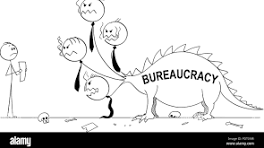
How Did it Happen??
Not really for the government were given strong powers over Fish and Game and it slipped through into law.
It shouldn’t have. Fish and Game was made responsible to the Minister of Conservation. But the reality is most ministers wouldn’t;’t have a clue, they are virtually told what to do by the bureaucrats in the related department.
I have been critical of Fish and Game for not being strong enough advocates on some issues whether it be a dam on a river or some commercialisation or development. When I taxed Fish and Game about it, the response was that they could not speak out because of their statutory responsibility to the Minister of Conservation.
I would argue, despite what the law wrongly says, that Fish and Game’s first and foremost responsibility is to the licence-holders, ie the trout fishing and duck and game bird shooting public. After all they pay the fees – government pays nothing towards the management of the public’s fish and game. To the contrary and ironically, threats to the public’s fish and game resources usually come from government policies.
Gagged
So why were the advocates for Fish and Game seduced and taken down the path of being legally bound to the Minister of Conservation? Was it stupidity, naivety or just blind ignorance? What hand did the bureaucrats pay in limiting the political freedom of Fish and Game by the wording of the law?
There’s another example that should send a strong warning on the need for caution over any government move to “reform” fishing and hunting.
One example involve deer and big game hunters
Under the Wild Animal Control Act of 1977, the Minister was given the power to set up a National Recreational Hunting Advisory Committee.
So the minister back about 1980 set up a National Recreational Hunting Advisory Committee “composed of such persons as the Minister thinks fit — and any advisory committee so established shall hold office during the pleasure of the Minister, and shall have such functions and powers as the Minister may decide.”
The domination by the Minister was so evident. The minister selects who will be on the committee and then decides what it can discuss but at the end of the day it is only “advisory,” and the minister can opt to take no notice.
The reality was the Minister did not have a clue as to who the best persons might be for council or of decisions made. He went by the advice of the bureaucrats in the then NZ Forest Service. So in essence the bureaucrats pulled the strings of not only the minister but the hunting committee too.
And at the time committee members were forbidden to talk publicly. The gags were in place, the hog ties tight.
Conservation Boards
Another parallel case is conservation boards. Again the departmental bureaucrats “tell” the minister who should be on. Anyone nominee who might be forthright is unlikely to make it. Even if an outspoken individual makes it, the bureaucrats will ensure he or she is well in the minority.
Recalling the Recreational Hunting Advisory Committee of the 1980s is timely for in 2013 a Game Bill was passed by Parliament, and the Game Council was formed. The Act required the Minister of Conservation to decides who will be appointed to the council, from nominations received.
In other words it will – again – be tantamount to “government appointees” And just as back in 1980 with the Recreational Hunting Advisory Committee, the minister will not know Harry Hunter from Danny Deerstalker so will go on the advice from bureaucrats in the Department of Conservation.
Like the TV comedy, “Yes Minister” will be alive and well – and bureaucrats will be pulling the strings and telling the minister what to do. Sir Humphrey Appleby of “Yes Minister” has been reborn many times over, in fact as many as there are government departments and ministries.
The bureaucrats behind the minister are the challenge
Of special significance is an informed source within the commercial fishing industry told me the commercial sector looked at becoming a statutory body but after examination and a realisation of the perils, backed off the idea.
“We (commercial) saw it as a real minefield,” he told me.
Political Parties Implode
Fisheries ministers have been quick to criticise the recreational saltwater sector for division and fragmentation. Yes it has been true but is that not human nature? I get annoyed when a succession of ministers criticise the recreational sector for division or fragmentation. After all, politicians are no better. Political parties have divisions, they have inner cliques, fragmentation and groups even plot and carry out coups. Sometimes political parties implode and end up exploding to smithereens! The current Te Pati Maori is a prime example.
So what is the solution? That’s the dilemma. But really the best solution lies with us, each one individually and most importantly, collectively.

Political Power
Collectively the recreational outdoor sector has powerful, potent political potential.
A million or more voters is an incredible weapon at election time.
But inertia and apathy are the mortal enemies.
Were you one of the million Kiwis who couldn’t be bothered voting last election? Did you vote for the party options that showed support for recreational fishing?
That political factor could be termed“ people power.”
Undoubtedly more maturity, less spiteful jealousy and personal self serving agendas with more positive vision and motivation are needed. Idealistically – at the risk of being a cock-eyed optimist – I would like to think sensible people can organise themselves into a cohesive and competent administration that would not be hog-tied by the bureaucrats via an act of Parliament.
It’s over to us, each one of us individually – and together.
In the meantime be aware of the temptation of statutory bodies. Seductive at first glance but past experience says it could be a path to permanent bondage.
Editor’s Footnote: Tony Orman is a firmer president of the NZ Recreational Fishing Council and has served towards 30 years on acclimatisation society and fish and game councils.