
Kerikeri’s Swimming Spots and the Wider Issue of Recreational Access
Guest Post by Dave Rhodes
Public waterways, river swimming holes, and local natural features have long been a core part of New Zealand’s outdoor culture. For generations, people have cooled off in rivers near town centres, walked to waterholes with friends, and enjoyed places that require neither travel nor fee nor specialized gear.
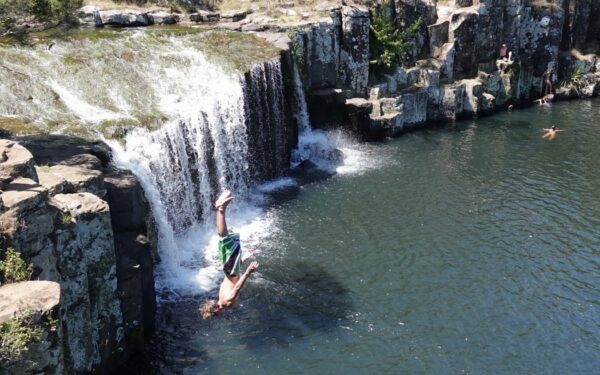
A recent RNZ article highlights how one such place - the Fairy Pools along the Kerikeri River - has been closed indefinitely due to development and safety concerns, leaving locals and visitors without access to a once-popular swimming spot close to town.
This is not, in itself, a dramatic news story. But it speaks to a persistent erosion of everyday outdoor access that many communities across New Zealand are quietly feeling.
What’s at stake
In Kerikeri - and in towns large and small around the country - access to swimming spots, river edges, beaches, and tracks has often been taken for granted. These are the places people:
- cool off in summer
- take young children
- gather with friends
- connect with nature within easy reach of home
They are not exotic locations. They are ordinary places that make life outside possible. And when access to them shrinks, the consequences are felt most directly by people who lack vehicles, time, or the ability to trek long distances.
In Kerikeri, the closure of Fairy Pools Lane has removed a close-by, free, and simple swimming spot. Young swimmers interviewed by RNZ contrasted this with Charlie’s Rock - a great swimming hole - but one that requires a 20-minute bouldery walk, which is not accessible to all.
A pattern, not an incident
This is not an isolated incident. Across New Zealand:
- beaches once accessed via paper roads or historic routes have been blocked or restricted
- informal river crossings have been closed for “safety reasons” without proven alternatives
- property development has absorbed old access routes that were never formalised
- councils and developers fall back on safety or liability as reasons for closures
While each case has its own context, the net effect is the same: places that once belonged to the public become effectively off limits.
Recreation is not optional
Recreation is often spoken of in broad, aspirational terms - great hikes, national parks, cycle trails - but everyday access matters too. Not every recreational moment is a grand expedition. Many are small, local, and accessible without cost or complex planning.
Those everyday moments are vital:
- they introduce children to outdoor life
- they support spontaneous outdoor activity
- they provide healthy, affordable recreation
- they form the backbone of community outdoor culture
Losing a swimming hole near town is not trivial - it is the loss of informal access to water and land, and that matters for quality of life.
Equity of access
A critical part of this story is equity. Not everyone has access to a car, free time, or the physical ability to travel distances to remote spots. Easy-to-reach waterholes, river pools, and beaches close to urban centres matter because they level the playing field for outdoor participation.
When close-by access disappears, outdoor recreation becomes the preserve of those who can afford to travel - not everyone.
A call for proactive access planning
If Kerikeri’s experience teaches us anything, it is that:
- Outdoor access needs to be proactively protected, not only preserved after the fact
- Local government and developers must balance community access against growth imperatives
- Safety concerns should be addressed with solutions, not permanent closures
- A national conversation is overdue about everyday outdoor access
This is not about resisting progress. It is about ensuring that public access to nature remains durable, equitable, and deliberate - not incidental.
Conclusion
The closure of a swimming spot in one Northland town may seem a small story. But it resonates with a larger and growing issue: when access disappears quietly, few notice until it is gone.
CORANZ supports a strong, forward-looking approach to access that recognises both spectacular places and ordinary ones. Swimming holes like Fairy Pools and waterholes like Charlie’s Rock are part of the fabric of outdoor life - and they deserve thoughtful stewardship.
If we value outdoor recreation for all New Zealanders, discussions around access must go beyond iconic destinations to include the places people use daily, informally, and without fanfare.