
by CORANZ researchers
Last year CORANZ featured an article about the :relentless” takeover of New Zealand by way of foreign acquisitions of land and property.
Back then the government’s held an Investment Summit where it courted wealthy overseas interests.
“Campaign Against Foreign Control of Aotearoa” (acronym CAFCA) expressed deep concern at the time about the increase in foreign acquisitions. Murray Horton of CAFCA said “the statistics tell their own story about the relentless takeover of NZ businesses and land by transnational corporations and other foreign buyers.
What often is hidden is the deception that these foreign corporates can use.
For instance a recent transaction showed Tasman Pine Forests Ltd., which one might assume by its name is a New Zealand company.
In fact Tasman Pine Forests is predominantly Japanese owned to the tune of 76% . Worse still it is purchasing from a company, totally New Zealand owned.
The details are:-
Japanese-Owned Tasman Pine Forests Expands Brightwater Holdings
Tasman Pine Forests Limited (Japan 76%, Various 24%) has been granted consent under the sensitive land – special forestry test (one-off) of the Overseas Investment Act 2005 to acquire a freehold interest in approximately 294 hectares at Eves Valley Road, Brightwater, Tasman District, for $2.9 million. The vendor is Carter Holt Harvey Property Limited (NZ 100%). The land comprises approximately 235 hectares of productive Pinus radiata, with the remainder in native vegetation or unplantable areas.
Tasman Pine Forests, ultimately owned by Sumitomo Forestry Co Ltd, a diversified Japanese global company, plans to maintain the land for production forestry, with harvesting scheduled to commence in 2039. This acquisition is part of a continuing trend of foreign institutional investment into New Zealand plantation forestry, particularly by Japanese investors. While these transactions are framed as ensuring productive forest management and economic benefit, they also reinforce offshore control over large-scale timber assets a pattern previously highlighted.
Again another example:- A company, Kauri Forestry LP, one could easily assume is New Zealand owned. It is greater majority-owned by Swiss interests.
European Forestry Fund Expands Holdings Under Standing Consent
Kauri Forestry LP (Switzerland 71%, Germany 29%) has notified its third land acquisition under a standing consent granted under the special forestry test, purchasing approximately 355.7 hectares at Waitawhiti Road, Tinui (Puketawa Forest) in the Masterton district for $4.02 million. The transaction proceeds under section 23A of the Overseas Investment Act 2005 as part of a standing consent issued in June 2024, allowing the acquisition of up to 10,000 hectares across 40 transactions by June 2027.
Similarly OceanaGold (New Zealand) Limited has no visible New Zealand ownership. The USA has 48% and Canada (15%)
OceanaGold Expands Central Otago Holdings
OceanaGold (New Zealand) Limited (USA 48%, Canada 15%, UK 8%, Australia 4%, Switzerland 3%, France 2%, Various 20%) has been granted consent to acquire a freehold interest in approximately 2,039.8 hectares at 540 Four Mile Road, Hyde, Central Otago, for $11.25 million. The applicant, a New Zealand incorporated company owned by OceanaGold Corporation, is the country’s largest gold producer. The land acquisition will allow expansion of the Macraes Mine, New Zealand’s largest operating open-pit and underground gold mine, while surplus land will be leased back to local fLarge Forestry Owner Expands Holdings Under Standing Consent
Similarly Matariki Forests & Matariki Forests Trading Limited mentioned sounds New Zealand with a Maori-sounding name. But its shareholding is (United States 72%, United Kingdom 8%, Norway 7%, Switzerland 4%, Various 9%) have notified LINZ of their first acquisition under a standing consent granted in January 2024, purchasing approximately 299.8 hectares of forestry land at Mokamoka Road, Tutira, Hastings, for $15 million. The vendor was Seneca South Pacific Limited (United States 100%).
What its needed is a company register of genuinely owned New Zealand companies and another distinctive one of those foreign owned.
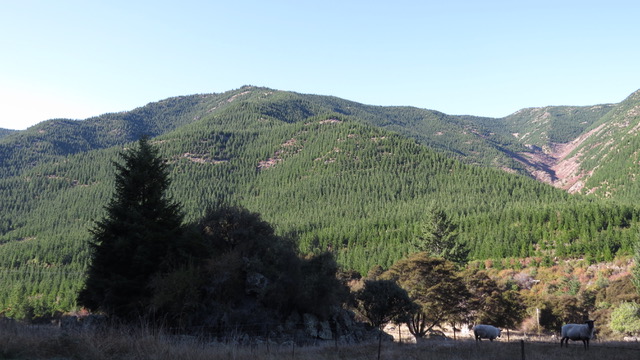
The forestry sector is now probably 70% foreign owned or controlled.
Details of recent acquisitions researched by CAFCA are:-
Footnote: CORANZ urges any environmentally or recreational individuals to join CAFCA.
To join the Campaign Against Foreign Control of Aotearoa (CAFCA), a New Zealand-based research and lobby group, individuals can pay an annual subscription fee, which was approximately $20 – unwaged $15.
as of early 2026, and receive the Foreign Control Watchdog publication. Contact CAFCA via email at cafca@chch.planet.org.nz to inquire about membership.
Almost without exception, foreign companies erect locked gates, blocking public outdoor recreation access.
What a very revealing article and one that will alert Kiwis to what is happening behind the doors of governments.
Opposing foreign acquisitions is NOT xenophobic but patriotic
I kept a cutting from Wellington’s “Post” newspaper about this subject.
Back in late 2024, the “Post” reported “the Government is set to reverse the current the burden on proof on foreign investors to show their investments would benefit the country, in a bid to encourage more overseas investment.”
That is tantamount to a sell-out.
I joined CAFCA. You get 4 issues of Foreign Watchdog, a comprehensive newsletter every three months. Well worth it and supporting a very worthwhile cause.
Annual membership fees: Individuals: waged $20; unwaged $15
CAFCA is not registered for GST.
To pay online, CAFCA’s bank account details are:
Campaign Against Foreign Control of Aotearoa Kiwibank 38 9000 0433691 01