
I was more than gob-smacked by recent utterances by Forest and Bird (e.g. Forest and Bird’s regional conservation manager for Canterbury and the West Coast Nicky Snoyink’s column “Press” March 23) in which she scaremongered over wild animals in National Parks.
Forest and Bird have always been noted for their “anti-exotic wild animal phobia” as a visiting American zoologist once described the irrational fear that afflicts government departments and vociferous groups like Forest and Bird.
There have been significant research studies on Fiordland that belie Forest and Bird’s fervent alarm calls about deer and wapiti. My opinion based on many years in the outdoors working and recreationally in wilderness areas such as Fiordland, is that deer numbers are to a large extent controlled by the harsh weather and the rugged environment.
So it’s no surprise to find the 1949 New Zealand/American Fiordland Expedition examined the red deer/wapiti relationship to the environment and concluded “no changes of economic consequence can result” from the continued presence of deer-- numbers of animals present cannot increase to any extent since the numerical strength of the herds is rigorously controlled by the limited area of good browsing range available.”
The year 1949 was generally regarded as red deer being at their peak numerically following the World War Two end in 1945, with many men (hunters) serving overseas.
Some years later in the late 1950s, an American scientist Thane Riney working for the government did research on an “undisturbed” red deer herd at the remote Lake Monk, Fiordland. These were pre-helicopter days and the deer had virtually never been hunted. It was assumed deer would be numerous due to no hunting.
But the study team found quite the opposite. Deer were few and the condition of those present was inferior. Thane Riney wrote that the deer population had once been high. Deer selectively browse foliage preferring some species such as griselina (broadleaf), Nothopanax (five finger) and Coprosma above others, the latter termed “unpalatable”.
”The introduction of deer--changed its character and altered its species composition through a process of selective browsing, but without endangering the survival of the protection forest. - – there is little cause for concern -- deer do not constitute a problem.”
Basically the effect of deer browsing was little different to the browsing by several species of moa over 50 million years. Thane Riney and fellow scientist Colin Bassett found evidence that deer numbers had once been high exceeding the habitat’s carrying capacity and then declined to a low stable level as the number of palatable species decreased. Scientists call it the “Bell Curve”.
The contents of a moa gizzard recovered at north Canterbury’s Pyramid valley estimated at 3,600 years old, contained species such as olearia (NZ tree daisy) and coprosma (five finger) indicating moa and deer had similar preferences in palatable species.
The comparison of deer and moa diets, generally indicates deer and other browsing wild animals replaced moa as the browsing agent in the functioning of wilderness ecosystems.
Footnote: Laurie Collins began his working career with the NZ Forest Service in the late 1950s working in wilderness areas on wild animal control. In leisure time he has spent in total, numerous months – arguably years – in Fiordland searching for moose in Dusky Sound and other areas, at a financial cost of $50,000 for access by helicopter.
CORANZ editor’s note:- This opinion piece was apparently sent to the Christchurch “Press” newspaper in response to two Forest and Bird articles that were strongly “anti-deer.
To date, 20 days later, CORANZ understands Mr Collins’ article has not been published. Is this extreme bias by STUFF and lacking journalistic integrity? CORANZ leaves readers to draw their own conclusions.
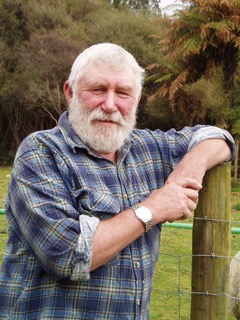
Laurie Collins – Fiordland experienced
Good comments by obviously an experienced bushman. Backed up by scientific studies quoted.
Of course Forest and Bird operate on ideology – not facts.
Good commonsense stuff, Mr Collins. Thank you
There is value in hearing perspectives that challenge prevailing assumptions, particularly where they are grounded in long-term experience.
Complex environments rarely respond to single explanations, and contributions like this help broaden the conversation.
This article adds a counterpoint that encourages a more complete view of how these systems function.
The reminder that environments can impose their own limits is a useful contribution to what is often a simplified debate.
Laurie’s field observation over long periods adds context that is not always captured in short-term or remote analysis.
Laurie brings decades of direct experience in Fiordland, and that perspective deserves to be part of the wider discussion.
This highlights the need to distinguish between localised impacts and system-wide conclusions, particularly in complex environments.
Fiordland is at least 50% inaccessible to deer, so there are plenty of areas you could call “ pristine “ if you want to. The vegetation isn’t that much different to that in the deer-accessible areas anyway.
How many F&B people have visited these so called devastated forests?