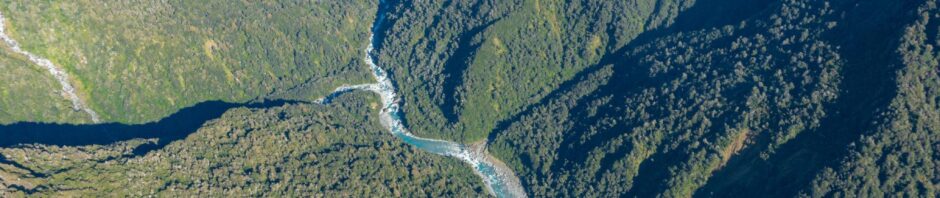
A proposal to develop the Waitaha hydro scheme on the West Coast has received draft approval through the fast-track process, prompting concern from recreation and environmental groups. The project would divert water from a remote river gorge to generate 23 megawatts of electricity, framed as a contribution to regional resilience and renewable supply. Objections focus on the loss of wilderness character and reduced river flows through a largely unmodified landscape. That tension is not unusual, but the process used to resolve it is.
The scheme was previously declined through the standard consenting process, including an Environment Court pathway, reflecting concerns about its environmental effects. Its re-emergence under a fast-track framework does not change those underlying trade-offs. What changes is the way they are assessed, and the structure within which decisions are made.
What changes under fast-track is not the existence of trade-offs, but how they are tested. Opportunities for wider participation are reduced, timelines are compressed, and decisions are concentrated within a narrower process. That may improve speed and certainty for proponents. It also alters how competing values-energy, access, and environmental condition-are weighed and challenged.
The environmental effects in this case are not hypothetical. The diversion of water through a tunnel would reduce flows through the Morgan Gorge, with acknowledged impacts even after mitigation. For recreation, this changes the character of the place. For ecology, it alters the functioning of a river system that has remained largely intact. These are not easily reversible outcomes.
It is also reasonable to ask whether alternative approaches have been fully examined. A project of this scale, at around $200 million, represents a significant investment in generation capacity. Equivalent annual output can be achieved through other renewable options, including wind, often at lower capital cost. However, those alternatives come with different characteristics. Hydro offers stable and dispatchable generation, while wind is intermittent and dependent on site conditions and integration with the wider grid.

This does not make one option inherently preferable to another. It does, however, reinforce the need for careful comparison. Different forms of generation distribute their impacts differently-across landscapes, ecosystems, and infrastructure. The question is not whether alternatives exist, but whether they are fully considered alongside the proposal at hand.
There is also a broader issue of durability. Energy infrastructure persists for decades, and the effects on landscapes and river systems are long-term. Decisions made under compressed processes do not become less permanent because they were made more quickly. The structure of the decision matters as much as the outcome.
This is not about whether renewable energy should proceed. It is about how those decisions are made, and whether the full range of consequences and alternatives are given proper weight.
These environmental criminals will do what ever they want, its about control and regardless of what the public want.