
by CORANZ researchers
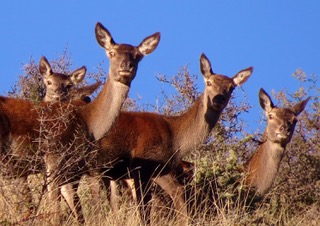
In 1958 Dr William Graf, zoology professor San Jose college inn California came to New Zealand on behalf of the Hawaiian state government to look at New Zealand’s “deer problem” as the US state was considering liberating deer.
Dr Graf visited New Zealand’s mountsain areas accompanied by Forestry department officials some who were scientists. His conclusions were strong – New Zealand authority and much of the people had an “anti-exotic wild animal phobia.”
In 2015 Dr. Jamie Steer published in as his doctoral thesis in Environmental Science at the University of Auckland, a paper “The reconciliation of introduced species in New Zealand; Understandings from three ‘exceptional’ case studies”. The three case studies were deer, mallard ducks and trout.
“The thesis explores human attitudes toward non-native wildlife and argues for a shift away from automatic eradication toward a more reconciliatory, coexistence-based approach.”
In the three case studies Jamie Steer used “a critical discourse approach to analyse our relationship with three specific introduced species in New Zealand”.
Mallard Ducks: Explores how adaptable birds that were actively brought over are now stigmatised as a threat to native species.
Deer: Examines the tension between deer acting as prized game animals and their management as ecological pests.
Trout: Highlights the widespread acceptance and protection of introduced trout, despite their predatory impact on native species.”
All three were introduced before 1900.
However wrote Jamie Steer, “from around the mid-19th century, introduced species have often been considered an undesirable form of wildlife in many countries. Introduced ‘invasive’ species have been routinely identified for removal in the belief that they damage or otherwise compromise the natural purity or integrity of ecosystems.”
“However, diverse literatures within both the natural and social sciences over the past few decades have questioned some of the assumptions underpinning these beliefs. “
In consequence, moves toward more reconciliatory approaches to the understanding of introduced species have become increasingly common.
Jamie Steer employed “bio-political theory, along with concepts from the wider constructionist literature. Bio-politics focuses attention on the expression of power over life itself and its attendant consequences.”
“An analysis grounded in a bio-political framework asks not only why death is considered necessary, but also why this death in particular is justifiable.”
Introduced game species were selected because they do not fit with common understandings of introduced wildlife in New Zealand, often being both demonstrably ‘damaging’ to native ecosystems and valued.
The species were viewed by perception rather than rational reality.
“I found that species, whether native or introduced, were reconciled primarily as a factor of their perceived contribution to the national identity and economy.”
“Species that were not considered useful were marginalised or ignored.”
But Jamie Steer was not overly optimistic about the future outlook away from the “anti-exotic wild animal phobia” that Dr. Graf coined. “Despite the optimistic contributions of many authors arguing for the reconciliation of introduced species, I show that any broad-scale reconciliation – at least in terms of a compassionate reconsideration – may be unlikely in New Zealand.”
While notions of ecological balance and human-exclusivity remain popular in constructions of nature in New Zealand, these beliefs necessarily exclude human introductions and, perhaps more notably, construct a belonging for humans in New Zealand as guardians or ‘archivists’ of native wildlife.”
Humans position themselves as humans as ‘moral predators’ against “a foreign invasion of introduced species” thus reconciling peoples’ own place in Nature.
Rhetorics of war-fare accompanied the perceived need to kill introduced species. Even science is not immune from the phobia. Certain introduced species are only reinforced by the “truth discourses of science”, which further promote moral predation, and the economics of pest management, which have created an important industry out of introduced species’ removal.
“Together, these findings suggest that any reconciliation of introduced species, though intellectually compelling, is unlikely to be advanced on any broad-scale in New Zealand until alternative human roles within nature are identified and propagated.”
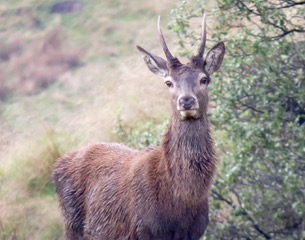
It’s interesting to note Dr Steewr’s reference to “Certain introduced species are only reinforced by the ‘truth discourses of science’, which further promote moral predation, and the economics of pest management, which have created an important industry out of introduced species’ removal.”
The pest industry is one of the greatest wastes of public taxpayer money. Each 1080 aerial drop costs $3 million.
The poison is ineffective (e.g. surviving rats have regained previous pre-poison levels within 18 months and three years later there are 3 times more rats – Ruscoe 2007) but no questions are asked by ministers.
Trout and native fish existed abundantly for a century before declines set in. The reason for native fish decline is not trout but loss of habitat, drainage of vital wetlands, excessive irrigation for corporate dairying, toxic nitrate contamination etc.,,
It’s not trout but invasive politicians like Shane Jones, Christopher Bishop and their exploitation via Fast Track laws.
“It’s not trout but invasive politicians like Shane Jones, Christopher Bishop and their exploitation via Fast Track laws.”
Spot on Zach, well said!
Like the Jack Tuhawaiki comments.
As the article says we are human predators. My ancestors slaughtered whales, seals, etc with gay abandon. No we love them. This sort of change is possible. It only requires somebody to employ the 640 journalists/spin doctors who lost the jobs recently to mount a campaign. Joseph Goebbels showed how to it and the current crop of political correctness followers used his techniques. When people hear something often enough (especially when said with passion) most start to believe it.
Aren’t humans introduced? We have done 1000 times more damage than the animals. Nature always finds an equilibrium. The forests are self surviving. The rivers have a carrying capacity. The only thing out of balance in NZ is the human population explosion. I can think of a few latte drinking critters that could do with a good cull out