
The Government’s replacement of the Resource Management Act has taken another step forward, but once again the legislation has changed as it has progressed through Parliament. The Environment Committee has recommended extending the transition period, broadening ministerial discretion over activities that may exceed environmental limits, and retaining controversial regulatory relief provisions. While one proposal for market-based allocation of natural resources has been removed, the overall reform continues to evolve rather than narrow.
One recommendation deserves particular attention. The ability for ministers to create a pathway for “significant infrastructure” to exceed environmental limits is proposed to be widened to include “publicly beneficial activities”. That may appear a modest change in wording, but it potentially broadens the range of projects that could qualify for exemptions. Good legislation should make clear where the boundaries lie and under what circumstances they may be crossed.
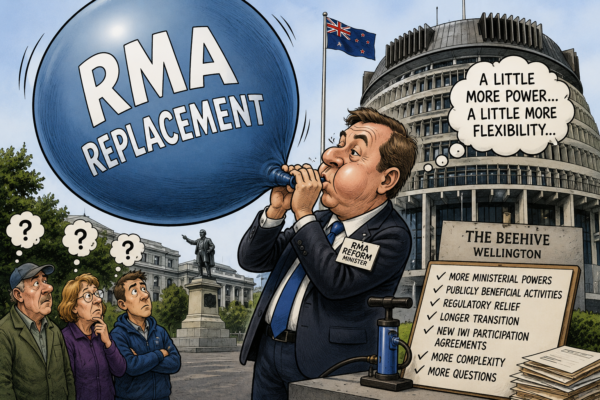
The continuing evolution of iwi participation arrangements also raises legitimate questions. The Government has announced that Mana Whakahono ā Rohe agreements will be replaced by new iwi participation agreements, yet many New Zealanders remain uncertain how the new framework will differ in practice. CORANZ has received considerable correspondence from readers seeking greater clarity on this point. Public confidence is strengthened when structural changes are explained clearly rather than simply announced.
The committee has also recommended delaying aspects of the transition to ease pressure on local authorities. That is understandable given the scale of the reforms. At the same time, each round of amendments means councils, businesses, community groups and recreational users must continually adjust their understanding of a system that is still taking shape. Certainty is itself an important part of effective environmental management.
Replacing the Resource Management Act was always going to be a substantial undertaking. Reform should improve clarity, accountability and confidence, not simply replace one set of uncertainties with another. The issue is not whether change is necessary. It is whether the final legislation provides durable rules that remain clear long after today’s ministers, committees and political debates have passed.
Given National are really Labour in drag, any finalised RMA replacement is bound to be just as bad as the current incarnation. Lots of rhetoric as always with no real movement. Elected on a firm mandate to remove co-governance and give us one person one vote democracy, they remove the iwi co-governance provisions on the one hand and replace it with the other. Our socialist-leaning judiciary will soon have us back exactly where we are now – or worse!
With increasing powers goes increasing responsibilities. With the likes of Jones in the mix that becomes a problem, RMA reforms by Bishop – say no more!
The IWI have enough financial and human resources to tie the government up in court challenges. This could be interesting. Iwi have become a thorn in the side of irrigators and those who want to take and pollute excess water.