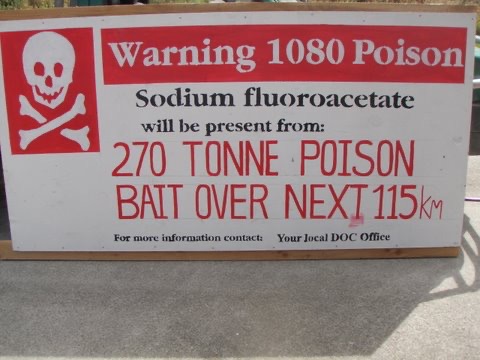
The Department of Conservation has no explanation for bird deaths on Motueka’s Sand-spit where several dozen oystercatchers were found dead. The department has discounted a recent 1080 poison drop in the Cobb Valley area of the Takaka River, in Kahurangi National Park as a cause.
However the Freedom Party is far from convinced.
“Trust their science? ,” asked the party on facebook. “Apparently its just a coincidence that so many oystercatchers and crabs died at Motueka Sandspit downstream from the Mt Arthur/ Cobb 1080 aerial poisoning ..after suffering twitching and other symptoms of 1080 poisoning.
No photos, no testing of their crop or stomach , no autopsy, no photos, no other explanation…just hopeful claims!”
DoC’s biodiversity ranger Leon Everett said tissue samples were tested and showed no 1080. Bird flu did not show up in testing either.
Conservationist Lewis Hore said in small bird species such as tomtits, 1080 breaks down extremely quickly. Birds need to be tested within 24 hours otherwise 1080 cannot be detected..
“Depending on how long the oystercatchers were dead for, would’ve had a bearing on tests,” he said.
Other facebook comments showed little confidence in DoC impartiality.
“Independent testing needs to be done because you can’t trust the perpetrators to investigate their own crime,” said one.
A sample of others were;-
“Its about as worthy as the fox looking after the chickens.”
“1080 metabolism changes quickly.. it turns to a citrate.. do they test for that??
“Sodium Fluoracetate breaks down to a citrate which DoC never use to test for.”
“I don’t trust DOC these days. 1080 is banned in most other countries worldwide. Yet NZ still uses it regularly – killing everything that eats or drinks poisoned food or water.”