
A new government move to consider bans on rock pool harvesting in parts of Auckland has sparked fresh debate about how environmental concerns intersect with everyday life, community behaviour, and democratic decision-making.
The issue centres on Whangaparāoa’s Army Bay, where residents, iwi and local advocacy groups say rock pools and intertidal marine life have been heavily depleted by repeated harvesting of shellfish, starfish and other sea creatures. Residents say the area’s once-teeming rock pool life is now noticeably diminished and that current rules are too weak to prevent large groups stripping these habitats “bare”.
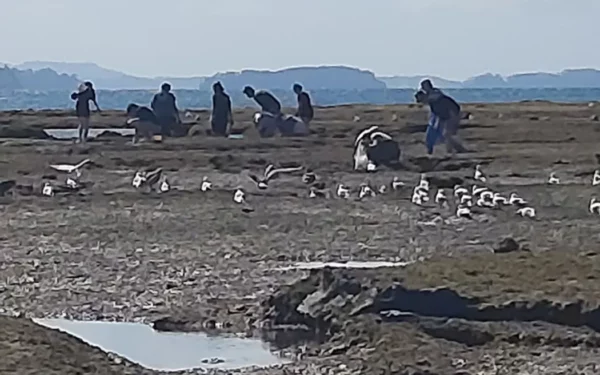
In response, the government - acting through the Oceans and Fisheries Minister - has sought urgent advice on a potential ban or temporary rahui (a traditional restriction) to protect the shorelines. Proposals under consideration include a two-year prohibition on harvesting, alongside education campaigns and community engagement.
Real concerns, real complexity
The strong feelings this issue has generated are understandable. New Zealand’s coastal ecosystems are fragile, and over-harvesting - even by recreational collectors - can have long-term ecological consequences if left unchecked. Scientists note that many intertidal species are locally important “ecosystem engineers” whose loss can disrupt broader ecological balance.
However, the situation also highlights a familiar challenge in public policy: the mismatch between environmental facts and workable responses. At present, many people harvesting are doing so within legal daily limits. According to fisheries officials, most collectors comply with existing rules - even as the volume of activity increases.
That raises questions about whether the policy framework is outdated or enforcement under-resourced, and whether blanket bans are the right tool for long-term conservation.
Community norms versus broad generalisations
The debate has also touched on sensitive issues of culture and behaviour. In comments reported by media, the minister referenced “cultural clashes”, noting that different groups may have varying harvesting practices and appetites for seafood from the shore.
Whatever the intent of such remarks, they risk diverting attention from the core policy questions:
- How to genuinely involve affected communities in conservation?
- How to ensure rules are fair, enforceable and based on sound ecological evidence?
- How to avoid unfairly singling out cultural or demographic groups while promoting sustainable use of shared resources?
- How to return the rock pools to pristine condition?
Focusing on cultural differences can inflame social tensions, particularly when the underlying concern - environmental degradation - deserves constructive, evidence-based discussion.
A broader policy lesson
For those concerned with outdoor recreation, environmental health, and democratic governance, the rock pool debate echoes larger themes we’ve seen across New Zealand policy discussions:
- Single-issue framing limits public support. When a problem is described in narrow, emotional terms, it invites emotion and reaction more than thoughtful debate.
- Community engagement matters. Policies imposed with little local input risk backlash, especially when they affect people’s access to places and activities they value.
- Sustainable outcomes need shared ownership. Conservation measures that people understand and feel part of are far more likely to succeed than those perceived as top-down impositions.
These lessons apply not only to rock pools but to freshwater management, land use, pest control, and other environmental issues that regularly surface in national debate.
Not just about rules - about trust
The rock pool controversy illustrates that environmental issues are as much about social structures, governance and shared norms as they are about science. Communities want their children to know native shore life; they also want rules that are clear, fair and enforced consistently. Solutions that ignore one side or the other risk alienating those whose cooperation is essential for conservation success.
As policy options continue to be developed, they should be grounded in evidence, community engagement, and proportionality rather than reaction. New Zealand’s environment is precious - and protecting it requires a balance of care, clarity and democratic legitimacy.