
Part Seven of a CORANZ series on risk, competence, and access
By Andi Cockroft, Chair, CORANZ
If competence has been eroded - by risk aversion, liability culture, no-fault systems, and the quiet removal of formative experiences - the obvious question follows: can it be rebuilt?
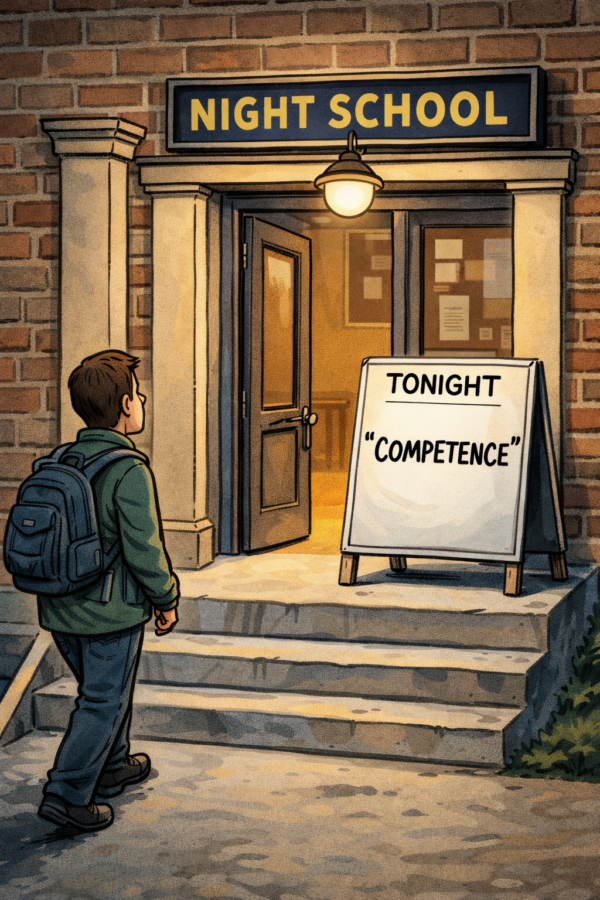
Not restored to some imagined past, but rebuilt in the world we now inhabit. With modern laws. Modern expectations. Modern constraints.
Or has the balance shifted too far for that?
Competence is not a switch you flick. It is learned slowly, unevenly, often informally. It grows through exposure, feedback, correction, and repetition. For much of our history, that process happened without programmes or policy. It was assumed. Today, it is neither assumed nor automatic.
So where would rebuilding even begin?
One answer is education - but not the kind that ends with a warning sign. Education that builds judgement rather than compliance. Teaching people how to read conditions rather than telling them conditions are dangerous. Explaining variability rather than presenting risk as binary: safe or unsafe.
Is that still possible in public spaces?
We already know that signs don’t create capability. They shift responsibility while discouraging use. If competence is to return, learning has to replace restriction at least some of the time. That requires institutions to accept that enabling use carries responsibility - and that responsibility cannot be reduced to paperwork alone.
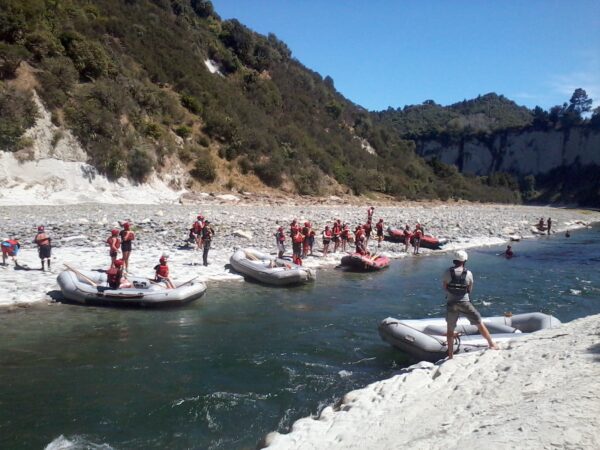
Are councils prepared to move from “do not” to “here’s how”?
Schools sit uneasily in this conversation. They once played a central role in building practical competence. Swimming, outdoor education, camps, informal play - all were part of learning how to live in a physical world. Today, schools are cautious, constrained, and often overwhelmed.
Can competence be rebuilt without placing schools back in the firing line of liability? Or must learning shift elsewhere - to communities, clubs, parents, and peer-led spaces?
If childhood is no longer the primary training ground, does adulthood become the place where judgement must finally be learned - when the consequences are greater and the margins thinner?
Outdoor recreation offers one of the few remaining contexts where this might happen. Tramping, paddling, hunting, fishing, climbing - these activities still demand judgement. They still reward preparation and humility. But increasingly, access to them is mediated by warnings, closures, and conditions that reduce opportunity to learn.

Is it realistic to expect people to develop competence in environments designed to minimise exposure?
Rebuilding competence may require accepting graduated risk - not all or nothing. Spaces where learning is possible without catastrophic consequence. Conditions where people can try, fail safely, and adjust. That kind of environment is harder to design than a fence or a sign. But it is far more effective.
Does our system still allow for that kind of learning?
There is also a cultural dimension. Competence requires trust - in people’s capacity to learn, to adapt, to take responsibility. Trust has been in short supply. It has been replaced by assumption: that people are incapable, careless, or litigious. Those assumptions then justify restriction, which further erodes capability.
How do you rebuild competence in a culture that no longer expects it?
One place to start may be language. Moving away from “unsafe” as a permanent label, toward conditional explanations. Away from “closed” as default, toward “managed”. Away from “proceed at your own risk” as abdication, toward shared responsibility grounded in information.
Is it possible to speak honestly about risk without retreating into prohibition?
No-fault systems complicate this further. When consequences are softened, incentives shift. That doesn’t mean people are reckless. But it does mean that responsibility must be actively cultivated rather than assumed. Competence must be named, taught, and valued - not left to emerge by chance.
Can a no-fault society still expect people to be competent? Or must competence be designed back into the system deliberately?
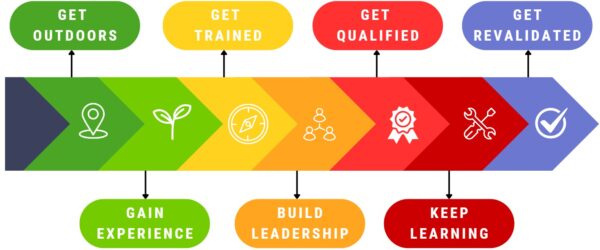
This is where CORANZ’s role becomes clearer. Not as a training provider. Not as a regulator. But as a voice asking whether access policy can move beyond fear. Whether outdoor spaces can once again be places where people learn how to manage themselves, not just where risks are managed away from them.
The series so far has shown how competence was lost - not through a single decision, but through accumulation. Skills withdrawn. Experiences narrowed. Responsibility shifted. Access constrained. None of that will be reversed quickly.
But rebuilding does not require a return to recklessness. It requires intent.
Intent to trust incrementally.
Intent to teach rather than warn.
Intent to enable rather than exclude.
And perhaps most challenging of all, intent to accept that learning involves uncertainty.
The outdoors has always been a teacher. It teaches patience, limits, preparation, and respect. But only if people are allowed to engage with it meaningfully. If every interaction is pre-managed, the lesson never arrives.
So can competence be rebuilt?
The honest answer is that it won’t be rebuilt by law alone, or by signs, or by fear of blame. It will be rebuilt - if at all - by creating spaces where learning is again expected, supported, and valued. Where judgement is allowed to form. Where responsibility is shared rather than avoided.
That is not a call to dismantle safety. It is a call to remember what safety was once meant to support: capable people, not closed places.
Whether we are willing to make that shift remains an open question.
But if we don’t ask it, the answer will be made for us - one fence, one sign, one closure at a time.