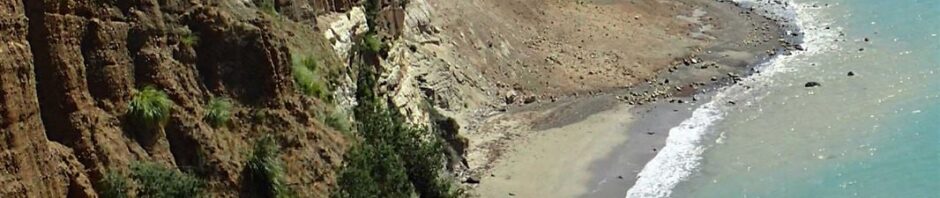
The Cape Kidnappers gannet colony sits on the cliffs at the end of Cape Kidnappers, south-east of Napier. The colony is one of the largest and most accessible mainland gannet colonies in the world, perched above a rugged, erosion-shaped coastline.
This is a place defined as much by approach and timing as by the destination itself.
How people arrive
Access to the gannet colony is part of the experience:
- Guided vehicle trips across coastal flats
- Walking routes that depend on tide and weather
- Farm tracks and managed access points
Unlike many viewpoints, this is not somewhere people wander into casually. Arrival is deliberate, planned, and often guided.
What people do here
Recreation at Cape Kidnappers is focused and restrained:
- Wildlife viewing at close but controlled distance
- Photography of birds, cliffs, and coastline
- Short, purposeful walks
- Quiet observation rather than movement
Most visits are measured in hours, not days, and revolve around a single focal point: the colony itself.
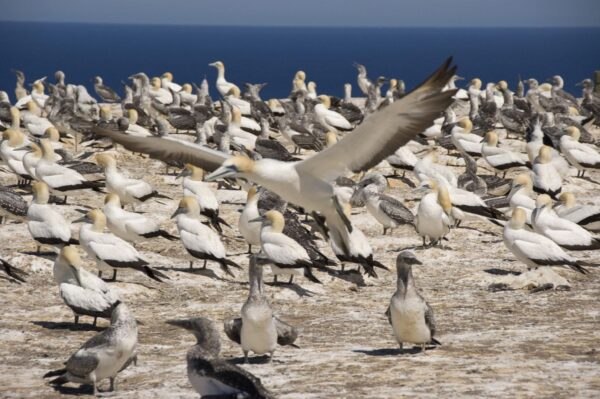
A living place, not a lookout
The gannet colony is:
- Loud
- Active
- Constantly in motion
Breeding, nesting, feeding, and interaction happen continuously. Visitors are there to observe, not to interpret or intervene.
Distance and boundaries matter - both for safety and for the birds.
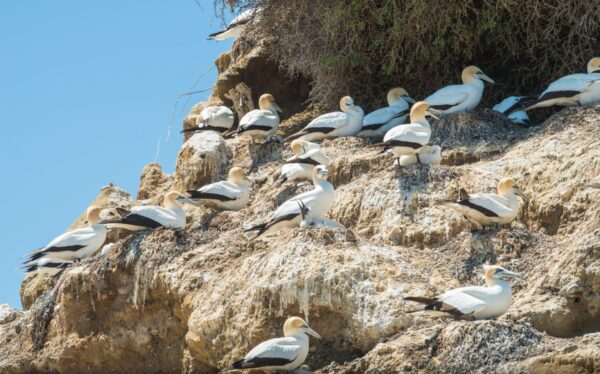
Access and protection
Access here balances:
- Public interest
- Private land
- Wildlife protection
- Coastal hazards
Managed access ensures:
- People remain safe near unstable cliffs
- Birds are not disturbed
- The site remains viable long-term
This is a place where limited access is not exclusion, but stewardship.
Shared use
Cape Kidnappers is shared by:
- Visitors
- Guides and operators
- Conservation managers
- Wildlife
Human presence is carefully shaped to remain temporary and peripheral.
Who this place is for
The gannet colony suits:
- Visitors interested in wildlife
- Families with older children
- Photographers and observers
- People comfortable with guided access
- Those happy with a single, strong experience rather than variety
It is less about wandering, and more about attention.
Weather and timing
Conditions here matter:
- Wind can be strong
- Sun exposure is high
- Access routes can change with weather and tides
Visits are best planned rather than spontaneous.
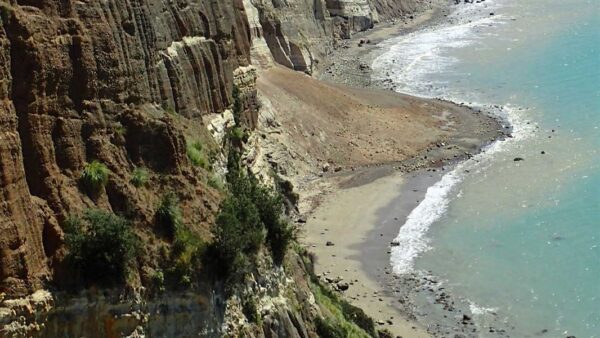
Why Cape Kidnappers matters
Cape Kidnappers shows how:
- Access can be structured without losing meaning
- Wildlife and people can coexist through restraint
- Some places are best experienced briefly and carefully
It reinforces an important idea in the Places series:
Not all access means freedom of movement - sometimes it means permission to pause and observe.
Editorial note
Cape Kidnappers pairs naturally with Activities such as:
- Bird watching
- Outdoor photography
- Short coastal walks
- Sketching outdoors
It contrasts strongly with places like the Port Hills or river corridors, reminding us that some landscapes ask more of our behaviour than our bodies.