
Recent reporting highlights growing concern for coastal communities facing repeated flooding, erosion, and infrastructure damage. The discussion is often framed around increasing environmental pressures and the possibility of managed retreat. That may be part of the picture, but it does not fully explain the situation. The more immediate question is how risk has been managed over time.
What actually changes in these cases is not simply the level of exposure, but the pattern of response. Coastal settlements have always faced storms, shifting shorelines, and flood risk. Many are located in areas where rivers meet the sea, or on low-lying land prone to change. Taken together, these are not new conditions, but known characteristics of the landscape.
This shifts the focus from cause to capacity. Repeated damage, short-term repairs, and ongoing disruption suggest that responses have often been reactive rather than planned. Infrastructure is restored, but underlying vulnerability remains. Over time, this reduces resilience and increases the likelihood that each event has greater impact than the last.
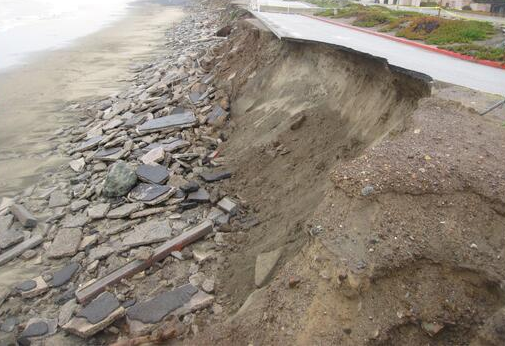
There is also a question of investment. Local accounts refer to infrastructure being maintained with temporary fixes rather than long-term strengthening. Roads, drainage, and protective works have not always kept pace with the level of risk they are expected to manage. This does not imply neglect in any single decision, but it does indicate a pattern of deferred response.
Managed retreat is now being discussed as an option, and in some cases it may be necessary. But it sits at the far end of the response spectrum. Between doing nothing and relocating entire communities lies a range of measures involving planning, investment, and adaptation. The extent to which those options have been fully pursued varies considerably.
The principle is straightforward. Risk is a function of both exposure and response. While exposure may change over time, the effectiveness of response is shaped by decisions about investment, planning, and coordination. These are within human control.
This is not about whether coastal risk exists. It is about whether our response has kept pace with what we already know.
Whilst coastal erosion had occurred for millennia, so has accretion – the addition of land. Locally to me in Horowhenua, since the first surveys around 1840, the sea is now a respectable 150 metres away – landowners bulldozing and taking advantage of what should technically be crown land.
The University of Auckland has interesting research at https://coastalchange.nz/ that suggest New Zealand actually has fractionally more accretion than erosion – we are growing as an island not shrinking but where is the news reporting on that – not catastrophic enough obviously
No different to Moa Point in Wellington. Under investment in any infrastructure is simply negligence by authorities. For several decades now many Territorial Authorities in New Zealand have been out of control spending more and more, borrowing more and more, to spend on none-core projects – the dazzling look-good, feel-good stuff that satisfies the magpie side of their persona – eye-catching and glitzy unlike sewage we just don’t want even to think about. Large Councils could take economic lessons from the small Rural ones
Councils routinely borrow to fund long-term infrastructure, and that is both expected and necessary. The issue is not the presence of debt, but how it is prioritised. In some cases, investment in core services such as water, drainage, and transport appears to lag behind spending on projects with less direct impact on resilience. When borrowing is used ahead of essential infrastructure, the result can be a growing gap between exposure and preparedness.
yes, borrowing by councils is not unusual, particularly for long-life assets. The question is whether that borrowing is aligned with the most immediate risks. Where investment in core infrastructure is deferred while other projects proceed, the system becomes more vulnerable over time. This is not a question of debt levels, but of sequencing and priority.