
The announcement of a new national deer control initiative has been presented as a long-overdue step toward addressing the environmental and economic impacts of feral deer. It brings together government agencies and sector organisations, signals coordination, and promises better outcomes.
And yet, from the outset, one of the most effective groups involved in deer control has been excluded from planning and governance: hunters.
That omission is not symbolic. It is structural. And it undermines the credibility of the strategy before it has properly begun.
The problem is not intent - it is design
The organisations behind the plan - including Ministry for Primary Industries, Department of Conservation, Federated Farmers, Beef + Lamb New Zealand, and Forest & Bird - are not wrong to want better coordination.
According to these organisations feral deer damage native vegetation, undermine biodiversity goals, and impose real costs on farmers and land managers.
The problem lies in assuming that a control framework can be effective while treating hunters as incidental, informal, or external, rather than as a core delivery mechanism.
That assumption does not survive contact with reality.
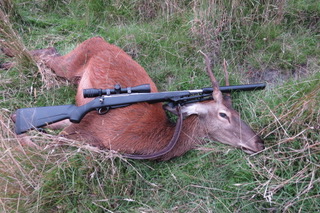
Hunters already do the work - just not on a balance sheet
Recreational and commercial hunters remove very large numbers of deer every year, across public and private land, often in terrain and conditions that formal programmes struggle to reach cost-effectively.
Yet the new initiative proceeds as if this effort is marginal, unstructured, or unreliable - largely because it is not captured in a centralised dataset.
That is a data failure, not a performance failure.
When a system excludes a major contributor because their contribution is poorly recorded, the solution is to fix the data, not to sideline the contributor.
A pattern we’ve seen before
This is not the first time a well-intentioned environmental strategy has been designed around institutions rather than outcomes.
We have seen similar patterns in freshwater management, biosecurity responses, and pest control programmes:
- central planning prioritised over field reality
- formal actors privileged over effective ones
- reporting requirements valued more than results
- and participation framed as a risk rather than an asset
The result is usually the same: high administrative confidence, uneven delivery, and declining trust among those expected to implement outcomes on the ground.
The absence of hunters creates practical blind spots
Leaving hunters out of planning and governance does not simply offend a stakeholder group. It creates real operational gaps.
For example:
- Spatial coverage: Hunters operate in remote, steep, and forested terrain where helicopter-based control is expensive or weather-limited.
- Temporal coverage: Hunting effort is continuous and responsive, not constrained to funding cycles.
- Behavioural insight: Hunters understand deer movement, pressure response, and population dynamics at a local scale that national models rarely capture.
- Cost efficiency: Much of the removal effort is self-funded, with minimal public cost.
Ignoring this does not produce a cleaner strategy. It produces a less effective one.
Data gaps are being used as a justification - backwards
One of the reasons given for excluding hunters is the lack of a consolidated national dataset on deer kills.
That is true.
But it is also circular.
You cannot argue that a group should be excluded because their activity is not measured, while simultaneously failing to create mechanisms to measure it.
If hunters are not part of the system, their contribution will remain invisible. If it remains invisible, it will continue to be discounted. This is not neutral policy design - it is self-reinforcing exclusion.
What a functional deer control framework would look like
A strategy that actually aims to reduce deer impacts - rather than simply coordinate institutions - would look very different.
It would not be neat. It would not be uniform. It would not fit comfortably inside existing organisational silos.
But it would work.
Such a framework would include:
A national harvest reporting platform
Not a licensing regime. Not a compliance tool.
A voluntary, incentivised, low-friction reporting system that allows hunters to log kills, locations, and effort - producing usable population and pressure data over time.
Formal recognition of hunters as delivery partners
Not “stakeholders to consult”, but participants in design, with representation alongside agencies and sector bodies.
If hunters are trusted to remove deer, they must also be trusted to help design how that removal is coordinated.
Integration, not substitution
Helicopter control, professional culling, and recreational hunting are not mutually exclusive. They are complementary tools with different strengths.
A functioning system aligns them spatially and temporally, rather than pitting them against one another or pretending one can replace the other.
Regional flexibility
Deer pressures, land use, access, and ecological sensitivity vary widely. A one-size national prescription will either be blunt or ignored.
Local knowledge matters - and hunters are often among the most consistent local observers.
Outcome-based success measures
Success should be measured in vegetation recovery, reduced browse pressure, and sustained population suppression - not in hectares flown or meetings held.
Hunters already understand this logic. Many institutions struggle with it.
Why this matters beyond deer
CORANZ is not a single-issue organisation. Nor is this a single-issue problem.
The way this deer control initiative has been framed reflects a broader governance tendency: excluding capable communities because they are difficult to classify, regulate, or neatly account for.
That approach does not build resilience. It erodes it.
Whether the issue is pest control, freshwater health, biosecurity, or land stewardship, solutions increasingly depend on distributed capability, not just central authority.
Hunters represent one such capability. Ignoring them weakens outcomes for everyone else.
A way forward that doesn’t require starting again
The good news is that this does not require scrapping the initiative.
It requires adjusting it.
- Open the governance structure.
- Build the data tools that are currently missing.
- Treat hunters as contributors, not complications.
- Design for messy reality rather than tidy diagrams.
Doing so would not only improve deer control outcomes. It would signal that New Zealand is capable of learning from experience, rather than repeating it.
Conclusion
A deer control strategy without hunters is not bold.
It is incomplete.
Coordination matters. So does competence. But neither can substitute for including the people who already do the work.
If the goal is fewer deer, healthier ecosystems, and lower long-term cost, then sidelining hunters is not just unfair - it is counterproductive.
The way forward is not exclusion.
It is integration.
And the sooner that is acknowledged, the sooner real progress can begin.
MPI know nothing about deer management. Why are they even involved? Know-nothing bureaucrats, greenies and cow cockies getting together to come up with a deer strategy equals a farcical gathering of muppets wasting precious taxpayer resources in order to destroy a valuable public resource.
Only the deer can win….
There is a lot of scare mongering going around about wild deer and other wild animals. Federated Farmers is a main force behind the hysteria.
A lot of this panic is based on a lack of knowledge of ecological history in a word – ignorance. For 60 million years several sub-species of moa browsed the vegetation from snowgrass alpine tops to lowland grasslands and forests. More than one scientist have likened the moa browsing to deer browsing.
There is no problem; it is all in the minds of the ignorant.
Yes agree J Morgan. Renowned in his day, ecologist the late Dr Graeme Caughley said between the extinction of the moa and the establishment of deer, New Zealand’s vegetation was in an “unnatural” state since the Polynesian migrants arriving about 1250 AD had exterminated the moa and burned a lot of the habitat.
So the “bush” was dense with ample under-storey whereas in moa times or after 1900 or so in deer times, it was far more open.
Two things – farmers appear to have done a poor job of controlling deer numbers themselves and how in the heck do you intend to control deer numbers in the vast NZ back country? To the former issue, maybe if Fed Farmers had coordinated with NZDA re farm access for members decades ago this might have controlled numbers better? To the second submission – as has been proven with possums, controlling numbers inside vast tracks of native forest is very difficult. The best bang for your bucks is to put lots of effort into the forest/farm borders… which brings us back to Fed Farmers working with NZDA so private hunters can help control numbers for FREE.
Control will never occur as long as we do not have game freezers. Get rid of the rubbish ten eighty, reinstate game freezers and wild meat recovery for the average man. Viola animals will be controlled