
New Zealand is a long way from most global conflicts. But we are not insulated from global supply chains.
The current instability in the Middle East has again exposed how dependent we are on imported fuel. New Zealand no longer refines its own crude oil. Every litre of petrol, diesel and jet fuel now arrives by ship.
That is not inherently reckless. Many countries operate this way.
Margin is our real issue.
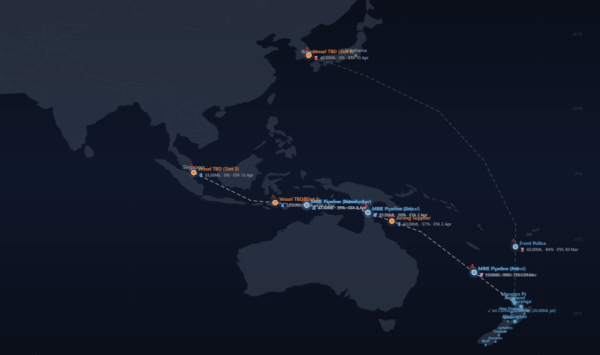
Independent tracking tools such as FuelClock.nz suggest that New Zealand may hold only a matter of weeks of verifiable fuel supply at any given time, depending on incoming shipments. The exact number will fluctuate. Official data and commercial confidentiality mean the full picture is not always visible to the public.
But even if the margin is somewhat larger, the question remains:
Is running lean a resilient strategy for a geographically isolated island nation?
Diesel is not optional infrastructure. It powers freight trucks, fishing vessels, farm machinery, irrigation pumps, generators, construction equipment and emergency services. It moves food. It moves medical supplies. It supports rural economies. It enables access to large parts of the country.
Outdoor recreation depends on it too. Hunters, anglers, trampers, boating clubs and volunteer organisations operate across long distances. Search and rescue depends on mobility. Fire brigades in rural districts rely on diesel appliances. DOC operations depend on transport and machinery.
If supply tightens, prioritisation becomes necessary.
Who gets fuel first? Freight? Emergency services? Agriculture? Aviation? Private vehicles?
These are not abstract questions. They are resilience questions.
New Zealand generates most of its electricity from renewable sources. That is a strategic strength. But transport remains overwhelmingly oil-based. The closure of domestic refining capacity concentrated our exposure to global shipping routes and overseas refining hubs.
That decision may have made commercial sense at the time. The risk profile has changed.
Resilience is not built in a crisis. It is built before one.
Strategic fuel reserves, diversified supply arrangements, transparency around stock levels, and clear contingency planning are not alarmist demands. They are prudent governance.
Election year will inevitably bring promises about cost of living, infrastructure, and growth. Fuel security should sit within that conversation.
This is not about panic.
It is about preparedness.
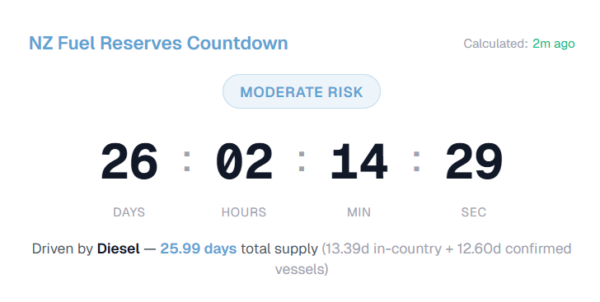
Independent platforms like FuelClock exist because people want visibility. If official assurances are robust, clarity will strengthen confidence. If margins are thin, honest discussion is better than complacency.
Lean systems are efficient. They are not always resilient.
New Zealand’s distance from global markets is permanent. Supply chains are not.
Four weeks of fuel - whether precise or approximate - is less important than the underlying question:
Are we comfortable running this close to the edge?
I am already aware of clubs and groups that have put their April activities on hold. The main reason is the price of fuel but there is also the uncertainty of supply. Nobody wants to find that a high country service station has run out of fuel or its now rationed, and they cannot get home. The lack of certainty seems to extend to the government members themselves. The lack of specific reserves for ambos. search and rescue, fire brigades, etc., is incompetence at its worst. Ditto for staff in these occupations. We cannot enjoy the outdoors without them.