
An observation by Andi Cockroft, Chairman, CORANZ
Introduction: A Standout Asset Under Pressure
New Zealand’s reputation as a world-class destination for freshwater angling is firmly established. From the braided rivers of the South Island to remote alpine lakes, overseas anglers are drawn to clear water, trophy trout, and the experience of fishing in wild, open landscapes that still feel largely untouched.
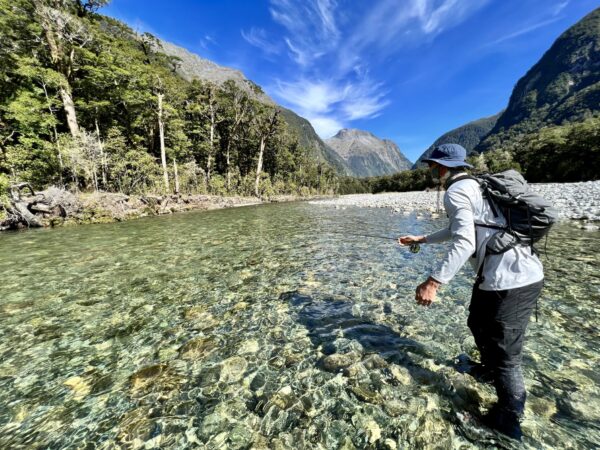
Image Courtesy Fly Fishing and Hunting NZ
Research by NZIER for Fish & Game New Zealand estimates that freshwater anglers (domestic and international combined) spend $113–$139 million each year on angling trips, contributing $66–$81 million in GDP and supporting approximately 950–1,170 jobs nationwide. While international anglers make up a smaller proportion by number, they are particularly valuable, spending more per day than the average overseas visitor.
Alongside this contribution lies an uncomfortable reality: water that is no longer safe or appealing for contact recreation undermines both environmental values and the high-value tourism and recreation economy that depends upon it.
The scale of the opportunity
International anglers are typically high-spend, low-impact visitors. Many travel specifically for New Zealand’s trout fisheries, often booking guides, accommodation, transport, and equipment well in advance. Their average daily spend is estimated at roughly $340 per angling day, making them a particularly valuable niche within the wider tourism sector.
The scale of individual fisheries highlights what is at stake. The Taupō trout fishery alone has previously been valued at around $93 million per year, taking into account licence sales, accommodation, guiding, and other associated expenditure. This demonstrates just how economically significant a high-quality freshwater fishing destination can be.
When water quality or fishery health declines, the impact is not just ecological. It directly affects confidence, visitor numbers, reputation, and the long-term viability of businesses built around angling tourism.
Signs of decline in freshwater quality
Environmental monitoring across New Zealand has identified repeated breaches of recommended safe levels of E. coli in rivers, lakes, and groundwater. These bacteria are commonly used as an indicator of faecal contamination and therefore of the potential presence of harmful pathogens.
For anglers and others who enter the water, this is not a minor technical detail. Contact with contaminated water can result in:
- Gastrointestinal illness
- Skin and ear infections
- Eye irritation and other health problems
Water that appears clear is not necessarily safe. Rivers with strong flow can mask contamination, and some of the most visually appealing locations may periodically fail basic safety standards. This has practical consequences for anyone fishing, wading, crossing rivers during a tramp, or taking water for drinking in the backcountry.
In addition to microbial contamination, many waterways are affected by high levels of nutrients such as nitrogen and phosphorus. While not always immediately harmful to human health, these can fuel excessive plant and algal growth, reduce oxygen levels in the water, and disrupt the delicate balance that supports insect life and healthy trout populations.
A clear case study: the Taharua and upper Mohaka
One of the most frequently cited examples of water-quality decline affecting a premier fishery is the Taharua and upper Mohaka river system in the central North Island.
The upper Mohaka has long been recognised as a nationally significant trout fishery, protected by a Water Conservation Order. However, changes in land use within the Taharua catchment, particularly conversion to intensive farming, have been associated with increased nutrient levels and deteriorating water clarity.
Over time, this was linked with fewer large trout and a decline in overall fishery quality. As a direct result, a high-end international lodge that had previously relied on the Taharua for guided fishing gradually shifted away from operating on that river, citing the reduced quality of the fishery.
This represents a very real example of lost tourism opportunity, even if it is not expressed in neat national statistics. When a premium operator changes its business model because a flagship waterway no longer meets expectations, the economic cost is immediate and local - and the reputational damage can be broader still.
Reputation and international perception
New Zealand’s outdoor and tourism brand has long rested on imagery of clear rivers, pristine lakes, and abundant wildlife. However, this image is beginning to be challenged in overseas media.
In April 2025, The Guardian reported on the findings of New Zealand’s latest environmental assessment, noting that many ecosystems – including freshwater systems – are under serious pressure, and that only a small proportion of larger water bodies remain in good condition.
While the article focused on biodiversity more broadly, it also underscores an uncomfortable point: international awareness of environmental decline is growing. When that perception extends to rivers and lakes, it inevitably affects decisions made by anglers deciding where to spend their time and money.
For niche tourism markets such as fly fishing, reputation travels quickly. A few widely shared accounts of degraded rivers, unreliable fishing, or visible pollution can undo years of careful destination branding.
What we know - and what we do not yet measure
There is strong evidence that:
- Freshwater angling contributes significantly to New Zealand’s economy
- International anglers are high-value visitors
- Water quality and fishery health are key determinants of angler satisfaction
- Specific rivers have already declined to the point where commercial angling operations have pulled back
What is not yet available is a precise national figure for the number of international anglers who have chosen not to visit, or have chosen to go elsewhere, specifically because of declining water quality.
This is not because the link does not exist. Rather, it is difficult to measure decisions that are never made: trips that are never booked, flights not taken, lodges not reserved. The economic opportunity cost is real, but largely invisible in traditional tourism statistics.
Why this matters to members
For members, freshwater is not just a recreational backdrop. It is central to identity, culture, training, competition, family tradition, and in many cases, livelihood.
If water quality continues to degrade, the consequences are likely to include:
- Fewer safe and attractive fishing locations
- Increased pressure on the remaining high-quality waters
- Reduced participation, especially among young people
- Lower tourism revenue in rural and regional areas
- A gradual erosion of New Zealand’s reputation as a world-class fishing destination
These outcomes are in nobody’s long-term interest, regardless of political view or background.
Constructive pathways forward
Avoiding further decline - and restoring what has already been damaged - does not require radical ideology. It simply requires an honest acknowledgement that clean water is a valuable national asset.
Practical, achievable measures that can be widely supported include:
- Prioritising water quality in high-use recreational catchments
- Protecting headwaters and spring sources from contamination
- Supporting riparian planting and streambank stabilisation through community-led projects
- Limiting direct stock access to waterways
- Expanding transparent, real-time water-quality reporting
- Recognising recreation groups as partners in monitoring and stewardship
These actions serve multiple purposes. They protect public health, strengthen biodiversity, and safeguard a valuable tourism and recreation economy.
A shared responsibility for a shared future
Freshwater is one of New Zealand’s most defining features. It shapes landscapes, ecosystems, memories, and industries. It cannot be replaced or imported. Once degraded beyond a certain point, recovery is slow and uncertain.
Every angler who steps into a river, every child who swims in a lake, and every visitor who travels across the world to experience our waterways becomes part of a much larger story - one about stewardship, respect, and foresight.
The question is not whether clean water matters to tourism and recreation. It clearly does.
The real question is whether we choose, collectively, to protect it while we still can.
References
- NZIER – The value of freshwater angling: Assessing the economic contribution and wellbeing benefits of recreational angling in New Zealand (2025)
- The Guardian – April 8, 2025: Many native New Zealand species face threat of extinction, report finds
- Ministry for the Environment & Stats NZ – Our Environment 2025 – Tō tātou taiao
So we are still selling ourselves as 100% Clean and Green! Bah Humbug