
It’s Important for Our Waters
CORANZ commentary
By Andi Cockroft, Chair, CORANZ
Over the past decade, microplastics have shifted from an abstract environmental concern to something that is now routinely detected in water, sediment, and marine life. Scientific papers increasingly report their presence not just in heavily populated coastlines, but in remote and seemingly pristine environments.
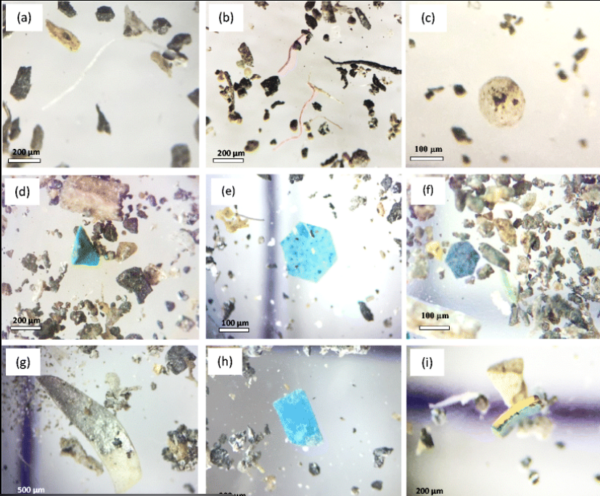
The question for CORANZ is not whether microplastics exist - that is now well established - but what their presence means for the places people value for recreation, and whether there are credible implications for human health.
As with many environmental issues, the science tells a more complex story than headlines suggest.

Detection: what the science is now showing
Peer-reviewed studies from around the world consistently show microplastics in marine organisms. Recent research in the Pacific region found microplastics in roughly one-third of sampled fish species from island coastal waters. Similar findings have been reported in Europe, Asia, the Americas, and the Southern Ocean.
These particles typically originate from:
- breakdown of larger plastic debris,
- synthetic fibres shed from clothing,
- packaging materials,
- fishing gear,
- and urban runoff.
Ocean currents transport them widely. The presence of microplastics in remote waters is no longer surprising; it is the expected outcome of decades of plastic use combined with slow degradation.
What has changed is not the pollution itself, but our ability to detect it.
The New Zealand context
New Zealand is not isolated from this global pattern. Studies conducted by New Zealand universities and research institutions have detected microplastics:
- in coastal waters,
- in marine sediments,
- and in fish species from southern and coastal waters.
Importantly, these detections have occurred both near urban centres and in areas generally regarded as “clean”. This reinforces a key point: microplastics are not solely a local waste-management issue. They are part of a global system.
For recreational fishers, snorkellers, divers and coastal users, this raises understandable concern. Fish that look healthy, waters that appear clear, and coastlines that feel untouched can still contain microscopic contaminants.
Where microplastics are found in fish
One critical detail often missed in public discussion is where microplastics are detected in fish.
Most studies find microplastics primarily in:
- the digestive tract,
- not the muscle tissue.
This distinction matters. In many forms of recreational and commercial fishing, the gut is removed before consumption, reducing direct ingestion by humans. Shellfish, small fish eaten whole, and filter feeders may represent higher exposure pathways than filleted fish.
This does not eliminate concern - but it does place it in context.
Human exposure: what we know so far
At present, scientists agree on several points:
- Humans are exposed to microplastics through multiple routes.
- Drinking water, airborne fibres, and indoor dust may contribute more exposure than seafood.
- Microplastics have been detected in human tissues, blood, and lungs, confirming exposure occurs.
What remains unclear is what this exposure does, if anything, at real-world levels.
There is currently:
- no established dose-response relationship,
- no agreed threshold for harm,
- no definitive evidence linking microplastic ingestion to specific diseases in humans.
Major health bodies, including the World Health Organization, caution against assuming harm in the absence of evidence, while also acknowledging large gaps in knowledge.
Why scientists remain cautious - but concerned
The concern around microplastics does not rest primarily on acute toxicity. Instead, it focuses on longer-term possibilities.
Microplastics can:
- adsorb other contaminants such as heavy metals or persistent organic pollutants,
- transport bacteria or pathogens,
- persist in tissues if small enough.
Of particular interest are nanoplastics - particles so small they may cross cell membranes. Laboratory studies suggest potential for inflammation or oxidative stress at high concentrations, but translating those findings to real-world human exposure remains difficult.
In short: plausible mechanisms exist, but population-level evidence does not - yet.
Ecosystem health as the early signal
Where evidence is stronger is at the ecosystem level. Some studies show microplastics can affect:
- feeding behaviour,
- growth,
- reproduction,
- and stress responses in marine organisms.
For CORANZ, this matters because recreational experience depends on ecosystem health long before human illness becomes apparent. Declining fish stocks, altered species behaviour, or degraded marine environments affect fishing, snorkelling, diving and coastal enjoyment regardless of whether human health impacts are proven.
Environmental degradation tends to be felt first in places people use.
Avoiding alarm - without ignoring reality
There is a temptation to frame microplastics as either a looming health catastrophe or an overblown distraction. Neither position is supported by the evidence.
The responsible position sits in between:
- microplastics are now ubiquitous,
- their long-term effects are uncertain,
- ecological impacts are more clearly established than human health impacts,
- reducing plastic pollution is prudent regardless of health outcomes.
This is not fear-mongering. It is precaution grounded in evidence.
This matters for outdoor recreation
For CORANZ, the relevance is clear. Outdoor recreation depends on trust in natural places. When water quality declines - even invisibly - confidence erodes. People notice changes in fish abundance, clarity, and ecosystem vitality long before laboratory thresholds are crossed.
Protecting outdoor places means engaging honestly with emerging science, not exaggerating it, and not dismissing it.
Microplastics remind us that even when places look intact, pressures may still be accumulating. Stewardship, waste reduction, and sensible policy are not about panic - they are about maintaining the environments people rely on for recreation, wellbeing, and connection.
The science is still unfolding. The presence is no longer in doubt. The impacts are still being studied. In that uncertainty lies a simple principle: it is wiser to reduce pollution than to argue later about its consequences.
That principle has served outdoor places well before. It applies here too.