
What PFAS Means for Land, Water, and Recreation
Recent international coverage has drawn attention to the issue of persistent contaminants entering land and food systems, often framed in stark and unsettling terms. Attention grabbing headlines such as “cancer-causing toxins discovered in America’s food supply” are appearing globally.
While some of that reporting leans toward alarm, it reflects a genuine concern being raised by scientists and regulators: how do we manage substances that do not readily break down once released into the environment?

Among the most prominent of these substances are PFAS - per- and polyfluoroalkyl substances - often described as “forever chemicals” because of their persistence in soil, water, and living organisms.
For CORANZ, the issue is not the headline. It is what lies beneath it.
What are PFAS and why do they matter?
PFAS are a large group of synthetic chemicals used in industrial processes and consumer products for decades. They are valued for their resistance to heat, water, and grease. That same resistance, however, makes them difficult to remove once they enter the environment.
International research has linked certain PFAS compounds to health and ecological concerns, particularly where exposure is prolonged or concentrated. As a result, attention has increasingly turned to how PFAS move through wastewater, land application practices, waterways, and food chains.
Biosolids and land application
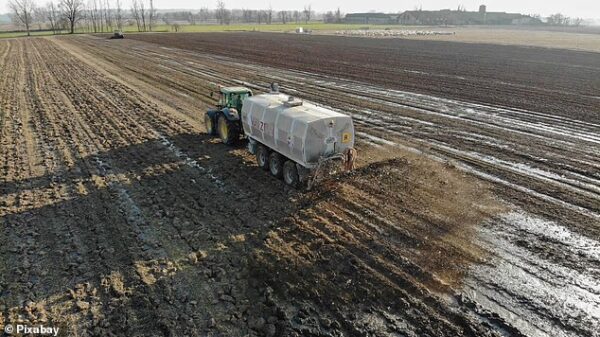
One pathway receiving growing scrutiny overseas is the use of treated sewage sludge, commonly referred to as biosolids, as fertiliser on farmland. While biosolids provide nutrients and organic matter, they can also contain trace levels of contaminants that originate from household, industrial, and commercial sources.
In some jurisdictions, regulatory oversight and testing have lagged behind emerging science. This has prompted debate, tighter standards in some regions, and concern about what happens when persistent chemicals are applied to land that drains into rivers, lakes, and coastal environments.
The New Zealand context
In New Zealand, available monitoring suggests that PFAS levels in drinking water and food are generally low and within international guidelines. That is reassuring, but it is not the end of the discussion.
Our national picture remains incomplete. PFAS have been identified around specific point sources such as firefighting training sites, and there is limited comprehensive data on their wider distribution in soils, sediments, and waterways. As with many environmental issues, absence of evidence is not the same as evidence of absence.
Why this matters for recreation
Outdoor recreation depends on trust in the environments people use.
When questions arise about water quality, sediment contamination, or food safety, people respond by disengaging. Swimming spots are avoided. Fish and shellfish are left uncollected. Places remain technically accessible, but their value as recreational spaces diminishes.
This is a familiar pattern. We have seen it with nitrates, sediment, and other slow-burn contaminants. PFAS fit the same profile: persistent, largely invisible, and capable of eroding confidence long before they trigger formal closures or regulatory action.
From alarm to assessment
Some media coverage has focused on worst-case interpretations, which can obscure nuance and undermine constructive discussion. CORANZ does not support panic-driven narratives. But neither do we support complacency.
The appropriate response lies between the two:
- acknowledging that PFAS persistence poses legitimate long-term questions
- recognising that New Zealand’s current risk appears low
- accepting that monitoring, transparency, and precaution are essential
This is not about assuming harm. It is about ensuring that land-use and waste-management practices are aligned with the realities of substances that do not simply disappear.
Questions worth asking
Rather than reacting to headlines, a more productive approach is to ask:
- Are current monitoring regimes sufficient to detect long-term accumulation?
- Do land-application practices adequately account for persistent contaminants?
- How are downstream recreational environments being protected?
- Is information accessible and transparent for communities who rely on local water and food sources?
These are governance questions, not sensational ones.
A measured conclusion
PFAS remind us that environmental management is often about patience rather than urgency - about seeing problems early, before they become crises. For those who value outdoor access and recreation, the stakes are not abstract. They are felt in the quality of water, the confidence to gather food, and the willingness to use the places we care about.
CORANZ supports evidence-based monitoring, transparent regulation, and precaution where uncertainty exists. Persistent chemicals require persistent attention - not alarm, but resolve.
That is the conversation worth having.