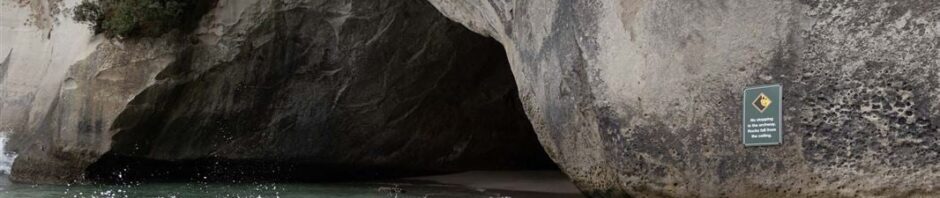
Calls to reopen walking tracks on the Coromandel Peninsula have drawn attention to the loss of access to well-used coastal routes. Community concern has focused on the impact of these closures, particularly where tracks have long provided reliable entry to popular locations. The immediate reaction centres on access, but the underlying issue is more complex.
Closures in this area are not occurring in isolation. Since major storm events in recent years, including Cyclone Gabrielle, parts of the Coromandel coastline have experienced significant land instability. Slips, erosion, and ongoing rockfall risk have affected a number of tracks, including routes associated with Cathedral Cove. In several cases, the terrain itself has changed to the point where previous alignments are no longer considered safe.
What changes in this situation is the basis on which access is determined. Public conservation land carries an expectation of availability, but that expectation is always subject to safety. Where risk cannot be reasonably managed, closure becomes necessary. That may be justified, but it also alters how access is experienced, particularly where there is no clear pathway to reopening.
This is where the tension becomes visible. While closures appear to be driven by legitimate geotechnical concerns, the reasoning behind individual decisions is not always presented in a clear or consolidated way. Information exists, but it is often fragmented across updates, advisories, and technical assessments. Without a clear statement of cause, duration, and intended outcome, temporary closure can begin to feel indefinite.
That lack of clarity affects confidence in the system. Access depends not only on physical tracks, but on understanding how decisions are made and when they will be reviewed. Where that understanding is missing, uncertainty fills the gap, and public discussion shifts from informed debate to speculation.
Public conservation land is held for both protection and use. Safety must take precedence where risk is real, but decisions to restrict access should remain visible, justified, and subject to review. The issue is not whether tracks are closed, but whether the reasons, risks, and future pathways are clearly understood over time.
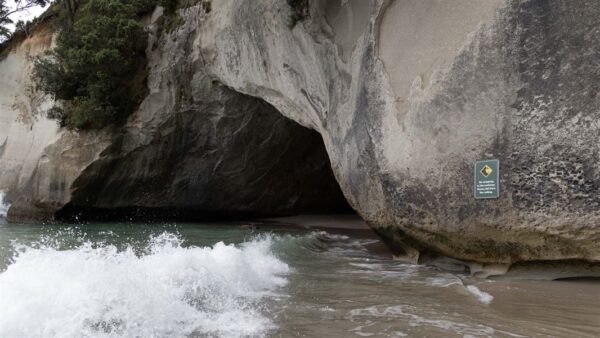
Cathedral Cove
There is an online petition here https://www.change.org/p/don-t-close-our-cathedral-cove-tracks if you want further information.
Is it simply lack of funding causing DOC to close all these facilities nationwide? Yet the bureaucracy expands and investment elsewhere in poisoning increases almost exponentially.
Somewhere DOC has lost its sense of direction.
Doc flexing there muscles, doing what suits them, regardless of what the public want.