
Recent warnings to swimmers and dog owners about contaminated rivers in Wairarapa have prompted understandable concern. But this is not a local anomaly. It is part of a nationwide pattern that affects outdoor recreation across New Zealand, from summer swimming holes to popular dog-walking spots and fishing reaches.
For organisations such as the CORANZ, this matters because freshwater is one of the most heavily used - and increasingly constrained - public resources for outdoor recreation. When rivers become unsafe, access in practice is lost even if it remains legal on paper.
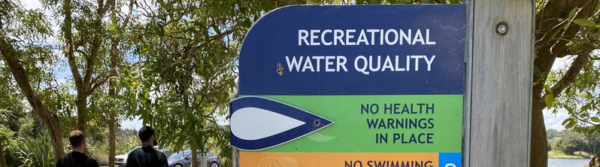
What the warnings are really telling us
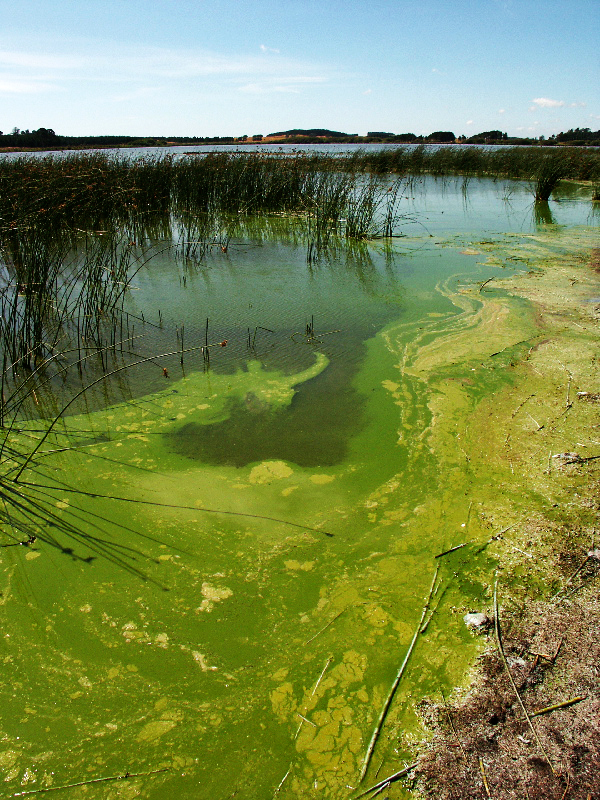
The Wairarapa alerts focus on two familiar risks: bacterial contamination (often measured by E. coli) and toxic cyanobacteria (commonly called toxic algae). Both pose real health risks to people, and especially to dogs, which can become seriously ill or die after contact with algal mats.
Crucially, these warnings are not unusual. Similar alerts are issued every summer across multiple regions, often covering large river systems that people assume are safe because they look clear or are traditionally used for recreation.
A national pattern, not a regional outlier
Across New Zealand, regional councils and health authorities regularly advise against swimming in rivers and lakes due to:
- elevated bacteria after rainfall,
- warm, low-flow conditions that favour toxic algae,
- nutrient enrichment from surrounding land use,
- and sediment loads that reduce ecological resilience.
From Canterbury to Hawke’s Bay, Waikato to Wellington, seasonal warnings have become routine. The specific rivers change, but the pattern does not. This tells us something important: freshwater safety issues are systemic, not isolated.
Why appearance can be misleading
One of the most frustrating aspects for recreationists is that risk is often invisible. Rivers can look pristine while still carrying unsafe bacteria levels. Toxic algal mats may sit along margins or under stones, unnoticed until a dog investigates them.
This gap between appearance and risk undermines confidence and discourages use. Over time, people simply stop visiting waterways they once relied on - a quiet erosion of outdoor opportunity.
Monitoring exists - but outcomes lag
New Zealand has invested heavily in monitoring. Public tools such as LAWA (Land, Air, Water Aotearoa) provide near-real-time information for many sites. That transparency is welcome and necessary.
But monitoring is not the same as improvement.
If warnings are becoming more frequent and more widespread, the question is not whether councils are doing enough testing. It is whether policy settings and land-use management are delivering the outcomes the public expects: rivers that are safe to use, most of the time, in most places.
Recreation bears the cost
When rivers are unsafe:
- families lose low-cost swimming options,
- anglers and paddlers avoid water they no longer trust,
- dog owners are warned away from traditional exercise spots,
- and communities lose informal gathering places that support wellbeing.
These losses rarely show up in economic accounting, but they are real. Outdoor recreation depends on confidence, not just access rights. Once confidence is gone, participation drops - and with it, public connection to freshwater protection.
The governance challenge
Freshwater management sits at the intersection of many pressures: farming, urban runoff, wastewater infrastructure, forestry, and climate variability. That complexity is often used to excuse slow progress.
Yet from a public perspective, the lived experience is simple: too many rivers are periodically unsafe.
Repeated warnings raise legitimate questions:
- Why do known problem catchments remain problem catchments year after year?
- Why do remediation efforts lag behind monitoring capability?
- Why are recreation impacts treated as incidental rather than central?
Not a blame game - a focus issue
This is not about demonising any single sector or region. Rivers respond to cumulative effects, and responsibility is shared. But shared responsibility must still translate into clear accountability and measurable improvement.
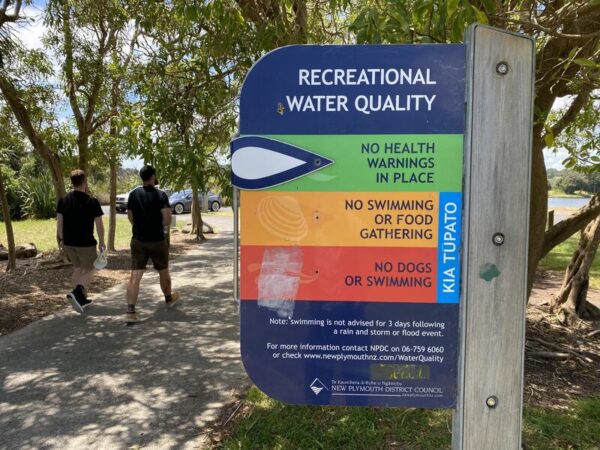
When warning signs become seasonal fixtures, something is not working as intended.
What better looks like
From a recreation perspective, success would mean:
- fewer and shorter-duration health warnings,
- visible improvement at long-problem sites,
- remediation that prioritises places people actually use,
- and policy that treats safe recreation as a legitimate outcome, not a secondary benefit.
People are willing to adapt their behaviour in the short term - avoiding rivers after heavy rain, heeding alerts - but they reasonably expect long-term progress in return.
A national conversation we need
The Wairarapa warnings should be seen as a prompt for a wider, more honest national discussion. Not about whether monitoring is adequate - it largely is - but about whether our freshwater policies are delivering what the public thinks they are paying for.
Outdoor recreation relies on healthy, usable rivers. If large parts of the country are effectively off-limits each summer, we need to ask why - and what will change to fix it.
Freshwater protection is not just an environmental aspiration. It is a public health issue, a recreation issue, and a test of whether governance can turn good intentions into lived reality.
Until that happens, warning signs will keep appearing - in Wairarapa and far beyond.
Warning signs at the two popular and well appointed camping grounds on the Lower Selwyn River in Canterbury used to show the risk of toxic algae. It was evident the monitoring was lax by the presence of would and cobwebs. Apparently due to both Selwyn District Council and ECan disputing responsibility. Within a day or so of a RNZ article showing a photo of the old sign, sign new signs were erected simply indicating if it safe to swim. Presently Coe’s Ford indicates it is not safe. A search on the LAWA website shows both toxic algae and pathogenic bacteria present.
The water is clear and free of sediment. Nitrate levels are routinely 3 – 4 times the Auvust 2020 NPS FM bottom line for nitrate. It is notable that the Coalition Government has prevented regional councils from implementing these standards pending the development of new ones. This is significant as Chrs Bishop’s RMA reforms rely on standards determined by the Minister. I.e the Natural Environment Act is proceeding through select committee with no environmental standards or limits stated. With the reforms giving the economy and environment equal weight and the knowledge that the pollution of Canterbury’s lowland rivers is the result of unmanaged diffuse pollution from dairy farms it seems there is no intention to address the problem. In fact this government has signalled it has no plans to address diffuse pollution. The dairy industry must be thrilled, the rest of use not so much. An election year is the time to show our displeasure.
As a boy, fishing the Manawatu River in the 1950s I could cup my hand and drink from the river. Fifty years later, it was labelled one of the worst polluted in the OECD countries. I remember then Environment Minister Nick Smith rubbishing the claims but I bet he wouldn’t dare to drink the water.
An environmental minister scoffing at pollution warnings – so much for Mr Smith and politicians who have turned a blind eye.
I can see the advantages for local bodies in not cleaning up a river. Much cheaper to put a sign saying “No Swimming”.
Children playing on their cellphones and tablets will never know what they’ve lost.
AI says it all -“The Manawatū River has been labelled one of the most polluted in the Western world due to significant farm runoff (nitrates, sediment) and urban/industrial waste, with one study showing it among the worst for nutrient pollution indicators in a broad comparison. While not definitively the absolute worst globally (especially compared to developing nations’ rivers), it’s considered a severe case in a developed country, prompting major local efforts and accords for cleanup, though water quality remains a significant challenge. ”
Rivers were a big issue in 2017 in the run-up to the election. Even more so now with this year’s election and with the nitrate issue in Canterbury, it’s become an even worse environmental calamity plus because of science-based links of high nitrate levels to high bowel cancer rates, a human health issue too.
Good comments “Chinook”.
The nitrate-bowel cancer link emerged from a very thorough Danish study. involving 2.7 million people over 23 years which found a significant link between long-term nitrate exposure in drinking water and increased risk of colorectal cancer. It’s no laughing matter that the Canterbury area has the highest bowel cancer rates in NZ and as I understand, among the top three in the world.
Politicians in ECan and in Parliament, wake up to your elected responsibility. People matter and not just in the months before an election!
This issue really, really matters! Fresh water is the essence of life. If we let all of our lowland rivers go bad .. how long before our aquifers and our drinking water sources follow?
We are already seeing a growing number of very serious and warning signs.
Our environment is the cornerstone of our economic wellbeing :
* agriculture is the consistent foundation of our economy
* it’s at the heart of our tourism numbers
It’s also a key part of how we identify, as a nation. Our clean, green image is more than just a marketing slogan.
We talk about a number of issues affecting our species, and our planet:
* our over-population (we’re not the only species on the planet .. yet more than 93% of mammalian biomass is now either human, or the animals we farm to feed ourselves)
* our impact on our environment
* loss of habitat for other biodiversity
* loss of global insect biomass (a more than 75% reduction, over the past 30 years)
* loss of global wildlife (more than a 60% reduction, since 1970)
* extinctions of other species
* we’ve altered over 75% of our planet’s land surface area (which is most of what we readily can .. from now on, it’s either icy, desert, or has difficult geography eg mountainous)
These are all serious issues.
But the ready availability of fresh, clean water .. is the most important issue of all.
Everybody blames agriculture .. and in defence, rural blames the urban sector.
At the end of the day, it doesn’t matter who’s to blame .. as much as it matters that we get on top of the problem.
Otherwise .. the future looks bleaker for all of us.
Pollution by cows = pollution by people; we farm them!! An oft quoted figure is that dairy cows produce 13 times as much effluent as a humans For human cities we require sewage treatment systems. By rights so should the “cow cities”. Canterbury has 1.25 million cows producing sewage equal to 13 x 1.25m = 1,625,000 people. That is four times the effluent load of greater Christchurch with very little requirements to treat it, …. go figure! Of course it all ends up mixed in with our precious fresh water for us, and those who come after us, to drink.
I can see the advantages for local bodies in not cleaning up a river. Much cheaper to put a sign saying “No Swimming”.
Children playing on their cellphones and tablets will never know what they’ve lost.
I see that a few days ago Lake Hood, a man-made lake, recorded dangerous cyanobacteria levels for the fourth year in a row.