Road cycling on formed routes is the use of sealed roads, shared paths, and waterfront or park-edge routes for recreation, exercise, and simple movement. In New Zealand it often takes place close to where people live - in towns, suburbs, and coastal margins - rather than as long-distance touring or competitive riding.
For many people, this is their most regular outdoor activity.
How people actually do it
This form of cycling is typically:
- Short to moderate in distance
- Done individually or in small groups
- Often repeated on the same routes
- Combined with errands, coffee stops, or play
Family use is common, including:
- Children riding independently
- Bikes fitted with child seats, trailers, or balance bikes
- Mixed speeds and abilities
The emphasis is on movement and access, not performance.
Where it happens
Road cycling on formed routes commonly occurs:
- Along waterfront roads and promenades
- On shared walking and cycling paths
- Through parks, reserves, and town belts
- On quiet local roads and loops
- Around harbours, rivers, and estuaries
Many towns and cities provide routes that allow people to cycle safely without leaving the urban area. A well-known example is Evans Bay Parade in Wellington, where a continuous waterfront road supports casual cycling, walking, and family outings with wide views and frequent stopping points.
Access realities
This activity depends on:
- Continuous, well-formed surfaces
- Safe crossings and predictable traffic
- Legal public access along coasts and reserves
- Parking or easy start points close to home
Even short breaks in continuity - missing links, unsafe intersections, or closed sections - can make routes unusable for families or less confident riders.
Shared use
Formed cycling routes are almost always shared with:
- Walkers and runners
- Families with prams
- People fishing or stopping to look
- Locals accessing nearby facilities
Successful shared use relies on:
- Moderate speeds
- Clear sightlines
- Courtesy and predictability
Most of this is managed informally, through familiarity rather than rules.
Who this suits
Road cycling on formed routes suits:
- Families with children
- Older riders
- People returning to exercise
- Casual cyclists
- Visitors exploring a town at ground level
Many people cycle this way for years without ever moving into sport or off-road riding.
Learning and progression
People often begin with familiar loops and gradually extend distance or confidence. Some later explore:
- Longer waterfront routes
- Connections between suburbs
- Early-morning or off-peak riding
Others remain content with short, regular rides that fit easily into daily life.
Extending the Activity: The Role of E-Bikes
How e-bikes have changed this activity
Electric-assist bicycles have significantly widened participation in road cycling on formed routes. By providing assistance when needed - on hills, into headwinds, or over longer distances - e-bikes allow more people to cycle comfortably, confidently, and repeatedly.
Importantly, they do not remove effort; they reshape it.
What this enables in practice
E-bikes commonly make it possible to:
- Ride further along familiar routes
- Return home without worrying about fatigue
- Ride into wind or on rolling terrain
- Include people with mixed fitness in one outing
- Carry children or light loads more easily
- Ride more often, not just occasionally
For families, e-bikes often allow:
- One adult to carry a child seat or trailer
- Parents to ride together despite different strength levels
- Longer, slower-paced outings that still feel achievable
Where e-bikes fit naturally
E-bikes are particularly well suited to:
- Waterfront loops
- Harbour-edge roads
- Urban coastal routes
- Town-to-suburb connections
- Longer formed paths that were previously marginal
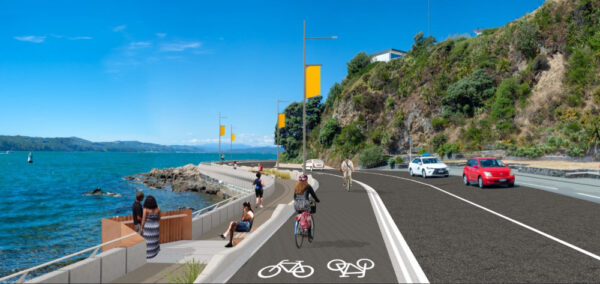
Routes such as Evans Bay Parade in Wellington remain ideal short rides - but with an e-bike, they also become part of longer, connected journeys, linking bays, peninsulas, and town edges without turning the outing into a test of endurance.
Access and continuity matter even more
Because e-bikes extend range, they:
- Expose missing links in networks
- Highlight unsafe crossings
- Make continuity more important than gradients
- Increase reliance on predictable, legal access
A broken section that might once have been tolerable now becomes a hard stop.
Shared use considerations
E-bikes do not fundamentally alter shared-use expectations:
- Moderate speeds remain appropriate
- Courtesy and awareness still apply
- Predictability matters more than power
Most e-bike users ride at similar speeds to conventional cyclists on shared routes.
Who this especially suits
E-bikes have expanded this activity for:
- Older riders
- People returning from injury or illness
- Parents carrying children
- Commuter-recreational hybrids
- People living in hillier towns and cities
They have turned many “used to cycle” people back into regular outdoor users.