Guest Post by Dave Rhodes
Activities during Conservation Week, including talks at Brooklands Zoo reported by Radio New Zealand, encourage people to make small changes in their gardens to support native species. Suggestions include planting for pollinators, reducing pesticide use, providing shelter, and managing domestic animals. These actions are presented as simple steps with positive outcomes. That may be the case, but the broader effect depends on how those actions interact with the wider environment.
It is not the individual action, but the cumulative effect. A single garden planted for birds or insects has limited reach. When these are repeated across many properties, they begin to alter local conditions. Food availability increases, shelter becomes more widespread, and species behaviour adjusts accordingly. Together, these changes influence how local ecosystems function.
This shifts the focus from intention to outcome. Encouraging pollinators may support insect populations, but it can also alter which species dominate in a given area. Providing shelter benefits some animals while potentially changing predator-prey relationships. Reducing pesticide use may increase biodiversity, but it can also introduce variability that differs from managed environments. These unintended consequences are often less visible than the initial action.
There is also a question of scale. Backyard changes are local by design, but their effects extend beyond property boundaries. Birds, insects, and small animals move freely between areas, responding to the combined conditions they encounter. What appears as a collection of individual efforts becomes a shared system shaped by many inputs.
This is not a new pattern. Human interaction with the environment frequently begins at a small scale and grows through repetition. Whether through feeding wildlife, altering habitats, or introducing new practices, the outcome reflects both the number of participants and the consistency of their actions. The result is not controlled in a single place, but distributed across many.
Straightforward perhaps, but individual small actions can, when widely adopted, alter how local environments function. The issue is not whether these changes are positive or negative in isolation, but how they combine over time.
This is not about discouraging participation. It is about recognising that even small interventions contribute to a wider system, and that their effects are shared.
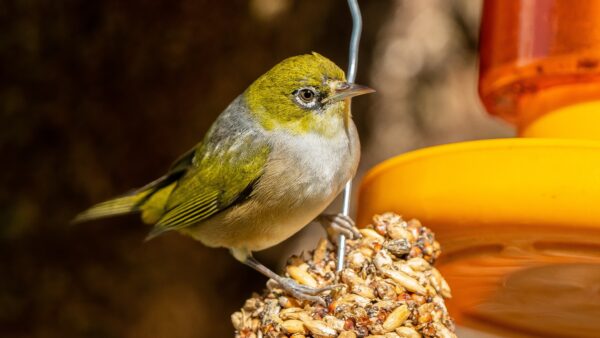
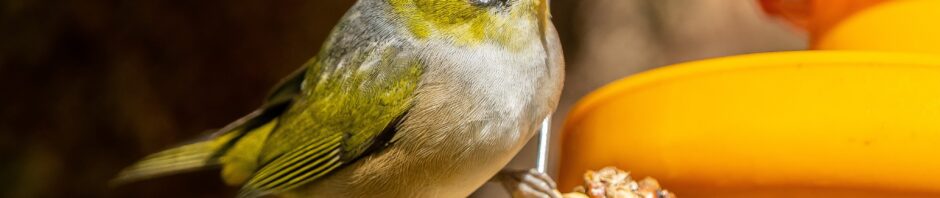
Interesting choice of bird for the photo Dave. The waxeye/white-eye/silver eye is a favourite of mine but is it truly a native? Zosterops lateralis was unknown in NZ before the 1832 and arrived in greater numbers in 1856. From then it spread across the country. Whether there were human hands involved in its introduction is unknown but considered unlikely. Probably because it is “pretty” it is classified as a “native”. The Australians however also classify it as an Australian native. Which brings us back to the question of “What is a N.Z. native”. Usually it is something that is self-introduced. I guess that definition also includes Myrtle rust and Spur winged Plovers; but will they be protected as beloved natives by DOC etc?
Perhaps needs wider control ie by mbie or maf. Environmental benefit requires support by the authorities to have an impact.