
Advance voting opens on Monday 26 October, and by the evening of 7 November the country will have made its choice. For organisations like CORANZ, which care deeply about access to the outdoors, the health of our rivers, and the protection of the landscapes New Zealanders love, the hope is that the environment will weigh heavily when voters pick up the pen. The honest truth is that, for many, it won’t be front of mind. So what will be?
The weekly shop comes first
Every survey this year points the same way. In the final Ipsos Issues Monitor before the election, cost of living remains the paramount issue, with health a growing concern in second place and unemployment a bigger issue than it has been for five years. Ipsos says cost-of-living concerns have dominated public sentiment since late 2021, which means a whole electoral cycle has been lived under the shadow of the grocery bill, the power bill and the rent. Earlier in the year, concern over petrol prices jumped 17 points to 26 percent, making it the fourth most important issue. Pre-election poll shows health concern on rise, but one big issue towers above all +2
That is not apathy toward the environment. It is triage. A family deciding between filling the tank and paying the dentist is unlikely to rank catchment management or public access to the high country at the top of their list, however much they may value a weekend at the river.
Work, and the fear of losing it
Employment has quietly become a major undercurrent. Ipsos found that unemployment worries have shot up from 5% to 19% compared with the last election cycle. Job security shapes how people hear every other promise. A voter worried about redundancy may look kindly on policies promising growth and development, even where those policies sit uneasily with conservation goals. thespinoff
Crime: louder in headlines than in surveys
Offending and public safety remain powerful campaign themes, but their weight in voters’ minds has shifted. Crime and law and order are now a top concern for 15%, dramatically down from 37% in 2023. That average hides real variation, though. Earlier this year, Ipsos noted that crime ranked top among people aged 65 and over, 58% of whom called it one of the three biggest issues, and older New Zealanders turn out to vote in large numbers. thespinoffthespinoff
The quiet crisis of trust
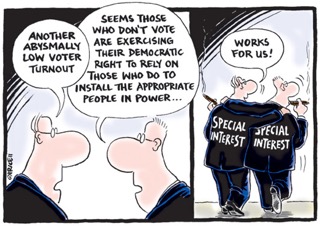
Beneath the specific issues lies something harder to measure: weariness with politics itself. In one Ipsos survey, the 10 percent of voters saying no party was capable of managing the economy was an all-time high. Neither major party has fully earned voters’ confidence either; on cost of living, confidence in both major parties has ebbed. Disillusionment can play out in different ways. Some will stay home. Some will drift toward smaller parties as a protest. Others will vote reluctantly for whoever they consider the least bad option.
Party loyalty: the habit that runs deep
Perhaps the most interesting factor is the one least discussed on the campaign trail. Many New Zealanders don’t decide each election from scratch at all. They vote the way they always have, the way their parents did, or the way their community does. For those voters, party identity acts as a filter: issues are interpreted through it rather than weighed against it. A long-time supporter unhappy with their party’s record on water quality may grumble, but still tick the familiar box.
Yet loyalty is weaker than it once was. MMP has made switching easier, and the split vote gives people a way to hedge: a party vote for one, an electorate vote for another. This year’s polling volatility suggests a sizeable group of voters is genuinely open to persuasion, and their late decisions could settle a very tight contest.
And the environment?
Where does this leave conservation and outdoor recreation? Not as a lost cause, but as an issue that needs connecting to what voters already care about. Clean water is a health issue. Access to rivers, beaches and back country is a cost-of-living issue for families who can’t afford overseas holidays but can afford a tank of gas to the nearest track. Resilient landscapes protect jobs in farming, tourism and regional towns. When the environment is framed as separate from people’s daily lives, it loses. When it is framed as part of them, it competes.
How will voters decide?
In the end, most people will make up their minds through a blend of all these forces: a dominant concern (usually money), a gut sense of who they trust, the pull of habit, and perhaps a final nudge from a debate, a news story or a conversation at the dinner table. Very few will sit down with a spreadsheet of policies.
That is not a criticism of voters. It is how democracy works in practice. The responsibility, for advocates of any cause, is to make the case clearly enough that it finds its way into those everyday calculations.
Whatever your priorities, the most important thing is to take part. Enrolment closes at midnight on Sunday 25 October, and this year you can’t enrol at a voting place. Then, between 26 October and 7 November, have your say.

Democracy is precious. To not vote is apathy at its worst. To not vote is not a protest as some non-voters argue it is. It is giving in to bad government which we have had since 2008 election at least. So get out and vote; otherwise don’t complain.
Interesting thoughtful discussion by Andi Cockroft.The few words at end i.e. “the most important thing is to take part” is good advice. I even know one chap who isn’t on the electoiral roll. Pathetic!
A good analysis of likely electorate responses.
MMP ensures Coalition Government, resulting from ‘horse trading.’
This is the weakness of democracy; sectarian interests confound good leadership.
It is a sad state of affairs.
It’s also sad and ironic that politicians who want a four year term, give us, by their performances every reason to say stick to three years. Who would want to give the Key or Ardern government another year in 2017 and 20-23 respectively?