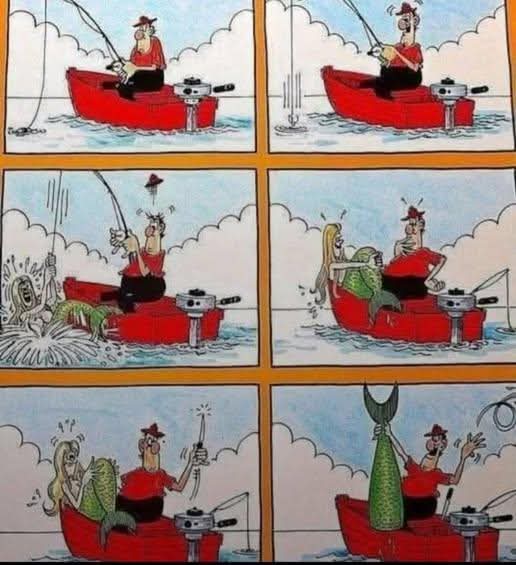
or Perception versus Reality
Anyone who has spent time around recreational fishing will have heard the stories. The fish that was just a little larger last time it was mentioned, the one that nearly made the record books, or the one that got away but would have been the catch of the season. It is part of the culture, and always has been. That does not make it wrong, but it does raise an interesting question.
What changes is not the experience itself, but how it is remembered and described. Time on the water is often measured less in exact figures and more in moments - the strike, the fight, the conditions, and the company. When those moments are retold, detail can shift. A 45-centimetre fish becomes “about 50”, a weight becomes an estimate, and the story becomes the focus rather than the measurement.
This is not necessarily deliberate. Human memory tends to favour the highlights, and fishing provides plenty of those. The best fish, the hardest fight, the near miss - these are what stay with us. Over time, those memories can become simplified or adjusted without any conscious intent. The result is a version of events that feels accurate, even if it differs from what might have been recorded at the time.
There is also a social element. Fishing has always been as much about sharing the experience as it is about the catch itself. Stories are compared, retold, and occasionally improved in the telling. It is part of the enjoyment, and part of the connection between those who spend time on the water.
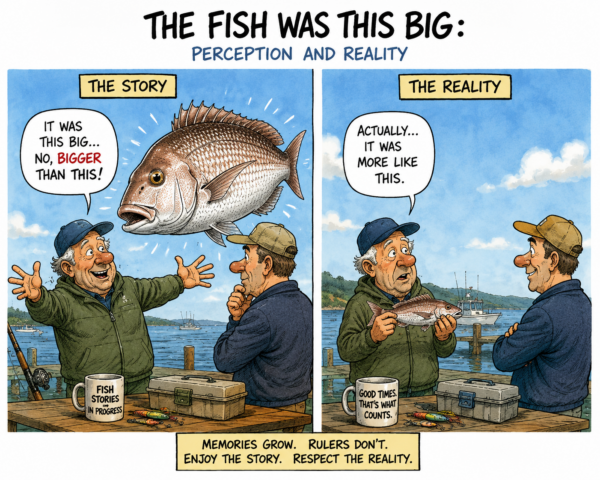
The wider point is not about exaggeration, but about the difference between perception and measurement. A ruler or scales will give one answer. Memory and experience may give another. Both have their place, but they serve different purposes.
The principle is straightforward. Recreation is not always about precision. It is about experience, and how that experience is carried forward. Where measurement matters, it should be used. Where memory takes over, a degree of variation is part of the tradition.
This is not about questioning honesty. It is about recognising that the story of a catch is often as important as the catch itself, and that the two do not always align exactly.
And perhaps that is part of the appeal.