
Guest post by Steve Hodgson
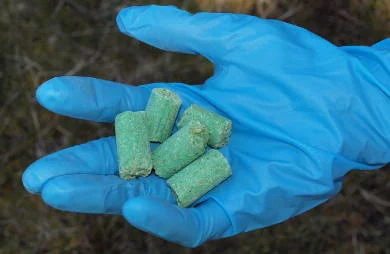
New Zealand has been using 1080 for decades. In that time, budgets have grown, control footprints have expanded, access restrictions have multiplied, and the language of urgency has become permanent. We are told the threat is escalating, the science is settled, and more funding is essential.
If all of that is true, then three questions should be easy to answer.
They never are.
Question One: If repeated 1080 poisoning works, why does the problem persist - and why do the footprint, funding, and restrictions keep growing?
Any effective control programme should trend toward resolution. Over time, success should mean less intervention, not more. Yet after decades of repeated aerial poisoning, we are told pests remain at crisis levels, forests are under constant threat, and emergency responses must continue indefinitely.
Budgets rise. Control areas expand. Hunting and food gathering are routinely suspended. Access to public land is restricted again and again. If this is what success looks like, it deserves a clearer definition.
A system that requires perpetual escalation without a visible end-state begins to look less like a solution and more like maintenance of a problem. In any other policy domain, that would trigger a redesign. Here, it triggers another funding round.
Question Two: Where is the independent, long-term evidence showing net reductions in pest populations - not just short-term knockdowns?
We hear a great deal about kill rates and immediate post-operation drops. What we hear far less about is long-term abundance independent of repeated intervention.
Rats and other fast-breeding pests are known to rebound quickly after large-scale knockdowns. Reduced competition, abundant food, and disrupted predator dynamics can drive rapid recovery. In some contexts, populations return to baseline within a few years - sometimes overshooting.
If repeated 1080 applications are genuinely reducing pest pressure at a system level, there should be:
- transparent baseline data,
- independent longitudinal monitoring,
- and clear evidence of declining rebound over time.
Instead, we are offered projections decades into the future, often framed around ever-present “mast years” and worst-case scenarios, while present-day outcomes remain stubbornly ambiguous.
If the science is as strong as claimed, show the trend lines - not the justifications.
Question Three: Why are alternative tools and community-based approaches consistently restricted rather than integrated?
Recreational hunting, local stewardship, and diversified control methods are not panaceas. No serious person claims they are. But neither are they irrelevant.
Yet time and again, these tools are sidelined. Hunting is curtailed or banned in treated areas. Community involvement is reduced to consultation after decisions are made. Control is centralised, professionalised, and increasingly commercialised.
If the goal is long-term suppression or elimination, why exclude ongoing pressure from people already on the ground? Why rely so heavily on episodic poisoning while restricting tools that provide continuous engagement, local knowledge, and social licence?
A system confident in its effectiveness would welcome complementary approaches. A system that resists them invites questions about dependency.
The pattern that can’t be ignored
Taken together, these questions point to an uncomfortable possibility: that 1080 has become not just a tool, but an industry - one that requires persistent crisis narratives, expanding exclusion zones, and rising public expenditure to sustain itself.
This does not require bad faith. Systems can drift into self-preservation without anyone intending it. But intent does not cancel outcomes.
If, after decades, we still face:
- escalating pest warnings,
- perpetual emergency framing,
- expanding restrictions on access and hunting,
- and calls for ever more funding,
then the burden of proof shifts. It is no longer enough to say “doing something is better than doing nothing.” We must ask whether we are doing the right thing, in the right way, for the long term.
Not anti-conservation - pro-accountability
Asking these questions is not opposition to conservation. It is a demand for accountability, transparency, and honest evaluation.
If repeated 1080 poisoning is effective, show how it leads to fewer operations, smaller budgets, and restored public access over time. If it is not, admit that dependency has set in and redesign the system accordingly.
Public land, public money, and public trust are all on the line. Those who question outcomes are not the problem. The real risk lies in a system that no longer feels the need to answer.
Three questions. Straight answers. That is not too much to ask.
A tiny country in land area – New Zealand far and away leads the world in using 1080, to the tune of over 90%. The fallacious argument that NZ’s food chain and ecosystem is unique and operates differently to the rest of the world is absolute bull sh—t.
The media go along with DOC’s absolute B.S.
If true investigative good journalism was alive and well, DOC’s hyper-spin would have been met with derision.
The only hope is for good investigative journalists to get onto this. There is no interest from the left or right to tackle it; even although it smells of corruption.
Some good honest independent pre and post monitoring of the effects of 1080 poison would put an end to the pro user’s argument that it is the “ best tool available “ is absolute bull. I monitored a poison operation pre and post poisoning independently of an official monitoring of tomtits the end result was the official monitoring found no dead birds at all yet a group of us found 14 dead tomtits in the same area along with grey warbler fantails and some exotic species 21 altogether. They tomtits were offered to DoC for autopsy but the declined saying “ we only have funding for one autopsy a year “
Many people who believe all the dramatic claims of impending disaster by the DoC and other supporters if this super toxin is not used have obviously never seen the end results of 1080 have been completely be sucked in by the propaganda machine
The protests against the use have been held all around New Zealand, along with potations that have been signed by thousands of New Zealanders wanting to see the use of the cruelest of poisons banned completely, this poison is the cruelest and inhumane form of poisons control possible
Bring back the rabbit boards to control the pests humanly
Doc will always use the simplest form of control for anything they do, not always the cheapest, people who agree with the use of 1080 aren’t human.
Peter
The whole “pest” culture is one based on self interest, money, and fibs to justify the existence of anti-pest bureaucracies. The Animal Health Board which morphed into TbFree and now OSPRI, is a prime example.
The target is the possum. A pest! Aaarrgh!
Minister of Agriculture Nathan Guy in 2016 told Parliament that of 9,830 possums tested for Tb, not one was infected with Tb. Besides NZ’s rate of Tb infection is way, way below the WHO’s yardstick for a country to be Tb free. Has been for a long time.
But OSPRI keeps the spin going because there’s highly paid jobs at stake. So the mini-empire continues with naive or disinterested politicians allocating public money for OSPRI to continue.
OSPRI champions 1080 and with DOC’s blessing aerially spreads 1080.
One example I know is a farmer illegally bringing Tb infected cattle to his farm from outside infected areas. TB outbreaks occurred and so TbFree (now OSPRI and DOC colluded and carried out a 1080 drop in the wilderness area behind the farms.
They knew the Tb had come in on the back of a stock truck. They declined to prosecute the farmer who was relatively high up in Federated Farmers.
A colony of kea on the tops of a mountain disappeared as did numerous other birds in robins, hawkes, falcons etc and insects.
What is the cost of an aerial 1080 drop? I have heard $2.5 to $3 million a drop.
In these times of NZ’s high debt, ailing health sector, need for more money for education, crime and law, etc it is shocking.
The humble possum is a much maligned animal blamed for bovine Tb spread and defoliating the forest. It is all hyper-spin by government agencies. Possums do not spread Tb. The main culprit are stock trucks and OSPRI’s error prone skin test – 30% error rate?
On defoliating forests, Landcare Research told a possum pest workshop (yes DOC organised it hence the title) that there never were 70 million possums as DOC claimed, but even if there were, they would consume just 1/7th of the daily foliage production.
NZ’s vegetation evolved under heavy browsing by moas – all several million.
Both the article and the comments are excellent….just what we need for our continuing campaign!
During the 35 years since I first stumbled (accidentally!) into politics I have been endlessly startled at the dominance of blind adherence to dogma over well thought-out policies throughout the entire system.
For example I’ve seen this country lose nearly all of its over 8,000 secure residential places for those with serious mental health issues; I’ve seen over 100 smaller local hospitals closed in a couple of decades despite their remarkable range of services provided on minimal budgets; I’ve seen vast increases in bureaucratic empires leading to chaos and confusion for those on the receiving end; and of course the insane agendas typified by poisoning the environment with 1080.
Whenever I see the mural of Norman Kirk on a Waimate grain solo I think of his background as a worker, then rising through local mayoralties and taking that real life experience into parliament.
I’ve no doubt there are some in parliament now with realistic life experience but have we ever seen so many who are there for totally selfish motives – and so many who appear incapable of rational behaviour?
Seems to me the most urgent need is to totally change the present political system which allows or rather, encourages, the nonsense which currently dominates so much of the way this country is run. I can only think of the Swiss system of citizens’ initiated referenda to make decisions on major issues. Why not?Parliament’s obviously not up to it.
Agree – it is the system – by design – I see there are people with flash titles, huge salaries, MP’s turning up each day – but for what? No current problems get solved and we get more controlled actions demanded or trying to be forced on us. Change is needed, now, tell these MP’s they will not get your vote – start local and decide how we change it. Independents? No parties? There is no one held to account.
1080, the poisoners, govt officials who ignore this atrocious scourge on our nation and monies attached to it all need to be held accountable. This needs to be stopped right now.
Well written article.
Considering long term conservation goals;
1080 is not an economical solution.
Further; continuous use of aerial poisoning can (and will)
eventually negatively effect tourism and meat exports.
Questions are being raised by regular overseas visitors to NZ:
as there are hardly any walking tracks on the West Coast, Fiordland etc.
without any „Danger Poison“ signs…!
The „Clean – Green“ image of NZ is a very thin veneer…!
It is frightening to realise how powerful the 1080 lobby is;
controlling the media and Govt. Departments/ Ministries.
Almost like a totalitarian state.
Time for all organisations to unite inthe fight for a more economical, ethical form of
conservation!
Q4. Why have so many west coast councils got financial interests in the production of 1080 and why has this conflict of interest been able to exist?
This is a great post by Steve Hodgson and 12 excellent responses. I’ve been trying to stop this wildlife poisoning madness for 13 years now and I’ve been opposed to it for 50 years. Go to Facebook Group “1080 eyewitness” and open Files if you want some evidence. We are being too polite to the people who we are trying to negotiate with and the problems we face are far bigger and more corrupt than most of us are prepared to believe. We, Independent Citizen Science, have all the evidence we need to Stop 1080 and similar poisons today, now, but the present political system has closed its doors. There are no serious negotiations under way. David Tranter’s and Rowena Kaleopa’s responses above are closest to heart of our problem. Our political system has to changeout the status quo will fight us all the way because modern technology, digital psychological warfare has allowed the growth of super rich power hungry people and organisations with evil personalities and evil agendas. We all have a part to play to end this insanity, individually or in groups depending on our personalities and circumstances. Very few of our present elected politicians or our selected public servants deserve our support.