
Government Planning Changes Draw Fire - And What It Means for New Zealand
Guest post by Dave Rhodes
Forest & Bird has labelled recent government changes to national environmental direction a “war on nature,” warning that weakened safeguards for biodiversity and native wildlife put New Zealand’s unique ecosystems at risk.
The criticisms follow amendments tied to the Resource Management Act reform, which among other things remove a requirement that mining projects demonstrate a national or public benefit before they can be approved - a test previously intended to protect habitats of high ecological value.
For many New Zealanders, the headlines may appear to be another front in the long-running debate between development and environmental protection. But dig a little deeper and this episode illustrates something far larger: how environmental policy is being decided, and why that matters for communities, recreation, and democracy.
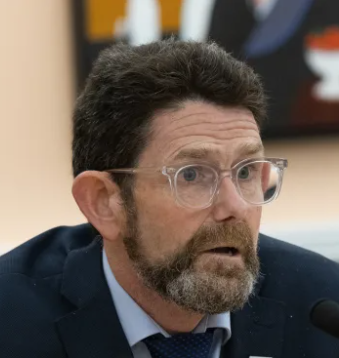
A real concern for native wildlife
Forest & Bird’s chief adviser, Richard Capie, argues the changes remove “vital safeguards” that help prevent permanent biodiversity loss - a risk many New Zealanders would say they do not want.
These national direction rules had been part of the planning system to ensure activities with significant ecological impact - such as mining and quarrying - were justified and mitigated. With those thresholds relaxed or removed, critics argue that sensitive indigenous habitats could face greater pressures without robust assessment.
While proponents of the reforms underscore the economic imperative - particularly the need for materials for infrastructure and jobs - the conversation often collapses into caricature rather than balanced analysis.
Governance, trust, and policy trade-offs
This debate is not just about wildlife; it’s about how decisions are made.
Many outdoor recreationists and regional communities have felt sidelined in recent planning reforms. Whether it’s access to public land, freshwater policy, or coastal use, a recurrent theme is consistency of process and clarity of purpose. Policies that appear to be fast-tracked or pre-decided without visible engagement erode trust.
That dynamic can be seen in other recent changes as well. For example, changes to the Wildlife Act stoked concern because they were introduced under urgency and perceived as weakening protections for iconic species like kiwi and bats - even if the government frames them as procedural fixes.
What unites these debates is not purely environmental or economic interest, but how and for whom priorities are set. Public confidence depends on transparent processes, consistent standards, and genuine opportunities for local voices - including outdoor communities - to be heard before outcomes are finalised.
Why this resonates beyond forests and birds
For many voters, wildlife and biodiversity are important - but they are weighed alongside everyday pressures like cost of living, healthcare, housing, and jobs. Our earlier polling summaries showed that environment typically does not top the list but remains part of a broader set of voter concerns. Those pressures intersect
in experiences such as:
- changes to land and water use,
- recreation access,
- regional economic opportunity,
- and community wellbeing.
When environmental protection is framed as an all-or-nothing fight, it polarises conversations that would benefit from nuanced, multi-stakeholder engagement. New Zealand’s biodiversity is indeed precious, but policy decisions affecting it must be defensible not just scientifically, but socially and democratically.
A challenge for our political year
As we approach an election year, the rock pool harvesting debate, freshwater planning reforms, and now Forest & Bird’s criticisms all point to a central question: how do we balance environmental protection with economic reality and community inclusion?
For groups like CORANZ, this highlights an opportunity - and a responsibility - to advocate for processes that:
- respect local knowledge and access traditions,
- build durable policy rather than reactive responses,
- and ensure that governance structures reflect the public’s interest, not just specialist interest groups or short-term advantage.
New Zealand’s outdoor heritage - its land, rivers, coasts and wildlife - matters deeply to many citizens, but protecting it sustainably requires policies that win broad public respect and long-term engagement, not cliff-edge debates.
Sadly NZ politics, like most capitalist countries, is now based on short term gain (and greed?). As I believe Dave is saying, the election is a hope, however slim, for a more holistic approach to the issues of the great outdoors. Sadly I suspect that more basic issues like having a roof over one’s head and food in one’s belly will be so important that the environment will slip down the priorities. In applies to our aspiring election winners as much as it did at Troy.
Remember the wooden horses of last time from the massive failure of boot camps to the promise that tax breaks for landlords would boost the economy and help the average renter.
The last paragraph is so logical but so unlikely to get priority unless something dramatic happens on the political landscape this year.
What New Zealand desperately needs .. but is unlikely to get .. is a better way for the general public (“the people”) to have direct input and provide direct feedback on the policies being proposed and/or followed, by the government of the day.
A problem we have .. is that we elect a government .. these days, most likely a coalition .. and then, within the constraints of their majority (or otherwise) in Parliament .. they get to have a relatively free rein for 2 of their 3 year term.
In their third year, the focus switches to the Election .. and their behaviour changes, as they try to win votes to gain another term. (Or, as we saw with Ardern, they realise the hopelesssness of their political position, and they cut and run (ie in her case, they quit and leave the country.)
If I was the government, I would want as much direct input and direct feedback from the people as I could get .. because the more I stay close and attuned to the will of the people .. the better I can serve them. Which is the primary role of government, after all. (It also just happens to maximise my chances of winning the next Election.
I like to propose solutions, not just air problems .. so I have an idea for such a direct input / forest feedback system …
With reference to Stewart Hydes and his idea of the government wanting “direct input and direct feedback ” from the voting public, I would add this needs a strong reversal of the current culture in NZ politics.
Governments today are getting their input and feedback from big business, i.e. the corporates, because the corporates make big donations to political parties in return for favours by way of law. The people are ignored.
Shane Jones’ and Chris Bishop’s Fast Track Approval Act is typical, pushing democracy aside by by-passing the traditional select committee process which means no public input or public feedback.
\It opens the door wide to the corporate dairying and forestry interests, corporate mining companies, corporate commercial fishing interests etc.
Corporatism is a big evil lurking in the shadows of the Beehive.
Favours from corporates to politicians do not have to take the form of money. A luxury gift – untraceable – may suffice.
Well said. Corporatism, often termed “crony capitalism” or “economic fascism,” is detrimental due to the collusion between large corporations and government, which restricts market competition and undermines democracy. It leads to the prioritising of corporate profits over the public interest.
Who elects politicians? Why it is the public.
Ironic is it not?
NZ is a special country with 2/3 of it belonging to the NZ citizens. They are however very open to commercial exploitation by politicians at the expense of all NZ citizens. There needs to be a separation between all politicians and the management of the public lands for the even benefit of all NZ citizens both living and future ones.
It’s is all our back yard and needs to be respected that it belongs to all NZ citizens equally.