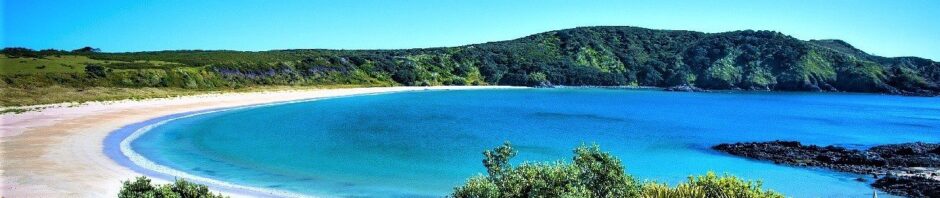
Maitai Bay Shows What Stewardship Can Achieve
CORANZ feature
By Andi Cockroft, Chair, CORANZ
Eight years ago, local hapū at Maitai Bay on the Karikari Peninsula declared a rāhui - an unofficial no-take fishing ban grounded in tikanga and community responsibility.
There was no new Act of Parliament. No fast-track process. No ministerial decree.
There were signs, conversations, education, and trust.
Today, the results are visible underwater.
Recent monitoring reported a seven-fold increase in snapper numbers. Crayfish have returned. Kelp forests are recovering from kina barrens that once stripped the seabed. Divers and snorkellers describe waters that feel alive again.
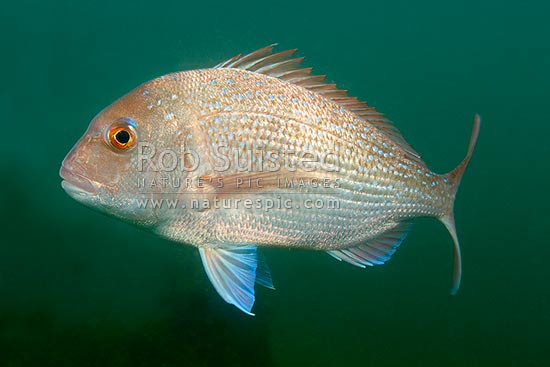
This is not theory. It is measurable change.
This matters.
It shows that when extraction pressure is reduced and communities stand behind a decision, marine systems can recover. It shows that restoration is possible within a human timescale. It shows that stewardship does not always require centralised control.
The Maitai Bay rāhui was not legally enforceable in the conventional sense. It relied on voluntary compliance and social norms. It relied on people accepting that the long-term health of the bay was worth short-term restraint.
Children reportedly remind visitors of the rāhui. Education has been central. Local leadership has been consistent. Community buy-in has been visible.
This is conservation as participation, not as imposition.
For CORANZ, there are several lessons here.
Healthy ecosystems enrich recreation. A bay full of snapper, crayfish and kelp offers more than a depleted one. Snorkelling becomes immersive rather than disappointing. Diving becomes rewarding rather than nostalgic. Even those who do not fish benefit from knowing that the marine system is functioning.
Stewardship builds ownership. When people see recovery with their own eyes, they are more likely to support protection. The relationship shifts from restriction to guardianship.
Local knowledge matters. Those closest to the bay recognised decline before it appeared in national statistics. They acted before collapse became irreversible.
This should encourage anyone who cares about rivers, coasts and outdoor places.
We spend much of our time documenting decline: water quality slipping, fish stocks pressured, habitats fragmented. Stories like Maitai Bay remind us that degradation is not inevitable.
Recovery requires time. Eight years is not a single season. It requires consistency. It requires cultural authority and social backing. It requires patience.
But it works.
There will always be debate about the balance between access and protection. Those debates are healthy. What Maitai Bay demonstrates is that protection, when community-led and understood, can strengthen recreation rather than diminish it.
This is not about exclusion. It is about regeneration.
The wider question now is simple: where else could this approach succeed?
Are there other bays, estuaries or river mouths where local initiative could lead recovery? Are communities empowered to act before systems tip into collapse? Are we willing to accept temporary restraint in exchange for long-term abundance?
Maitai Bay shows that waiting for national processes is not always necessary. Leadership can begin locally. Science can follow. Results can be measured.
This is a success story worth placing on the front page.
It does not deny the challenges facing New Zealand’s marine and freshwater environments. It does not suggest that all problems can be solved informally. It does show that community stewardship, grounded in place and sustained over time, can restore what once seemed lost.
Outdoor recreation depends on living systems. When those systems recover, everyone benefits.
Maitai Bay is proof of that.
The power of tikanga and kaumatua in rural Māori communities is all powerful; he tangata, he tangata, he tangata! = It is people, it is people, it is people! – {who count} Perhaps it is because those communities do not subscribe to the libertarian/ neo-liberal philosophies/tikanga that our elected reps in the Beehive subscribe to. Once upon a time (this is not a fairy tale) we had local authorities in NZ who got on with the job with central government dictating every action.
How long before Shane Jones, etc., want control over Tribal authorities impositions of such Rahul?
If everyone followed the un written laws of comminsence, just won’t happen everywhere, simply because of greed