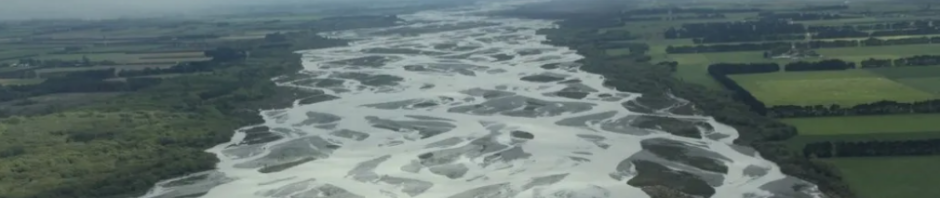
You Cannot Halve a River Without Consequence
For the first time in 40 years, no salmon will be weighed at the Rakaia Fishing Competition.
Four hundred entrants.
No fish.
That is not symbolism.
That is signal.
The Rakaia was once world-renowned for its sea-run salmon. Now harvest numbers have declined for three consecutive seasons, with estimated catches less than half of previous years across the major East Coast rivers.
Anglers describe it as “living the funeral.”
It is difficult language. But it reflects lived experience.
Multiple Pressures, One Outcome
No serious observer suggests a single cause.
Ocean survival conditions fluctuate.
River temperatures rise in low-flow years.
Habitat quality shifts.
Fish screen effectiveness varies.
But one structural factor sits at the centre:
Flow.
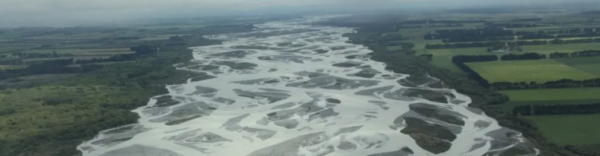
Between the Rakaia Gorge and the sea there are dozens of abstraction consents. A Water Conservation Order protects the river in principle, and minimum flow restrictions apply.
Yet legal abstraction can still reach significant proportions of river flow.
The simple ecological reality is this:
You cannot remove large volumes of water from a braided river and expect no biological consequence.
Limits before tools.
Legal Does Not Mean Sustainable
Consents are lawful.
Irrigators operate within the rules.
Hydro generation is nationally significant.
None of that changes the physical equation.
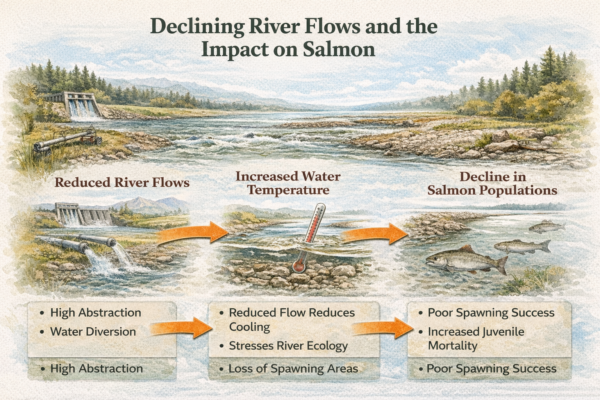
Reduced flows:
- Increase water temperature.
- Concentrate nutrients and sediment.
- Compress habitat.
- Reduce spawning success.
Over time, cumulative pressure expresses itself in population decline.
Water Conservation Orders protect allocation caps.
They do not guarantee ecological resilience if caps are set too high, or if review clauses are never triggered.
Public resource, public responsibility.
Stewardship in Action
The fishing competition’s decision to run without fishing is notable.
It is voluntary restraint.
It recognises that what remains must be given every chance to spawn.
That is stewardship.
The question is whether allocation settings reflect the same precaution.
The Monitoring Gap
A recurring concern raised by anglers is that review clauses in consents depend on demonstrated “adverse effects.”
If adverse effects are not actively monitored in ecological terms - not just flow compliance - then decline can proceed within the legal framework.
A river can degrade lawfully.
That is the uncomfortable point.
Evidence before emotion.
A Wider Pattern
The Rakaia is not alone. Other major East Coast rivers show similar trends.
When iconic fisheries falter simultaneously, the issue is systemic.
Ocean conditions matter.
Climate variability matters.
But freshwater allocation remains the factor within domestic control.
The Principle at Stake
This is not an argument against irrigation.
It is an argument for ecological limits that genuinely reflect biological thresholds.
If salmon runs collapse, the loss is not merely recreational.
It is cultural, ecological and economic.
Rivers are not pipes with scenery attached.
They are living systems.
If flows are reduced beyond resilience, populations respond.
When the salmon don’t come back, it is not mystery.
It is consequence.
Andi’s post is a bland review of the many “cuts” that have decimated the Rakaia River’s outstanding fisheries and recreational fisheries.
This post reads like most Commissions of Inquiry into New Zealand’s serial disasters like the sinking of the Waihine in 1968, the Pike River Mine, and the Cave Creek disasters.
Carefully orchestrated investigations uncover many of the contributing causes to these disastrous events but allow the culprits a free pass. It seems there is an unstated under lying requirement in New Zealand to find that “nobody is to blame”.
It was only Peter Mahon’s brilliant and blunt analysis of the Erebus disaster that the truth was revealed; that the government’s Civil Aviation programmed a commercial passenger plane to fly directly into the path of an active volcano.
The political imperative to cover up the true facts resulted in the Prime Minister and the New Zealand establishment destroying the career and life of Hon. Peter Mahon.
Lets not “sugar coat” this bitter pill, irrigation abstraction has irreversibly destroyed the Rakaia River fisheries.
A 1983 (irrigation) report identified this outcome among 28 “concerns” such as groundwater nitrate levels exceeding the MAV for drinking water. Aka Canterbury’s declared Nitrate Emergency.
In plain language none of these concerns were addressed due to “issues of time and cost”.
In plainer language this sums up the Coalition Government’s current RMA ‘reforms”.
At the start, it is said a ‘signal’ is there. I suggest it should be loud clanging bells or a siren alarm to signal an emergency crisis around an environmental catastrophe.
Your article is well thought out and identifies the crisis which minister Christopher Bishop and Shane Jones could not give a damn about.
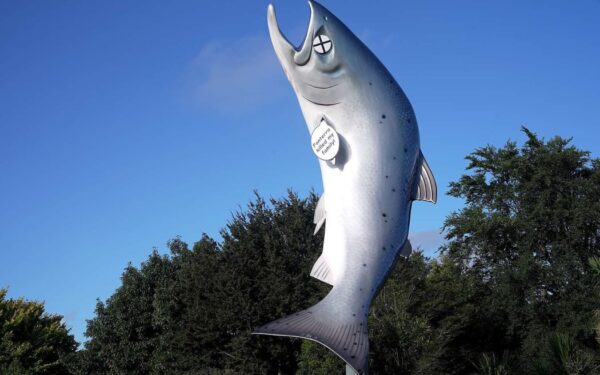
Some of you are old enough to remember Charlie Drake’s song “My Boomerang won’t come back” Well neither will our sea-run salmon!
Lyrics – Ode to sea-run salmon
On the braided river plains of
Canterbury just a couple of years ago
The salmon anglers were meeting
Having a big pow wow
To Fish and Game they went
We’ve got a lot of trouble, Chief
On account of our rivers spent.
Our rivers boys, what’s wrong with them?
The sea-run salmon won’t come back
Our salmon won’t come back
We’ve waved our rods all over the place
Practiced till we were blue in the face
We’re a big disgrace to the Angling race
Our sea-runners won’t come back
We can catch a kahawai (yeah, yeah)
Even catch a doggie or two (yeah, yeah)
But we’re a big disgrace
To the Angling race
Cos our sea-run salmon won’t come back
The boffins dismissed their concerns
They had to keep the genetics pure
And sent him on his way
He had his now useless rod and lure
So there he could not stay
This is nice, quipped his wife
Getting banished at your time in life
What a way to spend an evening
Sitting on a bank a grieving
Alongside the river once grand
With just a salmon rod in your hand
For three long months he sat there
Or maybe it was four
Then an business man
In a three piece suit came
A-knocking at his door
I’m the local regional councillor, son
They call me ECan Jack
Now tell me, what’s your trouble, boy
Our salmon won’t come back
Your salmon won’t come back?
Our salmon won’t come back
Your salmon won’t come back?
We’ve cast our rods all over the place
Practiced till we were blue in the face
We’re a big disgrace to the Angling race
Our salmon won’t back
Don’t worry, boy I know the trick
And of it, I’m gonna show you
If you want a salmon to put in your pack
You need to know where to go to
Get a soft bait and egg-rolling kit
And go away upcountry and happily cast
There’s canals with farmed fish, not sprats
Chemically coloured and obesely fat
Fed on offal pellets, and all that
Now they’ll replace your salmon of the past
While we steal your river clean and fresh
To irrigate for our milk and bovine flesh
We can take a rod and line (yeah, yeah)
Make a cast in a boring old canal (yeah, yeah)
But we still feel we’re a big disgrace
To all of the Salmon Angling race
Cos our sea-run salmon won’t come back
Apologies to: My Boomerang Won’t Come Back lyrics © Campbell Connelly And Co. Ltd., Edward Kassner Music Co. Ltd
A poem with nostalgic prose!
Brave man Rex, to dabble your toes!
If people bother to write posts,
Then find they’re judged by their own hosts,
Seems the water’s deep and critical,
(A brave man might say, a tad pitiful?)
So where’s the CORANZ etiquette?
Who’d want to get their own feet wet?
Sign up to join, or just forget?
And sorry if this doesn’t rhyme,
I just ran out of precious time !
CORANZ – *Supporting* contributors to Outdoor Recreation?