Lessons from a UK Debate
A recent debate in the UK has reignited an old and uncomfortable question: who feels welcome in the countryside.
A report there suggested that parts of the British countryside are perceived as “white and middle-class”, prompting calls for land managers and public bodies to think harder about inclusion. Predictably, the reaction was sharp and divided. Some welcomed the discussion as overdue. Others saw it as unnecessary, ideological, or even insulting to rural communities.
From a New Zealand perspective, the value of this debate lies less in the UK’s conclusions and more in the question it raises.
Access is not only legal. It is cultural.
Most outdoor spaces in New Zealand are, in theory, open to everyone. Public land, rivers, lakes and coastlines do not require membership, fees, or permission to enter. Yet participation patterns are uneven. Some people are regular users. Others rarely go, even when access is technically unrestricted.
That gap is worth understanding - without jumping too quickly to answers.
Feeling welcome is not the same as being invited
In many cases, people don’t avoid the outdoors because they are excluded. They avoid it because they feel unsure, inexperienced, or out of place. Sometimes it’s a lack of confidence. Sometimes it’s unfamiliar norms. Sometimes it’s simply not knowing where to start.
This is not unique to ethnicity, class, or background. Many long-time New Zealanders feel exactly the same about activities they didn’t grow up with - tramping, fishing, hunting, even camping.
The outdoors often assumes prior knowledge.
Inclusion doesn’t mean rewriting the outdoors
One risk in debates like the UK’s is the assumption that making people feel welcome requires changing the character of places themselves. That’s a false choice.
Welcoming more people outdoors does not require:
- sanitising landscapes,
- diluting traditions,
- or turning nature into a curated experience.
It usually requires something much simpler: lowering the entry barrier.
Clear information. Gentle first steps. Normalising everyday use. Making it obvious that you don’t need special gear, expertise, or identity to belong.
A barbecue by a river. A short walk rather than a long one. A casual swim rather than a challenge.
These are gateways, not compromises.
The danger of turning participation into policy
The UK debate also highlights a familiar pitfall: once participation becomes a policy problem, solutions tend to become abstract, top-down, and symbolic.
In reality, most people begin engaging with the outdoors not because of strategies or campaigns, but because:
- someone invites them,
- an activity looks enjoyable,
- or a place feels unintimidating.
Participation grows through experience, not instruction.
What this means for New Zealand
New Zealand’s outdoors doesn’t suffer from the same historical or demographic patterns as the UK, but it does face its own participation challenges - urbanisation, time pressure, screen-based lifestyles, and the quiet erosion of confidence.
The lesson isn’t to import overseas frameworks or language. It’s to stay focused on what actually works here.
If we want a broader cross-section of people to value outdoor access, water quality and public land, they need first to use those places in ordinary ways. Familiarity precedes advocacy.
That’s why small, practical initiatives matter:
- discovery events,
- informal group activities,
- accessible entry points,
- and a tone that says “this is for you” without explanation or apology.
A question worth keeping open
The UK debate will continue, and it will remain contentious. But beneath the headlines is a question that applies everywhere:
Do our outdoor spaces feel like places people can simply turn up to - or places they need to qualify for?
That’s not a question answered by demographics or documents. It’s answered quietly, one experience at a time.
And it’s worth asking - carefully, without accusation, and without losing sight of what makes the outdoors worth welcoming people into in the first place.
It is a matter of valuing the English tradition of the Commons vs the Neo-liberal (= feudal) approach to land ownership. Act and the other far right members of the coalition want to shift our concept of land ownership from guardianship to commodity.
My family tree is populated with farmers. Family owned farmers, especially intergenerational usually are the first to state that they see themselves as having the responsibility to pass on the land in a better state than they received it. The Neo-liberal approach sees it as a resource to to be flogged for all its worth. Destroy the guardianship approach and the Commons approach in relation to the public goes out the window. The answer lies in the ballot box but we have a long way to go to influence the main parties.
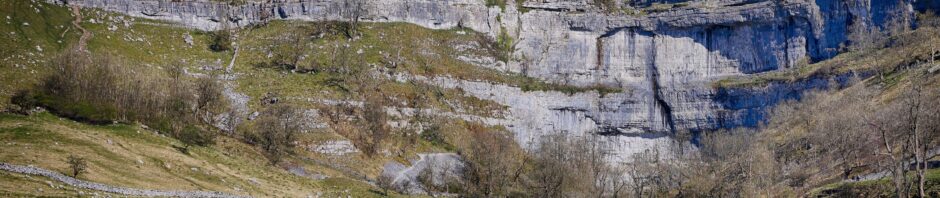
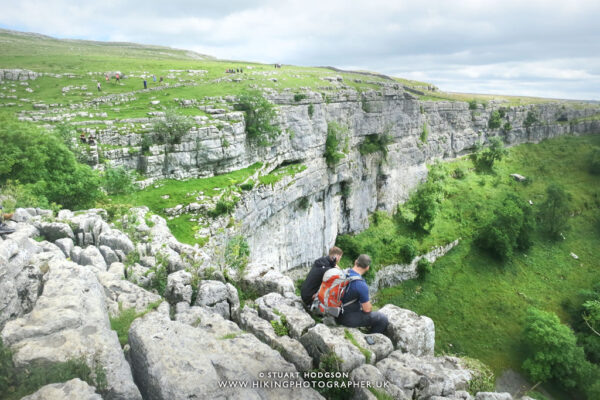
Ah, Malham Cover. Remember it well, first visited in 1964 with a school trip to see the source of the River Aire from beneath the cove.
Nowadays, all manner of ethnic groups are seen, Asian, Indian, Chinese – and the council has replaced the well-worn grass/gravel track with a more permanent sealed footpath – but is laying tarmac in an unspoilt wilderness to facilitate the welcome mat a good way forward for New Zealand?
Not only the Cove. Janets Foss, Gordale Scar even the Tarn all destroyed now compared to 50 years ago. Fences, styes, footpaths, signage – all desecrating the area in the name of “inclusivity” and “access”
Ka pai e hoa. Guardianship is known as Kaitiakitanga. You have stewardship of the land, not ownership. You are a trustee. As Ngai Tahu say: “Mō tātou, ā, mō kā uri ā muri ake nei”
Translation and Meaning = “For us and our children after us”.
As Rex promotes land access is to be shared, and especially, enjoyed. We all share primeval needs to get out and enjoy Papatuanuku and Tane’s landscapes and beautiful vegetation.
It is not always a good idea to make the countryside too inclusive, especially in the Benighted Kingdom.