Are We Still Asking the Wrong Questions?
By Andi Cockroft, Chair, CORANZ
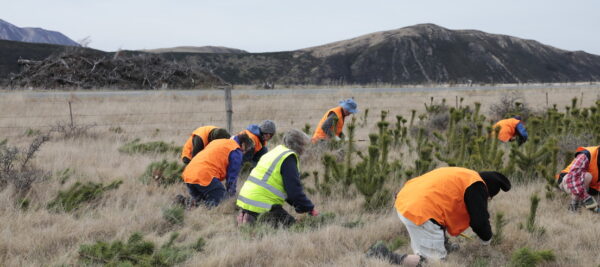
About twenty years ago, I found myself at Waiouru representing a group of volunteers – figuratively loppers and saws in hand – ready willing and able to cut wilding pine saplings out of the tussock. It was spring - October or November - the exact time when those seedlings are easiest to deal with. The plan was simple: remove the saplings before they seeded, bundle the trees, and donate them as Christmas trees to retirement homes and charities. Kill two birds with one stone – remove wilding pines and bring some cheer to others.
The offer was refused. Not because the work wasn’t needed, but because the Army had already engaged a commercial contractor.
At the time, that felt frustrating. In hindsight, it feels revealing.
Because here we are, two decades later, still talking about wilding pines as a growing national problem. So the question isn’t whether we understood the risk back then - we did. The question is why the problem persists when the solution was obvious even then.
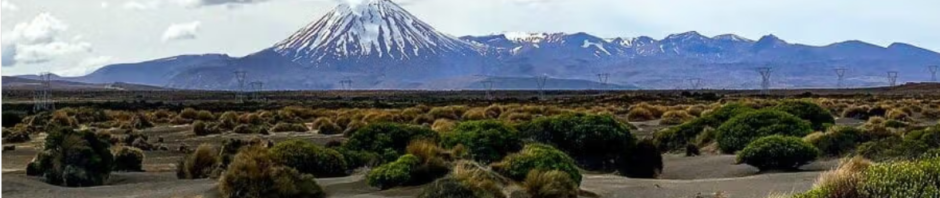
Wilding pines don’t appear out of nowhere. They spread predictably, seed by seed, year by year, moving downwind from known sources into open landscapes. At Waiouru, the conditions were perfect: altitude, wind, open tussock, and long-established seed trees. None of this was a surprise. So why were we paying to remove trees after the fact rather than stopping them early, cheaply, and repeatedly?
And why, even now, does that logic still seem hard to embed?
When wilding pines are discussed publicly, the focus is often on scale. Millions of hectares. Helicopters. Herbicide. Big numbers. Big programmes. But scale is also part of the problem. Large, expensive interventions tend to crowd out smaller, earlier, preventative ones. Is it really sensible to wait until trees are big enough to require aircraft before acting?
If wilding control is known to be most effective when trees are small, why do systems still favour late intervention?
Another question follows naturally: why is volunteer effort so often treated as a liability rather than an asset? At Waiouru, the refusal wasn’t ideological. It was procedural. Contracts, health and safety, insurance, procurement rules. It was easier to pay a firm than to accommodate free labour. Easier administratively, perhaps - but was it better environmentally?
How many opportunities for early control have been lost because systems are built for transactions rather than stewardship?
Wilding pines also expose an uncomfortable truth about land ownership. We often assume public land is better protected than private land. Waiouru should disabuse us of that idea. Crown land is just as vulnerable to long-term biosecurity failure when responsibility is diffuse and follow-up uncertain. If the Crown struggles to maintain control on its own land, what does that say about our national approach?
And why does control still depend so heavily on bursts of funding rather than permanence? Wilding pines don’t respect budget cycles. Miss a few seasons, and the problem rebounds. Seed banks don’t care whether funding was approved this year or deferred to the next. So why do we still treat wilding control as a project rather than an obligation?
There’s also the question of incentives. When control becomes expensive, the pressure grows to defend the cost rather than question the method. Helicopter operations look decisive. They photograph well. They fit nicely into reports. But do they encourage the kind of persistent, low-level vigilance that actually stops spread? Or do they normalise the idea that wildings are something we “deal with” periodically rather than prevent continuously?
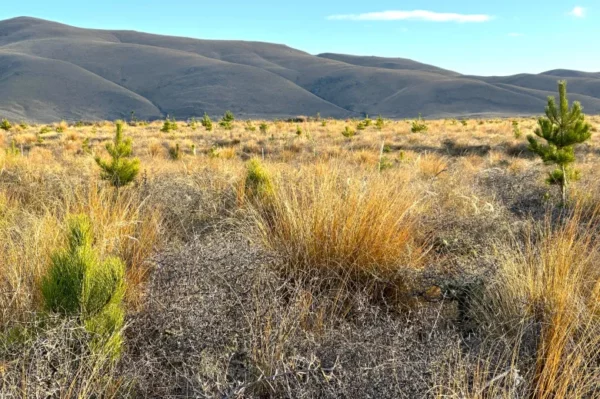
From an outdoor recreation perspective, wilding pines change landscapes profoundly. Tussock becomes scrub. Scrub becomes forest. Views close in. Open travel becomes constrained. Water yield changes. Fire risk increases. Access routes disappear. Yet these changes happen incrementally, quietly. By the time people notice, the argument is no longer about prevention but about acceptance.
Should we really be accepting that transformation by default?
For groups like CORANZ, wilding pines matter not because they are exotic trees, but because they reshape the outdoors in ways that affect access, safety, biodiversity, and the character of whole regions. They turn shared open landscapes into closed ones. They alter the experience of being outdoors. And once established, they are defended - not because they belong, but because removal becomes inconvenient.
That raises another awkward question: at what point does failure to control become justification for keeping what should never have been there?
Looking back to Waiouru, what stands out isn’t that volunteers were turned away. It’s that the moment was missed. Small trees. Willing hands. Immediate benefit. Community goodwill. All of it was available - and all of it was set aside because the system wasn’t built to accept it.
Has that really changed?
Today we have a national wilding conifer programme. Funding lines. Strategies. Coordination. And yet the same core issues remain: delayed action, insufficient follow-up, resistance to community involvement, and an underlying tendency to respond late and expensively rather than early and often.
If wilding pines are still spreading after decades of awareness, what exactly are we optimising for?
Is it ecological outcomes? Or administrative comfort?
Is it landscape protection? Or risk avoidance on paper?
Is it stewardship? Or contract management?
And perhaps the most important question of all: how many more decades will pass before we accept that early, persistent, locally grounded action is not an optional extra, but the only approach that actually works?
Wilding pines are not an unsolved mystery. They are a test of whether our systems can match what we already know. Twenty years ago at Waiouru, the answer seemed to be no. The uncomfortable question now is whether we’ve learned enough since to answer differently.
Because if we haven’t, then in another twenty years someone else will be standing in the tussock, cutting saplings, asking the same questions all over again.
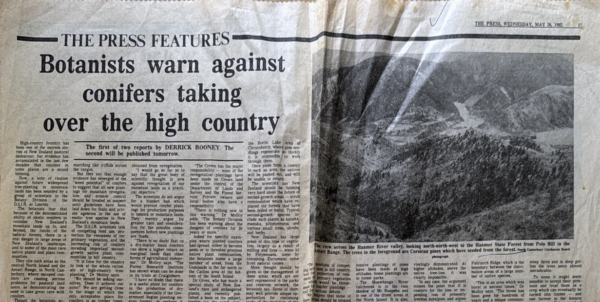
The wilding pine spread is amazing especially in areas like the Mackenzie basin and Marlborough. But government sits on its hands and doesn’t act decisively. Government needs to face up to carbon trading not only results in the loss of productive beef and sheep farms, it is an economic rip-off of the country. John Key and National hang your heads in shame.
The government has talked of expanding the planting of pine plantations on “marginal” land, to counter climate change. Does government not understand climate change is a natural cycle ranging from mini ice ages to warmer times. The Tararua Ranges behind our place once had a glacier in the Park Valley at the head of the Waiohine River.
The glacier has not existed certainly since the 19th century and probably before the Polynesian migrants arrived in 1250.
In short, the climate warmed many, many centuries ago to cause the glacier to recede and vanish. Only the u shaped landform of the Park Valley shows where a glacier once was.
Would somebody tell Climate Change Minister Simon Watts about the reality of climate change?
As for pine forests they are an environmental detriment. The runoff carrying slash and rubbish has caused much damage. Farms wrecked, houses buried with logs during the 2018 storm in Tolaga Bay, for example, and beaches with piles of forestry waste?
Wake up Simon.
The wilding pine issue is a multi-dimensional, systemic failure of both stewardship, and/or management.
Ultimately, it is a failure of governance.
And who do we put in charge of governance .. at a local, regional, and national level?
Why, politicians of course.
Local bodies, territorial authorities, and central government.
All governed by politicians.
So we’re pretty-much screwed.
Why?
Because politicians are best motivated by doing high profile, noticeable things .. things that may bite them in the arse if left undealt with .. things that will ultimately get themselves re-elected.
They are more motivated by the shorter-term, economic benefits of planting more pine trees .. than they are by the expensive, long-term issue of dealing with the outcomes of planting more pine trees.
Wilding pines are largely a hidden problem.
The biggest challenges lie mostly in the back-blocks, far away from city lights.
And even when they’re not .. pine trees are such a legitimate part of local landscapes .. nobody really notices.
I have just seen Climate Change Minister Simon Watts say the Emissions Trading Scheme still has a “role to play” in helping the country reduce emissions despite a crash in the price of carbon credits. Come on Simon, the ETS is nonsense just set up to allow major polluters a licence to pollute.
You might expect Labour to be more clued up?
But no they “can’t see the wood for the trees” either. Labour climate change spokesperson Deborah Russell said the carbon price was too low and an “urgent re-working” of the Emissions Trading Scheme (ETS) was needed so that it was effective in incentivising firms to take climate action.
Yes Deborah and those firms will keep polluting.
All Russel and Watts can wail about is dollars. They have no environmental or people conscience.
Under carbon trading and farm to pines conversions, we will see an environmental disaster about to happen, loss of biodiversity, boring unmanaged monocultures of pines, rural community decline, unmanaged fire risk, seed banks for wilding pine spread and loss of food producing farms.
Pines are bad news fior rivers and streams as a pine tree apparently takes up 100 litres a day. Multiply that by a few thousand pine trees in a valley!
It makes me angry- it is so brainless.
Carbon trading is a play area for speculative investors, often foreign thanks to the Ardern/Hipkins Labour government relaxing foreign investment laws around carbon “farming”. National and Act and NZ First are just as stupid.
Voluntary resources are, generally, massively under-utilised.
Resources are generally either voluntary .. or they’re not.
They’re either voluntarily organised, and voluntarily staffed .. or they’re commercial.
For some reason, there’s not a lot of mixed models being used.
An example of a mixed model would be .. a paid staff member, whether working for a private business, a council, a regulatory authority, or a government agency .. organising voluntary labour.
It might not always be successful .. it would depend on the cause, as well as other variables, such as timing, logistics, weather etc
But there are many causes people are prepared to volunteer for.
They do already.
And if, say, things like food, transport, equipment, running costs, and any other expenses were taken care of .. so the act of volunteering was cost-neutral (whereas it usually actually costs money to volunteer, because people have to pay their own costs) .. then people would be even more inclined to participate.
I read the comments by “Tramper”. As a reader of things geological, I can add to the Tararua glacier item, that at St Bathans in Central Otago, fossils from 16-19 million years ago, revealed there was “a distinctly sub-tropical Australian climate and the surrounding vegetation was characterised by eucalypts (gums) and palms” and life that featured metre long crocodiles and turtles etc.
The climate – 16-19 million years ago – had warmed to a sub-tropical temperature.
Global warming and cooling has been on-going.
The government has routinely failed to address the wilding pine issue. There are new techniques and funding sources available right now, but politics and bureaucratic ineptitude always gets in the way. Don’t expect anything to change, no matter how much taxpayer money is spent.
I read once and for the life of me cannot remember where. An American professor or professional of pine trees looked at the issue for PF Olsen’s forestry management I believe.
The report he left behind has since been silenced and disappeared. This was mainly due to the fact he stated that it’s impossible to stop the spread of pines now and in two centuries pines would completely cover NZ.
It was a very interesting read. The amount of seed each tree delivers annually. The indestructible nature of the seeds. The formation period they can withstand etc etc. No wonder they are popping up everywhere and it’s a total waste of money trying to stop it was the conclusion of this expert.
Made me go hmmmm !