
Opinion by Jack Tuhawaiki
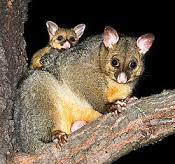
In 1919 the Auckland Acclimatisation Society wrote in its annual report, “We shall be doing a great service to the country in stocking these large areas with this valuable and harmless animal.”Today that is true as to the possum being a valuable animal and in early 2026, raw, machine-plucked New Zealand possum fur is generally valued around $110–$130 per kg paid to gatherers, with prices heavily influenced by quality, season, and fur length.
Compare that to strong, crossbred wool prices which recently strengthened to NZ $3.80 to $5.18 per kg, driven by a high demand for strong wool in carpet and other products.
Good style crossbred main fleece often hovers around $4.00 per kg with some higher quality or specific lines like hogget reaching over $9 per kg in premium auctions.
Even at $9 per kg, possum fur is over 11 times more valuable than strong wool.
Not infrequently in New Zealand you will hear people say “the only good possum is a dead possum”. This shows a lot about the negative reputation and abuse of brush-tail possums in New Zealand.
Browsing
First introduced to this country from their native Australia in the 1800s, possums thrived in their new predator-free environment. Somewhere in the mid 20th century, possums became blamed for negative consequences in browsing foliage.
From being seen in 1919 as “a valuable and harmless animal” they have been painted in a concerted campaign by the New Zealand government via the media as ruthless pests. One source said, “demonising these marsupials to the extent that international tourists are even advised to swerve while driving on the country’s roads in order to hit and kill these animals”. Yet New Zealand’s ecosystem evolved with browsing by about seven species of moa and other birds, browsing the forests. The “forest” therefore adapted to browsing.
Basically the demonising of the possum is encouraging violence towards the marsupials.
The print media in New Zealand have much to answer with unbalanced promote negative portrayals of possums. This in turn introduces a culture in public attitudes that is based on “hatred, disrespect and maltreatment of possums as pests warranting extermination and undeserving of compassion” said one scientific paper.
The Department of Conservation for many decades has publicised the possum as a “ruthless pest” claiming 70 million lived in New Zealand.
Ruthless
A possum hunter friend told me. “That 70 million figure is total bullshit. They’ve been quoting that for years to justify their use of 1080.”
He dismissed the “tonnes” of vegetation DOC claimed possums gobble each night as “garbage”.
He gets around the bush a lot and “it’s in very good heart,” he said.
So I did some research.
I found details of a Department of Conservation workshop held in the mid-1990s on “Possums as Conservation Pests”.
During it a scientist Graham Nugent of Landcare Research, spoke on the subject. First he described the 70 million figure as a “back-of-a-cigarette-packet” calculation.
Road Kills
I found DoC, in the company of a scientist who specialised in “road kills” of animals, had “calculated” that figure by counting dead possums on highways by driving around New Zealand.
Mr Nugent then told the possum pest workshop, the 70 million figure was “oft-quoted figure, frequently used to depict possum as a rapacious consumer of all things green.”
But by comparing the total foliage consumption of 70 million possums to the new foliage produced each night, the 70 million possums would gobble only about 1/15th or 7 percent of the new foliage each night.
Is that a menace to the forests?
Possums are very slow breeders giving birth to one “joey” a year. No population explosion is likely, only a slow increase.
Possum meat has been marketed on export markets as the main ingredient for pet food to Japan. However when a TV programme screened on Japanese television showing New Zealand’s aerial 1080 programme, the Japanese importer immediately cancelled the order.
Possums do not threaten the total national forests by deforestation. For the bulk of New Zealand’s forest, the process is one of a change in individual vegetation species known as composition. There would be less palatable vegetation species. So the change is merely a structural forest change.
In this way, Nature ingeniously limits the food supply for possums and keeps the population stable.
I’m sure DoC doesn’t understand this.
Possums are often blamed as a spreader of bovine Tb in farmed cattle and farmed deer herds. TbFreeNZ formerly known as the Animal Health Board (AHB) is a major user of aerial 1080 poison. I know of cases where stock movement with a farmer bringing cattle from a TB area to his farm introduced Tb. The AHB (TBFreeNZ) knew this but blamed possums and instigated big 1080 drops on the public lands adjoining farmland.
In any case NZ’s bovine Tb incidence is so low as being under the yardstick, the World Health Organisation sets to be classified as TbFree.
Bureaucrats will tell porkies to keep their empires and jobs safe.
The possum haters claim possums spread bovine TB in farm cattle herds. The fact is , the incidence of TB in possums is incredibly low .. as has been tabled in our parliament.
About 2016 Agriculture minister Nathan Guy told Parliament 9800 possums were autopsied and not one had any TB infection. That is zero.
Very good opinion piece Jack. Thank you.
I wonder how many mPs took notice of Nathan Guy’s figures re autopsies of 9800 possums for Tb?
There are businesses already selling clothing, at a premium, which blend possum fur and merino. The reviews are very positive. With the legitimizing of possum farming, and some start-up funding from the government (Shane Jones’s fund?) this could really take off. I’m surprised the Fed Farmers in government haven’t got onto it.
A Korean mate of mine tried to export possum meat as NZ Tree Bear and got clobbered by MAF. So much for entrepreneurship!
Any home gardener will know that pruning trees and shrubs promotes growth why wouldn’t possums do the same.
I own a Small but heavily forested in native piece of paradise in the Marlborough sounds. I do not control the possums and neither does anyone else. The forest is fine the ground cover of new trees is heavy in most places. There is no massive increase in possum numbers. They appear to naturally come and go in their own life cycle.
The real devastation is caused by old man pines. They dry the land, they smother areas of the native bush and seed hundreds of babies every year. Fix our forests get rid of pines first. A recent study showed possums eat pine seeds. So with the current attitude get rid of possums and harvest wilding pines seems to be the way forward
The language we use matters. It is fair to question whether emotive terms like “rapacious” help informed debate. Possums are introduced animals and clearly reach high densities in some areas, but impact is not uniform everywhere. In my own rural setting, possums are present and coexist with ground nesting birds. I have even conducted simple backyard observations with eggs placed alongside other food, and the eggs were left untouched. That does not settle the science, but it does suggest behaviour may be more nuanced than often portrayed. Proportionate, evidence-based discussion is better than slogans.
See my earlier experiments here: https://coranz.org.nz/do-possums-like-eggs/
The economic comparison is interesting, but the more important issue may be tone. Public debate often swings between extremes - either total eradication rhetoric or complete dismissal of impact. Ecological effects are density-dependent and site-specific. In some forests, browsing pressure is clearly documented; in other areas, coexistence appears stable. Local observation should not replace science, but nor should messaging rely on repetition of old figures without transparency. A balanced approach would serve conservation - and public trust - better.
It is reasonable to question long-standing figures and emotive framing. The oft-quoted 70 million estimate has been acknowledged as rough, and repeating it without context invites scepticism. That said, impact debates should rest on peer-reviewed evidence rather than anecdote - in either direction. Possums are not specialised predators like stoats or cats, and their diet is primarily foliar. The ecological question is one of density and habitat sensitivity. Moving away from slogans toward transparent data would improve the discussion considerably.
Language shapes perception. Calling any species “rapacious” risks oversimplification. Possums are introduced and can cause damage at high densities, but impact varies widely by habitat. Debate would benefit from transparent data and proportionate messaging rather than emotive characterisation.
The possum is a very valuable asset, I have never seen any area’s of forest that have been decimated by possums.
These animals are a means of employment and income, if the government and Doc spent some of the wasted millions on 1080 drops, and introduce an incentive plan and training, would seem the problem resolved and a resource utilized