
“New Zealand has an extraordinary talent for turning simple ideas into bureaucratic circuses. Give us something as straightforward as “sell butter to India,” and within months we will have created a subcommittee to discuss the butter, a working group to review the butter, and an annual symposium on the future of butter cooperation —- It means briefing papers, travel approvals, minutes, follow-ups, and the inevitable report that concludes more cooperation is required — a sort of bureaucratic food chain where nothing is ever eaten but everything is digested.”
Bureaucratic “bafflegab” predominates.
“The cleverness of the arrangement lies in its language —, we get “capacity building,” “technical assistance,” “policy dialogue,” and “stakeholder engagement.” These are wonderfully vague terms. They mean whatever a department needs them to mean, usually accompanied by a budget request.”
Job Creation
All this muddlement means bureaucrats are kept in jobs.
“And of course, once created, these processes develop a strong instinct for self-preservation. Committees do not meet once and declare victory. They meet again, and again, each time discovering new areas requiring further discussion. It is the bureaucratic equivalent of a perpetual motion machine, except instead of producing energy it produces paperwork.Instead of getting out of the way, the agreement constructs an elaborate administrative theme park. Committees, contact points, technical working groups, cooperation frameworks, review mechanisms, stakeholder engagements, capacity-building initiatives, and enough “dialogue platforms” to keep a medium-sized diplomatic corps employed indefinitely.”
“This is not free trade. This is a job creation scheme for officials who enjoy meetings.”
The India free trade agreement is a case study in this national affliction.
And being “national” the outdoors is engaged in this bureaucratic middlemen which sounds good to the casual listener but is on close scrutiny and observation, designed to stagnate and be sucked into a state of paralysis.
A friend once described a Recreational Hunting Advisory Committee set up by the then Forest Service about 1980. He told me it was like the Great Mu-Mu Bird.
“Mu-Mu Bird?” I asked.
“Yes Like the Great Mu-Mu Bird that goes in ever diminishing circles until it disappears up its own fundamental orifice,“ he smiled.
Sahara’s Sand
Often the bureaucrats will create an imaginary problem or crisis.
Zoran Rakovic writes “One is reminded of the old joke about consultants: if you put them in charge of the Sahara, within five years there would be a shortage of sand.”
Which reminds me of some committees currently in play. There is the Kaweka Sika deer discussion where there its talk of canopy collapse, there is a crisis over Marlborough Sounds blue cod and others. Some of my friends have closer knowledge of these specific matters.
The sika deer issue is an area that has suffered extreme events such as the Taupo eruption and weather extremes. When missionary explorer William Colenso trekked over the Ruahines in 1840 he encountered severe erosion such as giant land slips, dead and dying bush, stream beds choked with shingle and dead trees, 50 years before deer were liberated. A scientist Dr Patrick Grant researched the Ruahines and found the damages were severe cycles of storms and extreme weather and nit build animals. The Kawekas are adjacent and linked to the Ruahine Ranges.
But yes there its a committee examining the situation. The Central North Island Sika Foundation in collaboration withe Department of Conservation (DOC) and the Game Animal Council (GAC) is “overseeing adaptive deer management plans, population monitoring and conservation efforts.”
Yes some sika deer may be poorly conditioned but that’s typical of Nature when occasionally animal numbers overstep the carrying capacity of habitat.
Classic Study
Scientist Thane Riney’s Lake Monk, Fiordland study in the late 1950s told of a deer herd that was virtually never hunted. It exceeded the carrying capacity whereupon Nature culled numbers by starvation until equilibrium was achieved – naturally.
Would William Colenso’s observations have led to a committee being set up in 1843?
As for blue cod in the Marlborough Sounds I am informed by my reliable friends who fish there far more than I do, that there is no crisis. The cod fishery is in good heart, despite a sex imbalance caused by ministry mismanagement involving a ministry slot rule where cod 30-35 cms were only allowed to be taken.
Cod taken by anglers were largely the important breeding females.
Back in 2007 Labour’s Fisheries Minister Jim Anderton declared a blue cod crisis and tried to ban all recreational fishing in the Sounds. At the time I had no trouble catching a limit of bag of blue cod. But no, Anderton no doubt advised by his bureaucrats, declared a crisis.
The crisis which has been there for decades is the tarakihi fishery. Tarakihi were once abundant but are now only occasionally caught. Another fishery in dire state is the kahawai fishery, bulk harvested by purse seiners directed by spotting planes. But then what can you expect with an incompetent ministry and a pro-commercial biased current minister?
“What a fine kettle of fish!” as the saying goes.
So a working group committee is examining a very arguably imaginary problem but a real existing problems with tarakihi and kahawai have no committee.
I hasten to add, I’m not advocating a working group on kahawai and tarakihi.
Creating Jobs
Nevertheless a blue cod working group – a grand name for a committee – was set up decades and provides as Zoran Rakovic describes a “job creation scheme for officials who enjoy meetings.”
And there are a multitude of committees of the same nature to show the human failing is universal..
“Paralysis by committee” or is it “Paralysis by analysis” is the state of over-evaluating an imaginary or perceived problem until the choice of action becomes paralysed. There’s a host of quotes that give credence to the inertia generated.
“A committee is a group that keeps minutes and loses hours” and is often described as a group that “can meet and decide that nothing can be done”.
“If you want to kill any idea in the world, get a committee working on it”.
“If Columbus had an advisory committee, he would probably still be at the dock”, and
“If you see a snake, just kill it-don’t appoint a committee on snakes”.
“A camel is a horse designed by committee”.
“A committee is a collection of great men who individually can do nothing, but collectively they are able to decide that nothing can be done.”
The disguised audacity of bureaucrats is that although they are public servants, frequently they will chair a working group/party committee and members of the public on that group may be required to sign a confidentiality agreement preventing them from reporting back to constituents or the organisation they represent.
Footnote: – I do wish Zoran Rakovic all the best such is his total honesty but as an independent candidate for the Selwyn electorate, his chances may be slim.
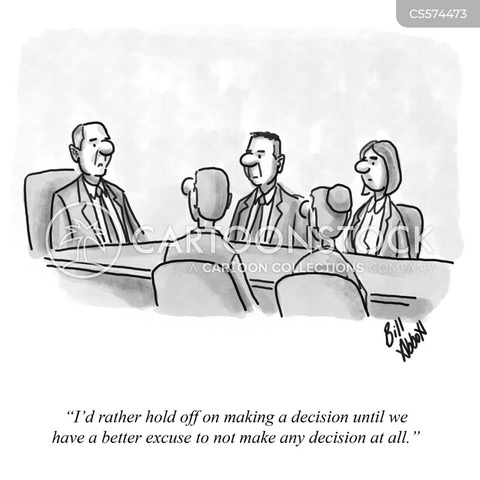
So true. I came across this on the internet which is of interest. :- Whenever a company faces a massive, high-stakes choice, the default reaction is almost always the same: “Let’s form a committee.” We naturally assume that putting more smart people in a room acts as a safety net. More brains, less risk.
The data tells a completely different story.
Back in 2012, researchers at Princeton University set up a fascinating experiment. They asked individuals, groups, and financial experts to make investment decisions using the exact same set of portfolios. After twelve months, they measured the returns. The individual decision-makers averaged an 8.2% return. The financial experts hit 9.1%.
And the committees? They dragged in at a dismal 5.7%.
Putting four people together made the decision 30% worse than leaving it to a single person.
This isn’t just an academic quirk; it is a daily corporate reality. It’s not just central or local government. The average large company runs on 15 to 25 standing committees.
Committees aren’t inherently evil. They are just overused or misused/abused by bureaucrats. Just be alert to the latter. Thank you.
This article got me thinking so I went to the internet. On “Forbes”, Rob Asghar said
“Writing-by-committee is in theory a fine thing, based on the notion that none of us is as smart as all of us. But in practice, none of us is as dumb as all of us, no matter the collective intelligence of the individuals involved.”
Probably sums it up pretty neatly?
But committees are democratic – perhaps a necessary evil. The point is don’t let government bureaucrats, whether centrakl or local government, misuse them for manipulation purposes. Or use them as a diversion to dilute public opposition.
‘I remember Prime Minister Keith Holyoake (1960s) was noted/notorious for setting up commmissions of enquiry, committees etc whenever an issue became controversial.
The crunch point is that committees are there for governance. Sadly most delve too deeply into management. In their simplest forms governance is setting policies and management is carrying them out. At most ONE member should be responsible for an area (or even all) management. They report back to the committee and as long as they stay within the policies it should work. If they do not the hang, draw and quarter them. It is also important that committees do not keep changing policies on a whim. This is the most common fault with committees. Normally policy changes should be determined by an AGM or SGM.
The reason most good men these days shy away from committee’s is the lack of progress. I have had my fill of strangulation by committee. You do your part and sign on. Only to have great ideas voted down or good people silenced by the majority which normally consist of the weak and these days the woke
Never underestimate the stupidity of smart people in large groups!!!
So true!