
by CORANZ researchers
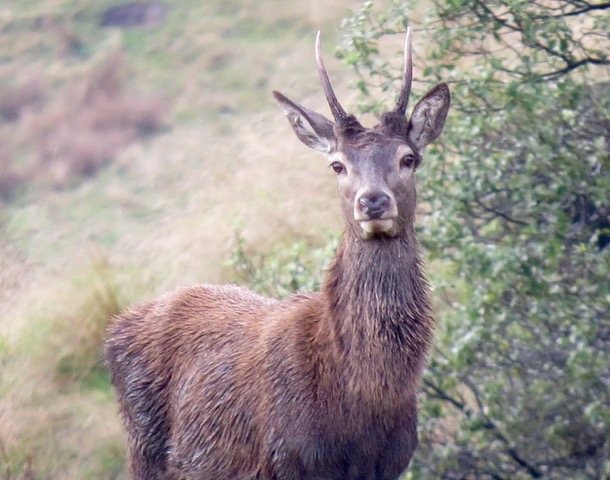
The Department of Conservation is desperately trying to debunk the scientific view that deer and moa browsing are similar by its posted facebook items.
The post is headed “Aren’t deer just replacing moa? Here’s George Ledgard, DOC senior Technical Advisor, in Forest Hill, Southland busting some myths around the idea.”
George Ledgard who may or may not have a scientific degree, is being very bold – perhaps foolish – in challenging the views of some very highly regarded, indeed eminent scientists who see a strong similarity between the era when there was moa compared to today where moa are extinct and deer and other wild animals such as tahr and chamois are the browsers of grass and foliage.
CORANZ endeavoured to find George Ledgard’s qualifications.
While it lists other DOC spokespersons as being a “scientist” or “biologist”, here is what is says about George.
“George knows everything there is to know about hooved creatures that walk on their toes – ungulates, for those in the know – and he’s a keen hunter as well as a technical advisor on the topic of wild animals. Hear about where we’re at with hunting and wild animal control, from one of our foremost experts who is also a hunter. George wears all the hats.”
No mention of scientist.
Assuming George Ledgard is not a scientist but a “technical advisor”, here are what some scientists say.
World’s Number one
Top of the qualifications must be New Zealander the late Dr. Graeme Caughley who has been rated as the world’s number one authority on ungulates.
Moa and deer are herbivores, i.e. eating vegetation by browsing.
At a seminar in 1988, Dr Graeme Caughley presented a paper in which he said there were three regimes of defoliation (i.e. browsing.
“Up to about 1400AD the herbivore component of the plant-herbivore system was dominated by a number of large avian (bird) grazers and browsers. The best known of these, the moas, comprised 11 species varying in weight between about 30 kg and perhaps 350 kg”.
Basically there were three periods of browser/vegetation relationships:-
- Strong browsing pressure over some 60 million years by the various moa species which lived from lowland through forest and scrublands to alpine snow grass tops.
- With extinction of moa by Maori colonists, the browsing of vegetation declined greatly to virtually no browsing except for canopy browsers like kokako and native pigeon.
- Introduction and acclimatisation of deer and other wild animals re-establishes considerable browsing.
Dr. Graeme Caughley termed period two with little browsing as “unnatural”.
Besides Dr Caughley’s very qualified view, others have acknowledged the similarity between moa and deer browsing in the ecology of New Zealand.
A R Wallace in his UK book on “Darwinism” back in 1889 commented that “moas --for countless ages, took the place of mammals in New Zealand”.
Countless ages is significant.
Millions of Years
New Zealand’s vegetation was subjected to browsing pressure by firstly vegetarian dinosaurs and then for probably 50 to 60 million years by moas.
Vegetation evolved defence mechanisms to counter the browsing by birds with thorns, divaricating branch structure and even toxins
More recently in 1986 at a symposium on “Moas, Mammals and Cimate Change in the Ecological History of New Zealand” various scientists agreed with Dr Caughley’s assessment.
Typical was the comment by I A E Atkinson and R M Greenwood that “it is apparent that the established view that New Zealand’s plants and vegetation evolved in the absence of browsing animals is wrong.”
Little difference
At the same symposium, C J Burrows, B M McCulloch and M Trotter in a paper said “the feeding effects of moas may not have been very different from those of browsing animals.”
Scientist Les Batchelor referred to plants as being “a selective response to browsing by moas.” He estimated the moa population was between six and 12 million birds. Dr Caughley estimated the moa population as at least six million.
In 2002 the Department of Conservation based on Landcare Research estimated the wild deer population at 250,000.
The contrast between six million moa and 300,00 deer is obvious.
Two years later, another seminar, Dr Peter Wardle of DSIR said “that these (divaricating) plants are adapted to withstand moa browsing.”
Dr Matt McGlone said habitats “were subjected to considerable browsing pressure by moas.” Two other scientists said ”browsing is not new to the New Zealand flora and landscape. Until about 1000 years ago, indigenous browsers probably exploited the plant cover to its capacity to sustain them, locally exceeding it and locally under-using it.”
They then said “browsing habits of introduced animals (deer) are not too dissimilar from those of lost avi-fauna (moas and others), natural soil and water values might not be compromised were animals left to achieve stable populations.”
Another scientist’s view was that the vegetation was dependent on a “browsing regime” for “its continued existence in that stable form.”
“Bafflegab” Propaganda
Later at the 1988 seminar Dr Graeme Caughley delivered some sharp words on the role of deer and departmental attitudes. He added that staff departments found difficulty in justifying policies that were anti-wild animal.
“They cannot think up a general justification for using it, hence the bafflegab (propaganda) -that presently poses as policy.”
Is DoC by its facebook posts, such as George Ledgard’s, resorting to “bafflegab”?
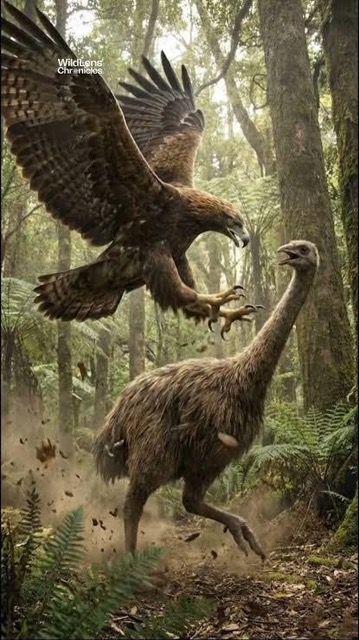
If New Zealand’s flora evolved under millions of years of moa browsing, what evidence demonstrates that modern deer browsing differs sufficiently to justify current DOC policy?
Bearing in mind the three phases in the ecological history and that in the period 1400 AD to about 1900AD ( no moa nor no deer), the “bush” the early Europeans saw must have been dense and not at all like what the Maori settlers saw in 1250AD.
Seems pretty clear to me. Why cannot technical advisor George Ledgard and DOC not see that?
Browsing actually helps promote growth. Any gardener will tell you how pruning stimulates growth of plants as long as it doesn’t happen in its early stages of growth.
Maybe different plant species browsed by both but the end result is still the same, open forests for ground feeding species such as kiwi robins tomtits ect to have have easy access to food, dense bush is cold and wet and completely uninhabitable for birds.
Nature rarely operates in absolutes. It tends to sit somewhere between “always beneficial” and “always harmful.”
This feels like an area where continued research is important. The system is complex, and simple comparisons are unlikely to capture the full picture.
If browsing pressure has long been part of the system, the question becomes what level is appropriate today, rather than assuming all browsing is inherently damaging.
It seems the discussion often shifts from ecological function to management outcome. Whether browsing exists is one question; how it is managed in a modern landscape is another.
Historic browsing by moa is well documented, but scale, species mix, and landscape context have all changed. Comparisons are useful, but they need to account for those differences.
There is clearly a long body of ecological work looking at browsing pressure over time. The challenge is not whether browsing occurred, but how comparable those regimes are under current conditions.
Isn’t this simply a part of DoC’s anti-exotic phobia seeking support from whatever source they can find – whether qualified or not? I seem to recollect 30 years ago an “expert” on climate and sea level being engaged (and paid) by a territorial authority to support their plans – their “expert” turned out to be a retired police sergent!
Mr Ledgard and DoC have fallen into the trap of assuming that you must be an expert on browsing ecology if you’ve shot a lot of deer. Nothing could be further from the truth. Even if Mr Ledgard had all the qualifications in the world, it wouldn’t alter the facts quoted in the scientific journals. There can be little doubt that moa were strong browsers of NZ’s indigenous vegetation. It therefore follows that the vegetation structure was radically altered to an unnatural state when the moa became extinct.
DoC would better serve the taxpayers by recognizing this and stop wasting money trying to return our vegetation to an unnatural state.
George Ledgard has a BSc (Hons) in Environmental Sciences and Forestry from Lincoln University. He has experience working as a DOC ranger in Southland.
His opinions are formed from his tertiary qualification, hands on experience, and are influenced by his employment by DOC.
It is the latter which throws the most doubt on his anti-deer stance.
The strength of Graeme Caughley’s research came from observing deer migrate into a “virgin” area of Fiordland bush, explode in numbers due to feeding on unmodified bush, then experience a population crash as the palatable browse was eaten. Caughley noted that while the bush was not “destroyed”, it was heavily modified by browsing and then recovered to a level that could sustain a much lower population of deer.
He observed the faint trails that existed prior to the deer and also identified that many of the scrubs were adapted to browsing. He made the reasoned connection that this was the result of Moa browsing.
Similarly most hunters will admit that heavy deer numbers will modify the bush by browsing. They will also know that WARO can easily control deer numbers in balance with the cost of helicopter overheads, a win/win in terms of deer management.
Most of the deer problem in 2026 is due to a lack of hunter access to private farm land.
It is DOC’s ideological stance of “indigenous good / introduced bad” that offends.
Introduced species such as deer, trout, game birds, etc. have acclimatized to NZ, and our landscapes have acclimatized to them.
It is wasteful and unrealistic to pretend we can turn back the clock.
The sooner DOC wakes up to this reality the better.
Typical Doc, they are very free calling staff and advisors scientists when something many fail way short of that title, it takes long years and hard yards and training from provin scientists to become a scientist, So these stories are propaganda, nothing esle
It is logical to suppose that once the browsing moa were eliminated the forest would luxuriate.
Thus, when new browsing species were introduced, the forests would become as they had been previously.
It is very disappointing to still have the old adage that a dead animal is a good animal. DoC is still bound up in old institutional thinking. Their employees are young graduates with great ideas on animal and environmental issues or elderly employees that are bound in the reasoning that poison is the best option since sliced bread. I would suggest that there is a whole library of books and scientific knowledge that is available at the New Zealand Deerstalkers library at 3 Collina Terrace , Thorndon, Wellington. With respect to George Ledgard, we have heard this all before.
Peter Trolove is so correct, but not quite, on a point of detail, I think the research on an undisturbed (un-hunted) deer population was not by Graham Caughley but by Thane Riney who found Nature dealt to any population that exceeded the carrying capacity of the habitat. Thane Riney’s research was a classic study.
It’s possible Graeme Caughley as a young trainee at the time under Riney’s tutorship and may have participated in field work?
George Ledgard should read the lake Monk study.
Peter Trolove writes “while the bush was not “destroyed”, it was heavily modified by browsing and then recovered to a level that could sustain a much lower population of deer.”
The same would have happened with moa – all 6 million of them as Dr Graeme Caughley scientifically estimated.
Moa would have modified the composition of the forest as would deer. Palatable species of vegetation would be lessened and unpalatable species of foliage would have increased until an equilibrium was reached.
If George Ledgard wants more detail can I humbly suggest he reads my 2000 book “About Deer and Deerstalking” which has chapters on Dr Graeme Caughley, Thane Riney and the Lake Monk study, plus other scientist’s views that the “browsing by moa and deer were not dissimilar.”
Incidentally Landcare Research in about 2000, estimated NZ’s wild deer population at 250,000. Even if allowing for any increase say 500,000, it pales in comparison to six (6) million moa.
It is annoying, tiring, and unnecessary, to repeatedly educate new DOC employees on the similarities of deer and moa browsing, and other fallacies. Or perhaps the recycling of staff is the only way DOC can maintain its staunch entrenched view against introduced game animals, summarised well by Dr Trolove above as “indigenous good/introduced bad”. There are various references (Thiney et al) on the topic which is well summarised in Tony Orman’s book “About Deer and Deerstalking”. I think Tony Orman’s analogy of a “projected” 500,000 deer numbers versus 6 million moa shows DOC’s silliness.
I like docs guess work on just about everything. The Kea population has loved it as well