By Andi Cockroft, Chair, CORANZ
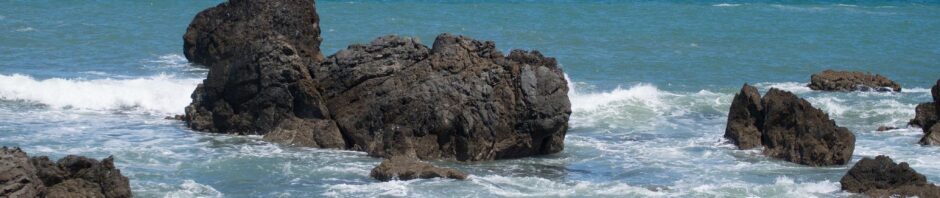
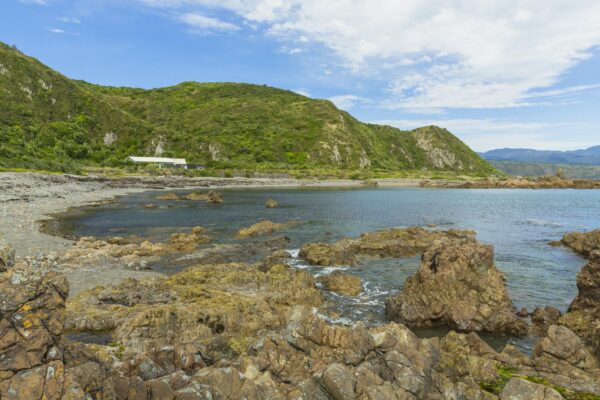
Wellington’s south coast is one of the city’s great assets. It is wild, accessible, biologically rich, and-on paper-protected. The Taputeranga Marine Reserve was established to allow marine life to recover and flourish, and to provide a place where people could experience a healthy coastal ecosystem close to a major city.
Yet time and again, the same stretch of coast is closed, warned against, or quietly avoided after wastewater discharges from Moa Point.
This contradiction has become normalised. It shouldn’t be.
A pattern, not an anomaly
The latest shutdown at the Moa Point wastewater treatment plant-staff evacuated, floors flooded, untreated or partially treated sewage discharged-is not an isolated incident. Nor was the sludge pipeline failure a few years ago that saw waste trucked for months to the Happy Valley landfill.
These events sit within a longer pattern of infrastructure failure, emergency responses, and public advisories telling people to stay out of the water.
What is striking is not that complex infrastructure occasionally fails. It’s that this has happened so often that the loss of coastal amenity is now treated as an acceptable side effect of doing business.
The myth of “dilution”
When sewage enters Cook Strait, the reassurance usually offered is that strong currents will dilute it quickly. Dilution, however, is not the same as elimination.
Nutrients, pathogens, and contaminants do not vanish. They disperse-often alongshore-into reefs, bays, and kelp beds. For a marine reserve, which relies on stable water quality to support recovery and biodiversity, repeated exposure matters.
A single event may be shrugged off. Repeated events become a chronic stressor.
Loss of recreation
Each discharge brings the same outcome for outdoor users:
- swimmers warned away,
- divers told to stay clear,
- surfers and kayakers reassessing risk,
- beaches rendered effectively unusable for days.
This isn’t theoretical harm. It is a direct loss of amenity in one of Wellington’s most valued public spaces.
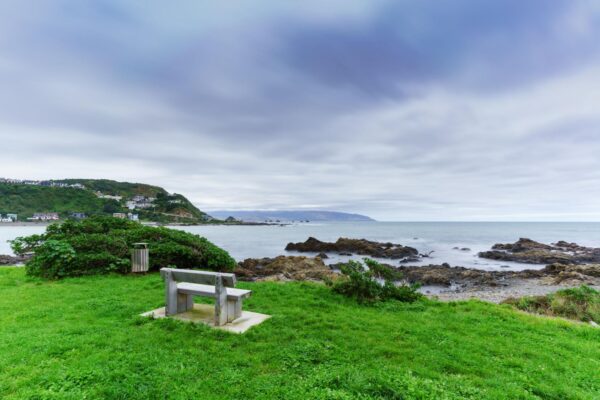
For many people, especially those without the means to travel further afield, the south coast is their primary place for coastal recreation. When access is repeatedly compromised, the promise of a marine reserve rings hollow.
Loss of food gathering
There is also a quieter loss that receives far less attention: food gathering.
While extraction is prohibited within the marine reserve itself, adjacent areas have long been used for customary and informal food collection-shellfish, seaweed, bait species. Repeated sewage events undermine confidence in the safety of these foods well beyond the immediate discharge zone.
People don’t need official bans to stop gathering kai. Uncertainty alone is enough.
Once trust is lost, it is slow to return.
An environmental contradiction
Here lies the uncomfortable truth:
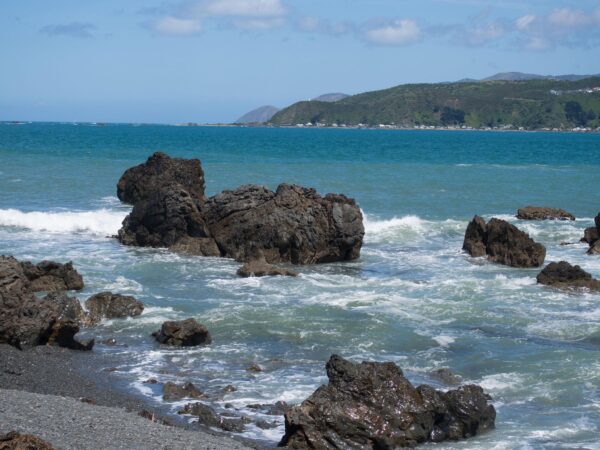
We have established a marine reserve next to an ageing wastewater system that fails with troubling regularity.
Fishing pressure is removed. Pollution pressure is tolerated.
That is not conservation. It is compartmentalisation.
Marine protection cannot be credible if it ignores the most basic requirement of ecosystem health: clean water.
Who is responsible?
It would be easy to direct all frustration at Wellington Water, the operator on the ground. But that would miss the deeper issue.
These failures are the legacy of decades of under-investment by regional and city councils, where rate restraint and political caution repeatedly deferred renewal of unglamorous infrastructure. Wellington Water inherited ageing assets and is now forced to manage them in public view as they fail.
Operational accountability matters-but so does historical honesty.
The real cost of delay
When wastewater systems fail, the cost is not just financial. It is paid in:
- degraded ecosystems,
- lost recreational opportunity,
- diminished food security,
- and public cynicism about environmental protection.
Outdoor users are told to accept closures as temporary and unavoidable. But when “temporary” becomes routine, it signals a deeper governance failure.
A reserve in name, not in experience
A marine reserve should be a place people are drawn to, not warned away from. It should inspire confidence in the idea that protection means something tangible.
Right now, too many Wellingtonians experience the south coast not as a sanctuary, but as a place to check advisories before entering.
That is not the fault of swimmers, divers, or food gatherers. It is the result of long-term decisions that placed infrastructure renewal at the bottom of the priority list.
Time to be honest
If we are serious about marine protection, we must be honest about its weakest link.
You cannot protect a marine ecosystem while repeatedly discharging sewage into it.
You cannot promote coastal recreation while routinely making it unsafe.
And you cannot build public trust while treating these outcomes as collateral damage.
The south coast deserves better than a reserve downstream of failure.
So do the people who use it.
The problem goes back decades as Andi suggests. That problem is soooo may councilors and Mayors have got themselves elected by promising to reduce rates, or at least the rate of increase. When faced with realities the standard response is to reschedule maintenance. One in five year replacements become six years, and then eight years and then ten and so on. Wellington is the classic case of this. Perhaps the large amount of government buildings is a problem too. They are exempt rates I believe.
What’s most frustrating is that none of this is new. Wellington has spent decades prioritising visible, politically attractive projects while quietly deferring the fundamentals that actually keep a city functioning. Sewage and water infrastructure isn’t glamorous, but when it fails the cost is paid by the environment, public health, and everyone who uses the coast.
Yes, Wellington has become very good at funding vanity projects and symbolic initiatives, while the basics rot underneath. You can’t build a “green” city on failing pipes. Marine reserves, waterfront activation and placemaking mean very little when people are repeatedly warned to stay out of the water.
This is what decades of political avoidance look like. Councils chased nice-to-have projects voters could see, and kicked the unsexy work of pipes, pumps and treatment plants down the road. Now the bill is coming due - and it’s being paid in beach closures, lost amenity, and polluted coastal waters.
The irony is that Wellington prides itself on environmental leadership, yet repeatedly tolerates sewage discharges into a marine reserve. That’s not leadership - it’s a failure to fund fundamentals while talking up aspirations. You can’t manage ecosystems with slogans if you won’t maintain infrastructure.
When sewage fails, everything else is just window dressing. Cities don’t collapse because they lack vision - they collapse because they stop maintaining the basics.
The basic problem with local bodies is they spend on “exhilarating” vanity projects and forget core services like sewerage and water.
Rates should not have to riose more than inflation if local politicians and mayors got their priorities right.
This is not an Wellington problem, the is an on going problem in Auckland’s north shores east coast suburbs, it has also been a problem in Hastings, with spills into the Tukituk river, Councils s throughout NZ are guilty of infrastructure maintenance, it history suggests that nothing is changing.
So, According to Wellington Water’s project information, the formal refurbishment programme at Moa Point started on 4 October 2023, and is expected to run through to 2028 as part of a multi-year plan to renew aging equipment and improve reliability and capacity. Added to that, started earlier was construction of a new sludge minimisation facility - a major associated project intended to reduce sludge volume and carbon emissions - began in mid-2023 – due for completion later this year.
For me, the problem is not just the refurbishment, it is the effect of traffic to and from the southern end of the airport. Long delays at peak times with a single lane traffic flow.
Yes, how come infrastructure projects such as this take 4 or 5 times longer in New Zealand than most other OECD countries? Japan would have completed it well before now – then again they wouldn’t have gotten into this mess in the first place.
As we highlight ongoing issues with wastewater infrastructure and failures like the Moa Point plant shutdown, it’s worth reflecting on how Wellington City Council’s spending priorities and rates trajectory have evolved over recent years. There’s no dispute that core services such as water supply, stormwater, wastewater and road networks have been under-funded for decades, something local leaders themselves have acknowledged as contributing to current problems. However, ratepayers are understandably frustrated when significant resources are also directed at high-profile urban transformation projects while essential infrastructure remains fragile.
Projects such as the Golden Mile revitalisation - initially budgeted at around $139 million and now estimated to potentially rise to $200–$220 million - have drawn scrutiny for their cost and uncertain benefits at a time when basic services are failing. The Council recently paused the project for a cost and risk review, recognising the scale of the financial commitment involved.
Despite central government withdrawing from the broader Let’s Get Wellington Moving programme at the end of 2023, WCC has continued to commit to components like the Golden Mile and cycle-friendly transport projects - often co-funded but still reliant on local rates and debt.
At the same time, rates have risen sharply in recent years as the Council grapples with the cost of both core service investment and broader city-building ambitions:
• For the 2024/25 long-term plan, the average rates increase was around 16.9 %, driven in part by infrastructure and other capital needs.
• In 2025/26, rates rose by an average of around 12 %, including a specific sludge levy introduced to help fund wastewater upgrades like the Moa Point sludge minimisation plant.
These figures suggest that, over the last few years, rates increases have been among the highest in recent memory, and are clearly reflecting pressure on council finances - from ageing water assets to ambitious urban projects.
What many residents fail to see, or struggle to reconcile, is why fundamental infrastructure - pipes, pumps, treatment plants - continues to be overshadowed by “vanity” civic upgrades, while water services face repeated crises. A more transparent prioritisation is needed: ratepayers deserve confidence that essential services will come first, and that growth and transformation projects do not come at the expense of basic infrastructure that supports everyday life and recreation.
From a motorist’s point of view, Wellington isn’t Amsterdam or Rotterdam. It’s steep, windy, exposed, and wet for much of the year. Carving up already narrow roads for cycle lanes has restricted traffic flow, created long queues, and delayed buses as well as cars - yet many of these lanes sit largely unused for most of the day. When changes reduce overall transport efficiency in a city with limited alternatives, the question has to be asked whether ideology is driving design, rather than Wellington’s actual geography and climate.
A genuine question arising from the Moa Point failure: how does replacing Wellington Water with Tiaki Wai actually change outcomes on the ground? The same pipes, the same treatment plants, the same legacy of deferred maintenance all remain. What does seem certain is that ratepayers now face rising charges on two fronts - councils freed from Three Waters constraints, and a new water entity already signalling higher water bills.
Yes, Terry. It’s hard to see how this reform prevents repeat failures like Moa Point. What it does appear to do is split the bill. Councils retain freedom to fund discretionary and “city-shaping” projects through rates, while Tiaki Wai openly acknowledges water charges will rise to cover decades of neglect. The risk is that accountability becomes more diffuse while costs accelerate.
Cynically, this looks less like reform and more like financial decoupling. Councils can now pursue non-essential projects without Three Waters crowding them out, while a new water entity takes responsibility for unpopular rate increases. Ratepayers lose leverage on both fronts - and it’s not obvious how that delivers better infrastructure outcomes.
Moa Point highlights the real issue: decades of underinvestment in essential infrastructure. Changing the governance structure doesn’t fix that history. Unless priorities shift, Tiaki Wai risks becoming a mechanism for higher water charges, while councils continue spending on projects that don’t stop sewage entering the harbour.
New entity, new bill - same pipes. The test isn’t governance theory, it’s whether beaches stay open and sewage stays out of the sea.
I dived moa point 30 years ago when becoming a diving instructor. The water was contaminated then already. If 30 years hasn’t killed the marine life then the water quality never will. Me personally don’t mind this location. At least a comparison study can be done on growth between reserves to see what effect water quality has on the environment
We’re now hearing unconfirmed reports of sewage discharges on the Karori Lighthouse side of the marine reserve as well as Moa Point. If true, this raises serious questions about network resilience, monitoring, and why the south coast continues to be treated as Wellington’s safety valve when things go wrong.
Taken from a plane yesterday, the discolouration in the water spreads far out to sea
Driving to work today, Saturday, I just couldn’t believe the number of spectators assembled along the coast from Houghton Bay to Lyall Bay. No available parks for many so they just crawled along oohing and aaahing to the site of untreated sewage. Is this a new pastime second only perhaps to rubber-knocking at accident scenes?