
by Ben Hope
Government moves with discussion documents and legislation passed in late December strongly suggests public estate in conservation land will be put up for sale to the highest bidder.
A paper “Modernising Conservation Land Management” proposals said that around five million hectares comprising over 60% of public conservation land could be put up for sale, if considered “surplus”.
Other sources put the figure much higher than five million hectares, i.e. up to two-thirds of the Department of Conservation (DOC) estate (approx. 8.5 million hectares total) is potentially affected, including stewardship land, conservation parks, and reserves.
The Overseas Investment (National Interest Test and Other Matters) Amendment Act, spearheaded by Associate Finance Minister David Seymour, was passed by Parliament in late December 2025 to fast-track foreign investment approvals.
The Act is expected to come into force in the first quarter of 2026.
The law simplifies screening for “less sensitive” assets, setting a 15-working-day instead of the previous 70 days.
Conservation Minister Tama Potaka has defended the changes, framing them as a necessary “backlog fix” rather than a broad “sell-off,” aimed at improving management efficiency, according to a NZ Herald article.
Reaction has been strong.
Andi Cockroft chairman of the Council of Outdoor Recreation Associations of New Zealand (CORANZ) described the government’s intention to sell public lands as “selling the Kiwi heritage.”
“It doesn’t belong to the politicians to sell, the land and resources belong to the people, who elect the politicians to serve the public interest,” he said.
“New Zealanders value their property ownership in public lands especially for outdoor recreation such as tramping, hunting, fishing, kayaking, mountain biking and other recreation uses.”
Not For Sale
Casey Cravens, chairman of the New Zealand Federation of Freshwater Anglers said the government move revealed the “lack of environmental awareness and environmental and democratic conscience by the coalition government.”
“On reflection I guess this was likely given earlier recent draconian law of the Fast Track Approvals Act which is all about short term exploitation and ignores democracy, by sidestepping the select committee process for public input,” he said.
Casey Cravens said the public’s conservation estate contained some “magnificent trout fishing in crystal clear rivers” which was highly valued by overseas tourist anglers and New Zealand trout anglers.
“In terms of overseas and domestic tourism, it’s worth many millions to the economy and it’s recycled for future generations. Public lands should not be put up for sale to the highest bidder.”
Forest and Bird chief executive Nicola Toki said public conservation land must remain protected so people can enjoy the incredible landscapes and precious native wildlife.
“We should not be making it easier to sell off conservation land for commercial gain,” she said.
Public conservation land covers about 8.5 million hectares, about one third of New Zealand’s total land area. These areas are highly valued for their ecological and scenic value for outdoor recreation as well as a strong asset for the tourist industry.
Sneaky Style
Greenpeace also expressed strong concern not only at the implications for public lands but at the covert manner of passing it into law.
While many people were winding down for the holidays, the coalition government was quietly putting a “for sale” sign up on the New Zealand’s public’s land said Gen Toop of Greenpeace.

Greenpeace’s Gen Toop
“It is now easier for foreign corporations to buy conservation areas, offshore islands, lakebeds, coastal zones, and wāhi tapu sites. If you haven’t heard about it until now, you’re not alone. David Seymour’s Overseas Investment Amendment Bill passed around 11pm on a Friday night in December and with no media attention,” she said.
CORANZ’s chairman Andi Cockroft also expressed distaste of politicians passing law on the eve of the Christmas-New Year period when the public were preoccupied.
“The pre-Christmas timing is outrageous, yet it’s an old political tactic by politicians lacking integrity,” he said.
These implications are significant – and long-lasting.
Before this amendment bill, the government had to run a group of tests and checks before approving the sale of sensitive land to offshore buyers. It could veto the sale or impose basic cultural and ecological conditions on it before approving it – or refuse the sale.
Safeguards Removed
But the Government has now removed almost all those safeguards. Now it is easier for offshore billionaires and foreign corporations to buy up ‘sensitive land’ in New Zealand, which includes conservation land, lake beds, coastal and marine areas, offshore islands and other said Greenpeace’s Gen Toop.
In the detail of the new law is removing criminal checks on would-be buyers.
“That means multinational corporations with a history of criminal activity – like breaking environmental laws, labour abuses, or tax evasion overseas can now buy sensitive land in Aotearoa without the Government being required to properly vet them,” she said.
The “Benefit to New Zealand” test is removed. This was a safeguard that required overseas buyers to show clear benefits before being allowed to buy sensitive land.
It also gave the Government a basis to impose conditions like:
- protecting biodiversity
- preserving heritage values
- maintaining public access
Public Interest By-passed
However overseas buyers no longer need to demonstrate public benefit.
The Government has scrapped the special forestry test. This was – another safeguard that applied extra scrutiny to overseas forestry investments and allowed the government to impose conditions on the sale.
“This matters because offshore forestry companies have already caused enormous harm. After Cyclone Gabrielle, forestry slash destroyed homes, damaged infrastructure, polluted rivers, and left communities traumatised,” said Gen Toop.
Treasury estimates that up to 70 percent of New Zealand’s plantation forestry is already foreign-owned. Some of the country’s largest forestry landowners are offshore corporations, including firms registered in tax havens like the Cayman Islands.
Despite that track record, the Government has decided offshore forestry investments now deserve less scrutiny, instead of more.
“If this Government is serious about protecting New Zealand’s future, it should be strengthening safeguards on overseas investment, not dismantling them in the dead of the night,” said Gen Toop.
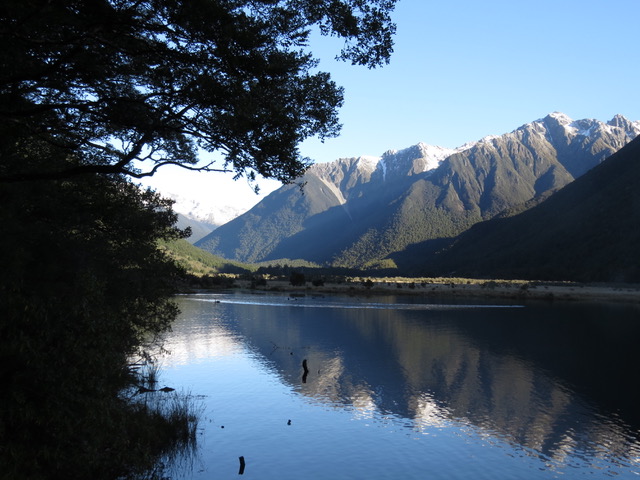
Governments come and go. Land sales don’t. Any administration willing to permanently alienate public land for short-term gain should expect permanent damage to its credibility.
Every hectare sold is a hectare removed from public use - tramping, fishing, hunting, paddling. Once access is lost, it rarely returns. This is not abstract policy; it directly affects how New Zealanders use their own country.
If this government believes New Zealanders support selling conservation land to offshore buyers, it should campaign on that policy openly. Sneaking it through Parliament suggests they know the answer already - and don’t like it.
Calling conservation land “surplus” reveals a profound misunderstanding of its value. Land isn’t surplus simply because it isn’t generating revenue. Its worth lies in access, ecosystem services, tourism, biodiversity and identity - none of which appear on Treasury spreadsheets.
Selling public conservation land isn’t economic reform - it’s intergenerational theft. Short-term fiscal gains are traded for permanent loss of access, heritage and ecological resilience. Future New Zealanders don’t get a vote, but they’ll pay the price.
After Cyclone Gabrielle, communities were told lessons would be learned about forestry, land use and accountability. Instead, safeguards are being removed and scrutiny reduced. That doesn’t look like learning - it looks like doubling down.
Fast-track laws, midnight votes, and holiday-period legislation all point in the same direction: bypassing democracy because it’s inconvenient. This isn’t reform - it’s governance by ambush. Public land deserves public debate, not procedural sleight of hand.
Removing criminal checks and the “Benefit to New Zealand” test while claiming to protect national interests is indefensible. If offshore buyers don’t need to show benefit, whose interest is actually being served here? It certainly isn’t the public’s.
Politicians do not own conservation land. They are temporary trustees. Acting as if DOC land is a disposable asset on a balance sheet betrays the public trust they are meant to serve. Once sold, access, biodiversity and future options are gone - permanently.
It’s not DOC land, it’s OUR LAND
Selling or reclassifying public conservation land via late-December legislation is not “modernisation” - it’s deliberate avoidance of scrutiny. When governments move laws affecting one-third of the country’s land area while the public is distracted, they forfeit the moral authority to claim a mandate. If this policy is so sound, why hide it?
There’s a great quote by the late US president John F Kennedy which Seymour, Jones, Bishop and the other MPs should ponder on.
“The race between wisdom and waste has not run its course – each generation must deal anew with the raiders, with the scramble to use public resources for private profit and with the tendency to prefer short-run profits with long-term necessities — the crisis may be quiet but it is urgent.”
It’s time for politicians like Seymour, Jones and Bishop and all MPs to understand they are public servants employed by the public, paid from the public purse. Sneaking draconian, dictatorial, undemocratic law through near to midnight, virtually on Christmas eve, is deceitful. Selling public property without reference to the owners (the people) is shameful.
All party leaders heed this.
There is an election in November.
The ancients knew it all too well – several millenia ago:
Aristotle:
“That which is common to the greatest number has the least care bestowed upon it.”
Plato:
“The rulers of the city, if they are not guardians of the laws, become their destroyers.”
Olynthiac I:
“The public treasury is administered as if it belonged to those in office, not to the people.”
Cicero:
“The property of the state is not the private estate of those who administer it.”
Tacitus:
“They call it administration; it is in fact plunder.”
Livy:
“The commonwealth is weakened not by open enemies, but by those who carve it up from within.”
So, as Cicero warned two thousand years ago, the property of the state is not the private estate of those who administer it. When public assets are sold as if they belonged to office-holders, the republic itself is diminished.
Hocking-off our heritage. Think Takaro Lodge, Poronui, Hunter Valley Station etc etc. All of these iconic areas have been locked out for kiwis and never generated a dime in extra value to NZ Inc. One would have thought that the Government had learned its lesson. Clearly they don’t learn….
What with Jones flogging off the fisheries, and National looking to flog off our heritage estates, that only leaves Seymour and ACT as an option – but Seymour is not exactly my cup of tea either.
We need either a Reform or One Nation Party here to give us real options.
“Modernising” conservation land management is classic bureacratic bludgerspeak.
It is word fog designed to hide the government’s intention to flog off public lands to the highest bidder.